
American Mahjong for Beginners: What You Need to Start
American Mahjong for beginners becomes much less intimidating when the first session is prepared around a few physical basics. You need the right tile set, a place to organize your hand, a current rules reference, and enough space for four people to build the table together. This beginner guide from JOKKOL focuses on the equipment and setup decisions that make learning calmer and more enjoyable.
What makes American Mahjong different?
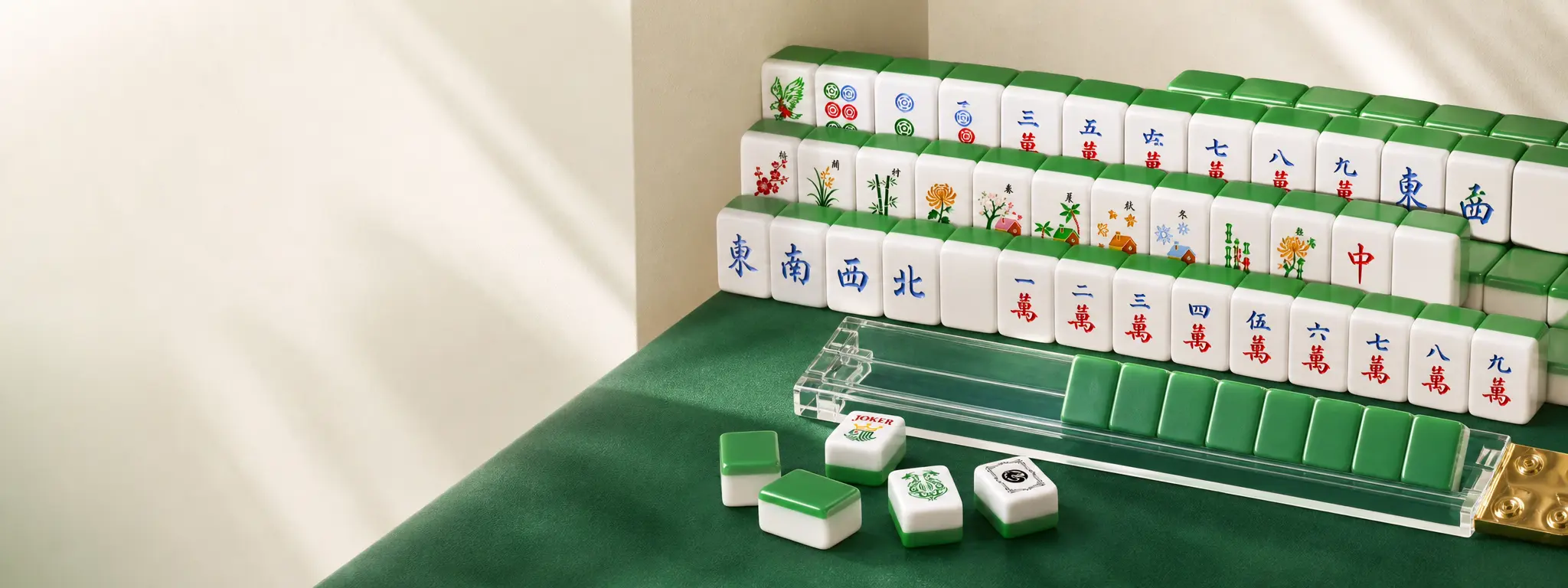
American Mah Jongg is not simply a smaller version of another Mahjong game. The National Mah Jongg League describes a version that uses an annual card of standard hands, a Charleston passing phase, and Joker tiles. Those features affect the equipment you buy.
If your teacher, club, or friends say “American Mahjong,” start with a set that explicitly includes Jokers and is made for that format. A set designed for another regional version may still look familiar, but it may not have the pieces or tile arrangement your table expects.
Beginner equipment checklist
You do not need a room full of equipment. You do need the right few pieces:
- A complete American Mahjong tile set with Jokers
- Four racks for the players' hands
- Four pushers, if your group uses them to build the wall
- Two dice for the opening roll
- A table or mat with enough space for four walls
- A current rule card or beginner-friendly rulebook
- A case, bag, or box that keeps the set together
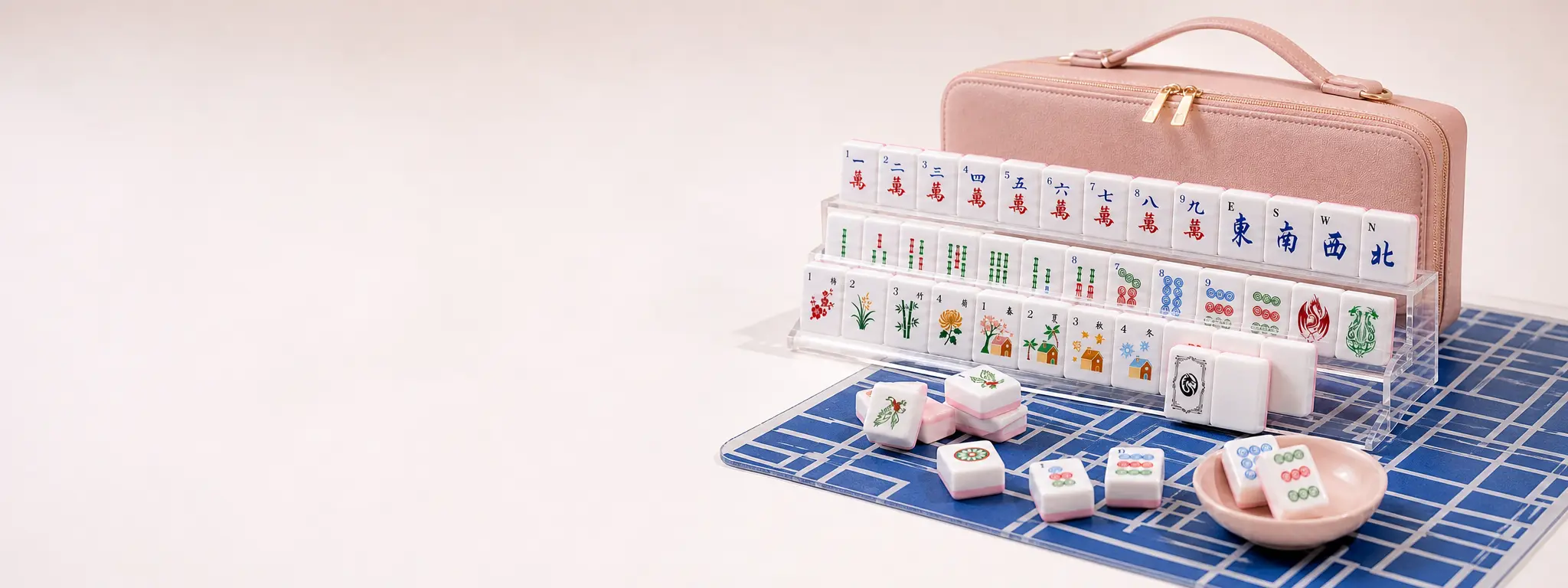
JOKKOL sells American Mahjong tile sets in several back colors, as well as a gaming mat, dice, racks and pushers, and a rules guide. Buying pieces that match in size and finish helps the first setup feel intentional rather than improvised.
Start with a readable set
Beginners spend a lot of time identifying suits, winds, dragons, flowers, and Jokers. Small or low-contrast markings add unnecessary friction. Look for faces that remain clear when the tiles are standing in a rack, not only when they are photographed flat on a white background.
Before you choose a set, check:
- The height, width, and depth of the tiles.
- The contrast between the printed face and the tile body.
- The shape of the corners and how the tiles feel in a rack.
- Whether the Joker and special tiles are easy to recognize.
- Whether the case protects the tiles from rubbing against accessories.
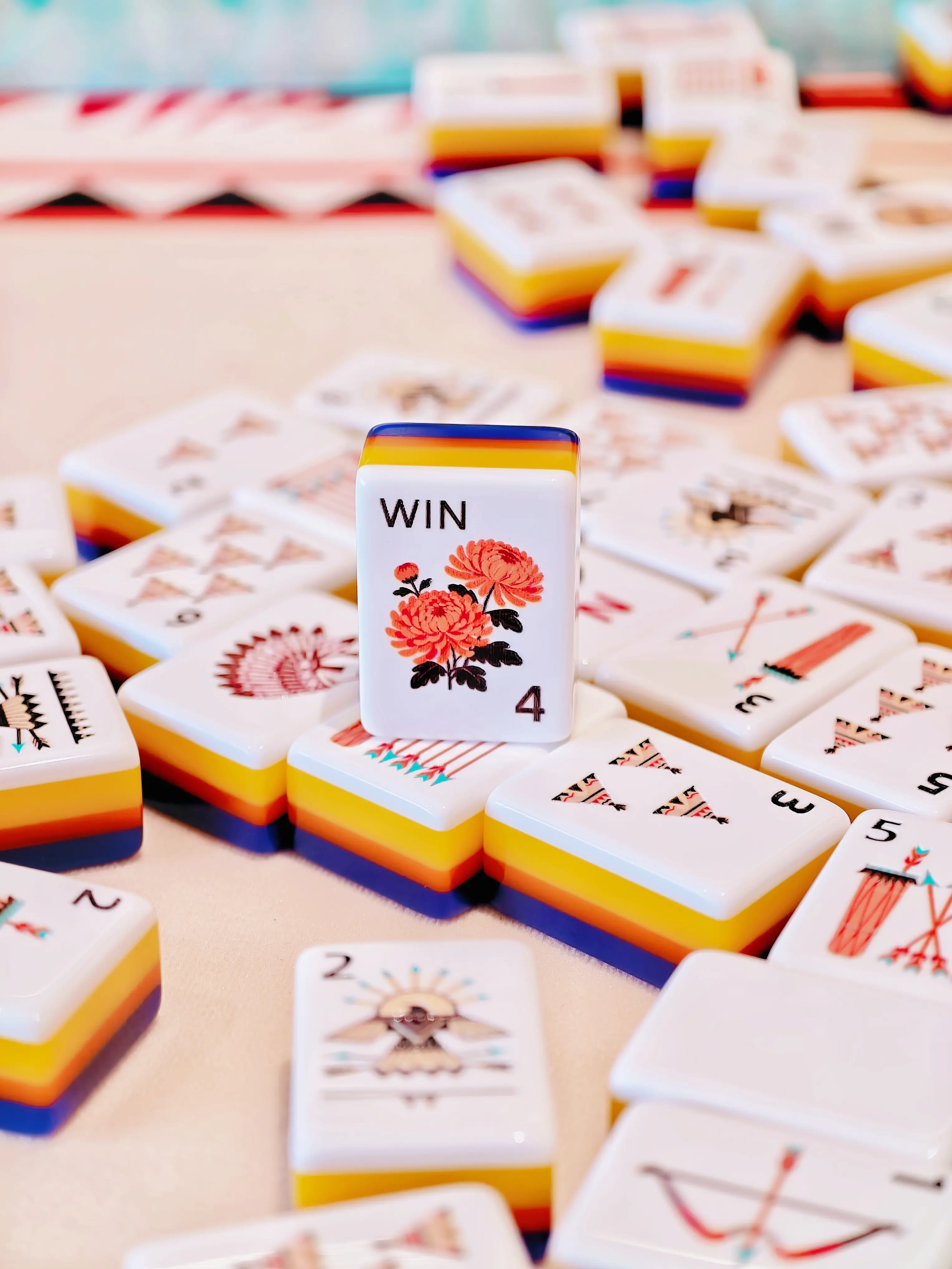
Color can make a beginner set more inviting. JOKKOL's pink, blue, green, yellow, and starlight pink options let players choose a style they will be happy to see at every game night. The color is a preference; the readable face is a requirement.
Prepare the table before the first deal
The first game goes more smoothly when the physical setup is finished before anyone starts explaining strategy. Put the racks at four sides of the table. Place the mat flat if you are using one. Keep dice and the rules card where every player can reach them. Then open the set and group the tiles by broad type so new players can see what they are working with.
The National Mah Jongg League explains that American play begins with the Charleston, in which players pass unwanted tiles. A clear table makes that passing phase easier to follow. It also gives the teacher room to demonstrate how a wall is built and how a hand is arranged without asking everyone to move their chair.
Learn the tiles in small groups
Do not try to memorize the entire set in one sitting. Use a short recognition sequence:
The three numbered suits
Dots, Bams, and Craks are the numbered suits. Learn one suit at a time, then practice spotting the same number across all three. A simple side-by-side arrangement is often more useful than a long explanation.
Winds and dragons
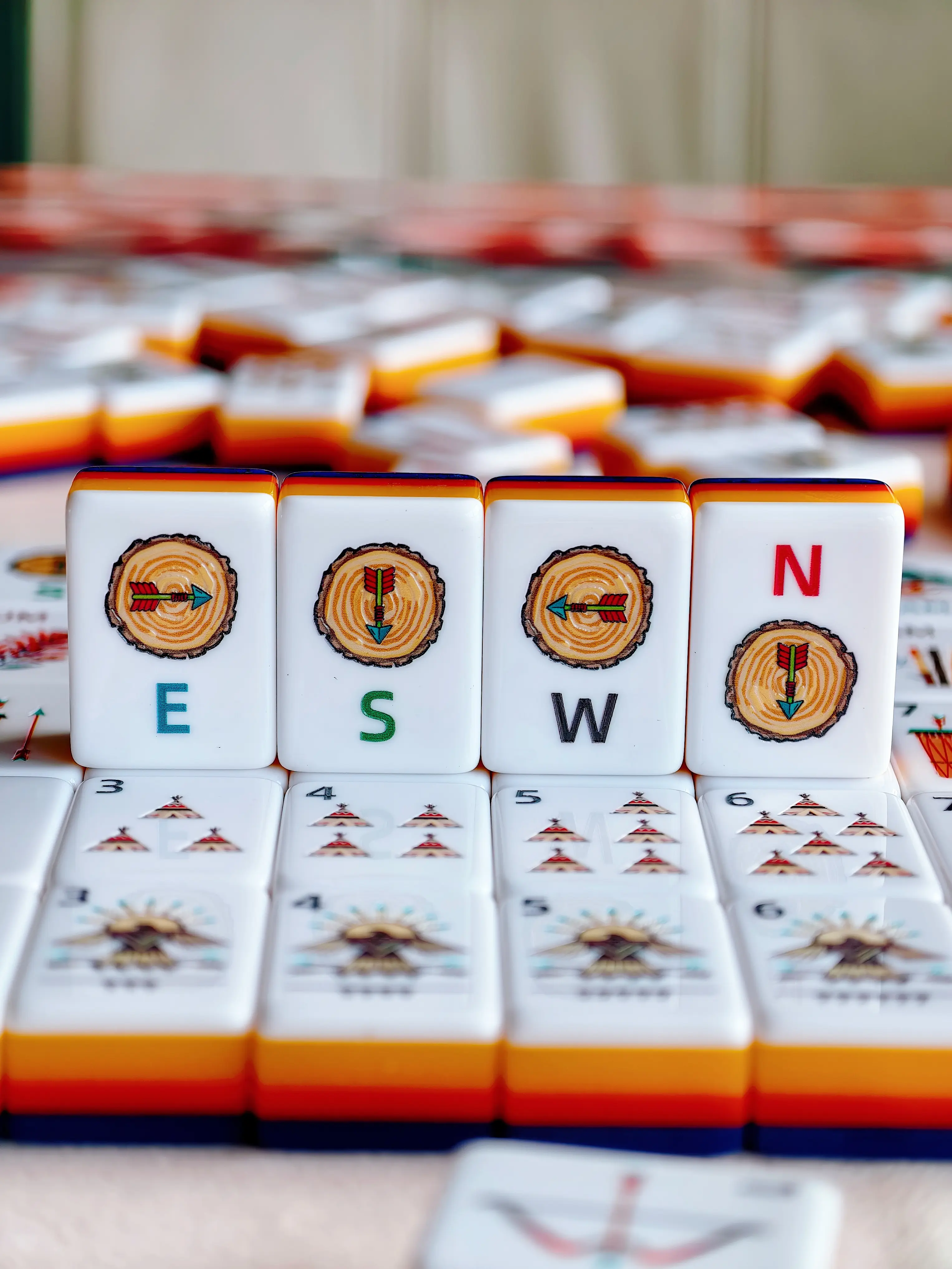
East, South, West, and North are the wind tiles. Red, green, and white dragons are the dragon tiles. The white dragon is also commonly called Soap in American Mahjong conversations.
Flowers and Jokers
Flower tiles are special tiles used by the rules and the current card. Jokers are a defining part of American play, but how they may be used depends on the hand and the table rules. Your rules reference should answer the situation in front of you rather than relying on memory.
Use the rack as a learning tool
A rack is not just storage for a hand. It helps a new player create visual order. Sort tiles by suit, keep special tiles together, and leave a small gap when you are not sure where a tile belongs. That gap gives you a place to make a decision without rebuilding the entire row.
Pushers can make the wall easier to move, but they do not replace learning the table sequence. Ask the group to show the movement slowly the first time. A beginner should understand why the pusher is being used, not feel that the accessory is another rule to memorize.
Keep a beginner session short
A first session does not need to end with a perfect score. A better goal is to complete the setup, identify the tile families, practice one Charleston, and finish a few turns without losing track of the order. Short rounds create more chances to ask questions.
If the group is teaching someone new, keep a visible list of terms: hand, wall, discard, Charleston, Joker, pung, kong, and Mahjong. Explain each word when it appears. This is more effective than giving a glossary before anyone has seen the action.
Common beginner mistakes
Buying the wrong version
An attractive set is not automatically an American Mahjong set. Confirm the intended rules and the Joker configuration first.
Choosing looks before readability
A beautiful color cannot compensate for faces that are hard to distinguish. Ask for clear images and real measurements.
Missing the accessory list
Check whether racks, pushers, dice, a mat, and a case are included. “Set” does not always mean “ready to play.”
Treating the annual card as optional
American groups often play against a current standard-hands card. Confirm which edition your group uses and whether the rules guide you are buying matches it.
Trying to learn strategy too early
The first useful skill is recognition and organization. Strategy becomes easier once the tiles stop looking like a wall of symbols.
A simple first-game plan
Use this sequence for a low-pressure evening:
- Open the case and identify every accessory.
- Sort the tiles into numbered suits and special tiles.
- Build the four racks and place the dice in the center.
- Explain the wall and the Charleston before dealing.
- Play one slow practice round with the rules card visible.
- Take a photo of the table arrangement for next time.
- Return every piece to the same place in the case.
This routine turns preparation into part of learning. It also gives the group a repeatable setup that feels familiar the next time they meet.
Start with a set you will want to use
For American Mahjong for beginners, the most useful set is one that removes small sources of confusion: readable faces, consistent tile sizing, enough Jokers, stable racks, and storage that does not scatter the pieces. Explore the JOKKOL Mahjong collection to compare sets and accessories, or visit the JOKKOL contact page with questions about configuration.
FAQ
What do I need to play American Mahjong at home?
You need an American Mahjong tile set with Jokers, four racks, a table, dice, and a current rules reference. Pushers, a mat, and a case make setup and storage easier.
Is American Mahjong hard to learn?
The vocabulary and annual card take practice, but the physical setup can be learned in one session. Start with tile recognition and table order before studying advanced strategy.
Can three people play American Mahjong?
Some groups use house rules for three-player play, but the standard game is built around four players. Ask your teacher or club which variation they support.
Should a beginner buy a colorful Mahjong set?
Yes, if the faces remain easy to read and the set matches the rules you will play. Color is a style choice that can make practice more inviting.
What is the most important accessory for a beginner?
Racks are usually the first essential accessory because they keep a hand visible and organized. A mat and pushers are useful additions for a complete table setup.