
American Mahjong Tiles Guide: Names, Symbols, and Easy Recognition
An American Mahjong tiles guide should do more than list names. It should help a new player look at a rack and know what belongs together. This visual, table-side reference explains Dots, Bams, Craks, winds, dragons, flowers, Jokers, and Soap, then shows how color and print contrast affect recognition. JOKKOL uses readable faces and coordinated accessories so players can spend more time learning patterns and less time squinting at a row of symbols.
The three numbered suits
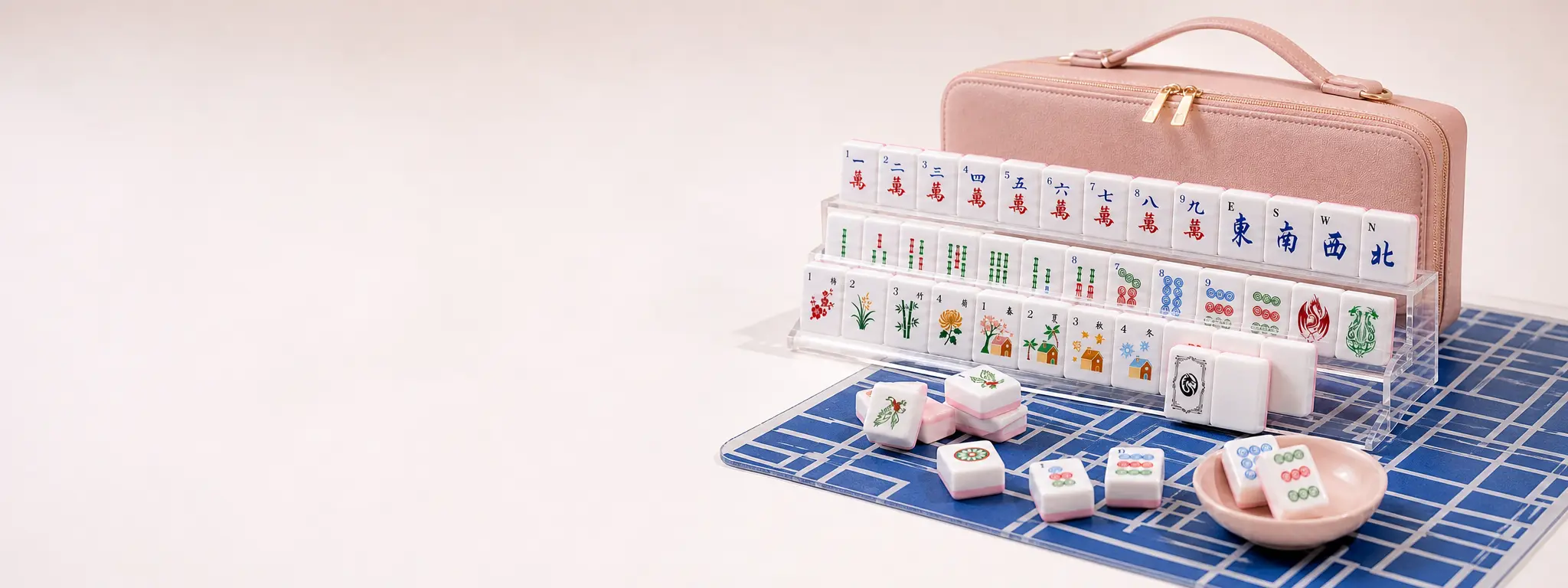
The numbered suits are the first family to learn. The names sound different, but the recognition trick is simple: look for the symbol repeated from one through nine.
| Suit | What you see | Memory cue |
|---|---|---|
| Dots | Round circles or coin-like marks | Think of a group of small wheels. |
| Bams | Bamboo-like bars or sticks | One Bam is often the most distinctive single symbol. |
| Craks | Chinese character-based marks | The red and blue character shapes repeat by number. |
Players do not need to memorize every design at once. Lay one suit in order, then compare the same number across all three suits. A rack with consistent tile height makes this exercise easier because the faces stay at one viewing angle.
Winds point to the four directions
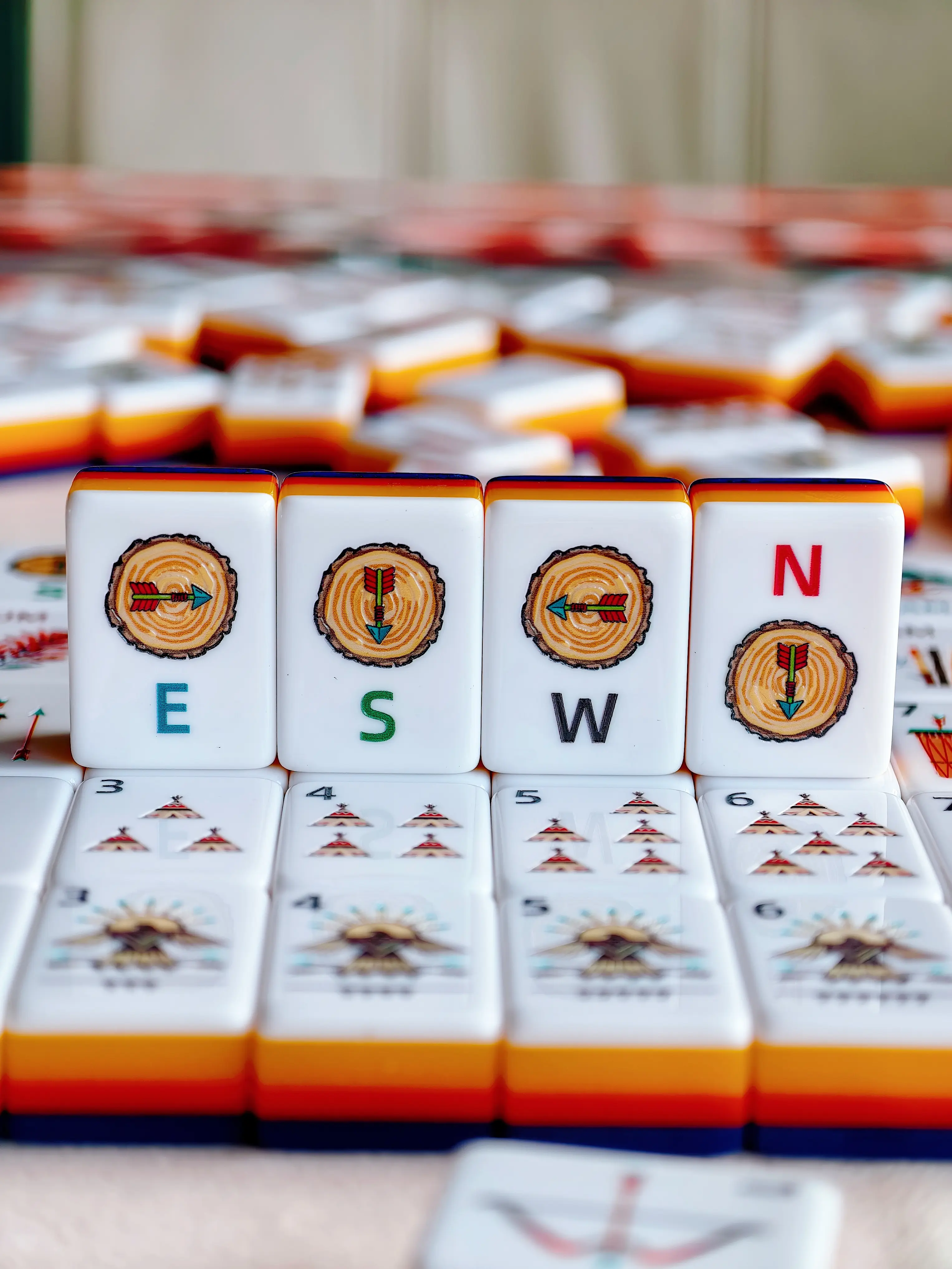
Winds are East, South, West, and North. They are not numbered suits, and they are often grouped together when a player sorts a new hand. Their characters can look similar at first, so read the English letter or reference mark if the set includes one. Keep the four winds in a separate row while practicing.
An American Mahjong tiles guide is most useful when it turns a name into an action: identify the wind, place it with the other winds, and check the current card before deciding whether it belongs in a hand.
Dragons carry color and meaning
The dragon tiles are Red, Green, and White. White is also commonly called Soap in American Mahjong conversations. The visual treatment varies by set, but the basic family stays the same. When a new player asks what Soap is, point to the white dragon and explain that the two names refer to the same special tile.
Dragons are easy to lose in a mixed rack because they are not part of Dots, Bams, or Craks. A quick sort into “numbered suits” and “special tiles” is often enough to make the hand readable.
Flowers are special tiles, not a fourth suit
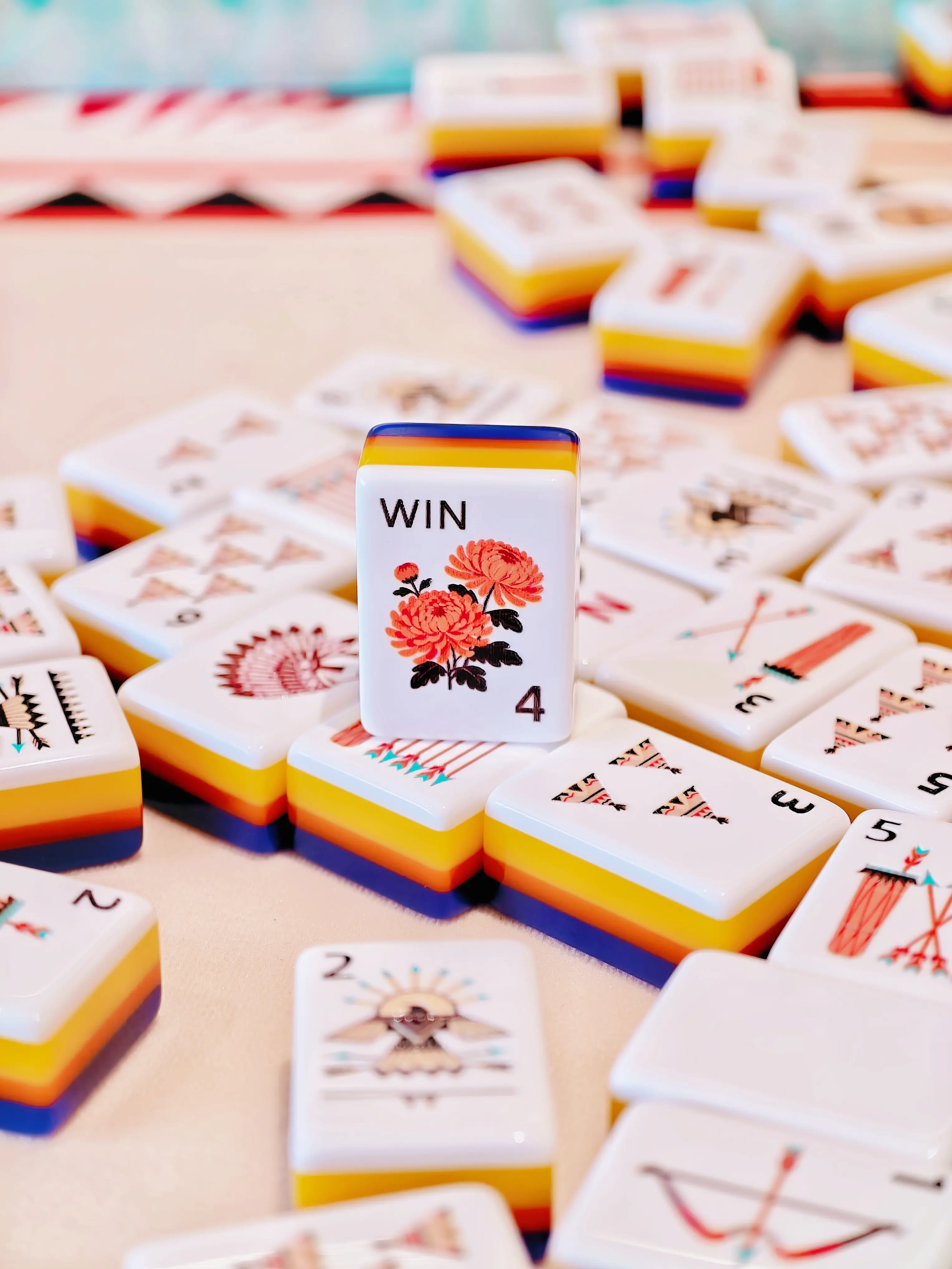
Flower tiles carry decorative artwork and are usually separated from the numbered suits, winds, and dragons. Their designs can vary considerably between sets. That is one reason a full-table photograph is more helpful than a single close-up: players can see how the flowers sit in the overall layout.
If you are replacing a lost flower, send the supplier a clear photograph of the set and ask about the matching design. Do not assume that a flower from another set will have the same artwork or finish.
Jokers belong to the American conversation
Jokers are a defining part of many American Mahjong sets. The tile is normally marked clearly so it cannot be mistaken for a suit tile. How a Joker may be used depends on the hand and the rules your group follows. The safest learning habit is to keep the rule card open and ask before exposing a Joker in a grouping.
The exact number of Jokers is a product detail, not something to guess from a photograph. When shopping, confirm the included count, the print, and whether replacement pieces can be requested later.
What are blank tiles for?
Some American Mahjong sets include blank tiles. Their purpose can depend on the group's house rules, replacement needs, or customization plan. Ask the seller or the rule source before assigning a blank tile a special meaning. Blank tiles should not be treated as automatic Jokers.
A simple recognition drill
Use this five-minute exercise before a first game:
- Place Dots, Bams, and Craks in three rows from one to nine.
- Put East, South, West, and North beneath the rows.
- Add Red, Green, White, flowers, and Jokers in a separate group.
- Name each family aloud while touching one tile.
- Mix only one family back into the rack and identify it again.
Repeat the drill with the tile faces standing in the rack, not only flat on the table. That is how most decisions will be made during a game.
Readability is part of tile quality
The same symbol can feel easy or difficult depending on the face design. Look for:
- Strong contrast between the mark and the tile body
- Centered characters and suit symbols
- Smooth edges that do not distract the hand
- Consistent dimensions across the set
- A Joker that is visibly different from ordinary tiles
JOKKOL's pink, blue, green, yellow, and starlight pink American Mahjong sets give players a style choice, but color should support recognition rather than replace it. A beautiful back does not help if the face is hard to read under the room's lighting.
Make your own table-side glossary
| Family | Common names | Where to place it while sorting |
|---|---|---|
| Numbered suits | Dots, Bams, Craks | Three adjacent suit rows |
| Winds | East, South, West, North | Special-tile row |
| Dragons | Red, Green, White/Soap | Special-tile row |
| Flowers | Flowers or flower tiles | Separate decorative group |
| Jokers | Joker tiles | Separate, easy-to-see group |
| Blanks | Blank tiles | Set aside until rules are confirmed |
This glossary is deliberately plain. Its job is to reduce the number of decisions a new player has to make at one time.
Explore the JOKKOL American Mahjong products for colorful sets and matching equipment. For a question about a symbol, replacement tile, or custom print, use the JOKKOL contact page.
FAQ
What are Dots, Bams, and Craks?
They are the three numbered suits in American Mahjong. Each suit runs through numbered tiles and uses a different visual symbol family.
What are Soap tiles?
Soap is a common American Mahjong name for the White Dragon tile.
How many Jokers are in American Mahjong?
The count depends on the set and rules configuration. Confirm it with the product listing or seller before buying.
Are flowers part of a suit?
Flowers are special tiles, not a numbered suit. Sort them separately while learning the tile families.
How can I read American Mahjong tiles faster?
Practice one family at a time, compare symbols across a full row, and repeat the exercise with tiles standing in a rack.