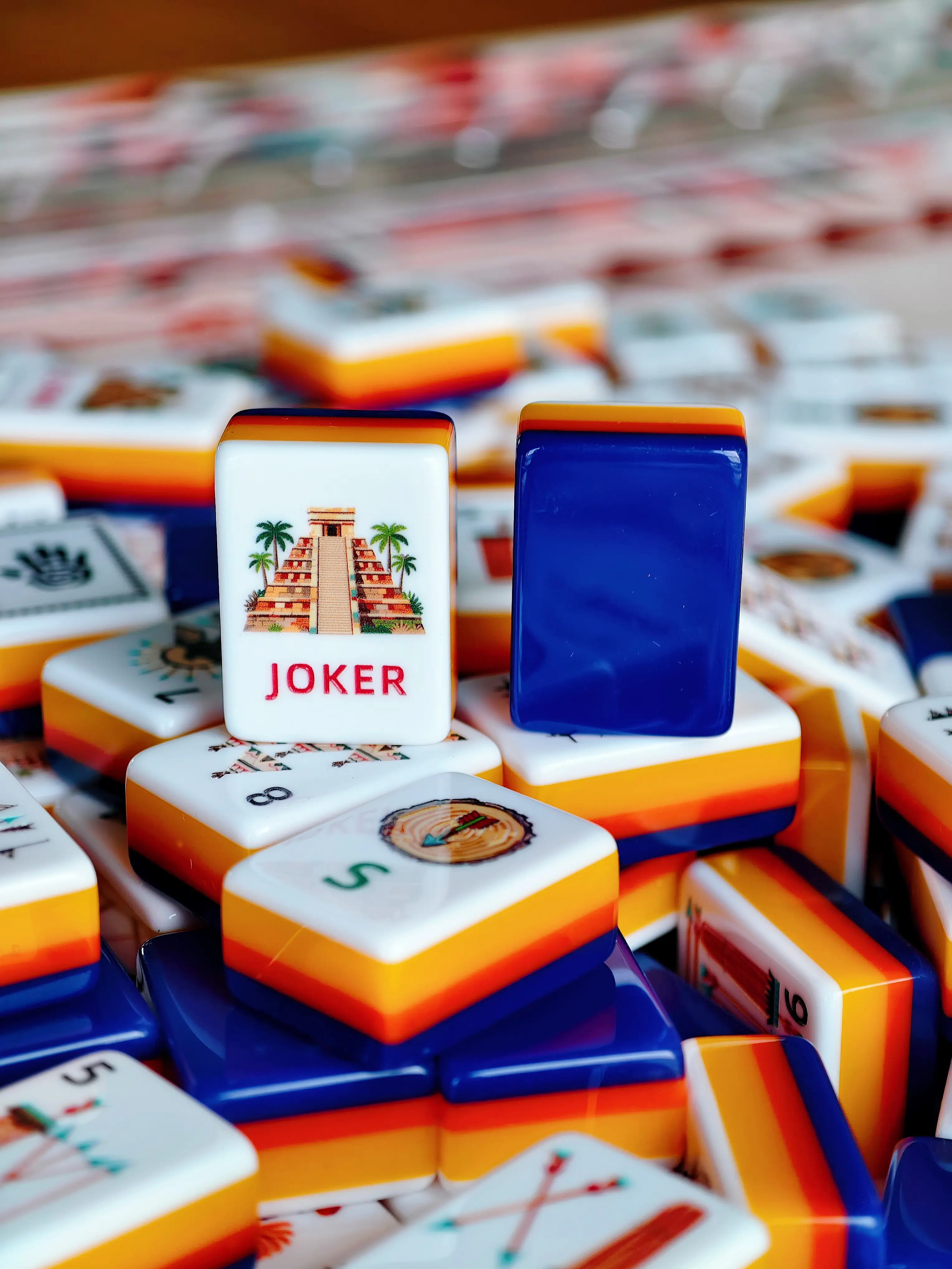

An American vs Chinese mahjong set comparison starts with the game your friends actually play, not the color of the case. For National Mah Jongg League-style American play, you need the right tile inventory, including eight Jokers, plus the current card used by your group. A Chinese set may share most of the familiar suits and honors but lack those Jokers. Conversely, an American set may supply the pieces for a Chinese variation once you remove the extras, provided its markings work for that game.
That is the short answer. The awkward part comes when a listing says only "complete mahjong set." Complete for whom? Before ordering, ask the host or teacher to name the rules. That one question can prevent a lovely purchase from becoming the wrong equipment.
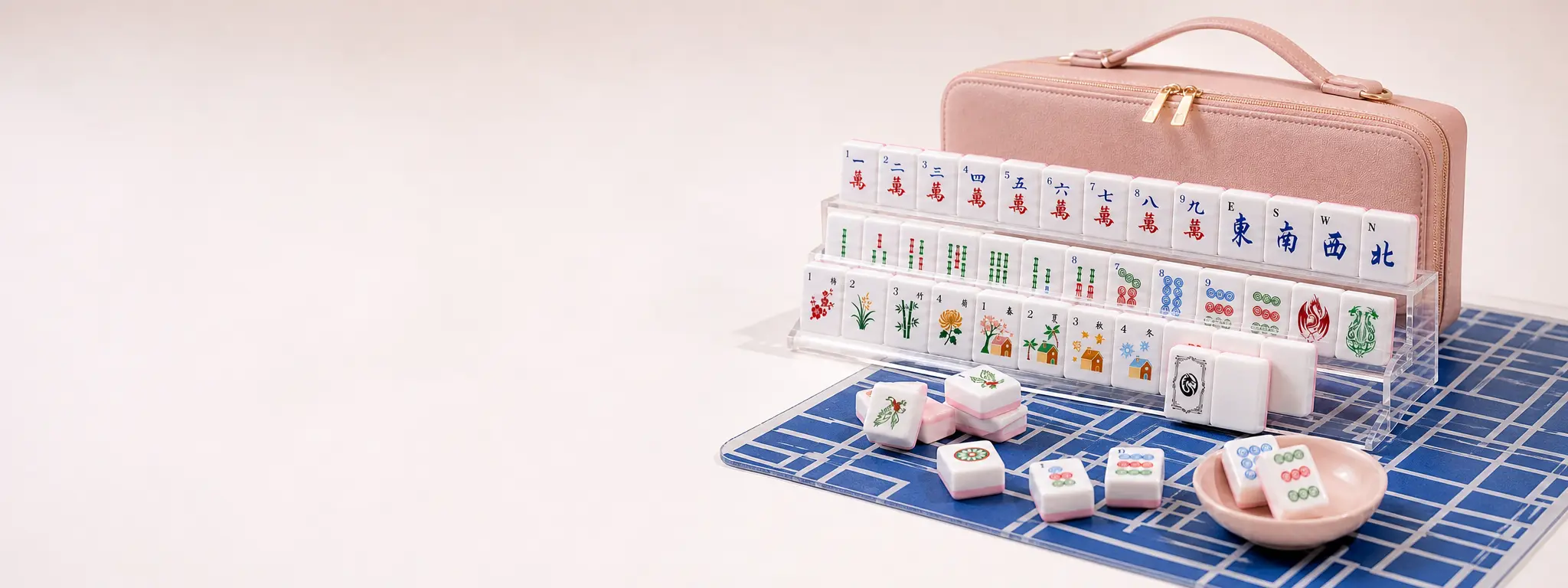
Display image: confirm the actual inventory and included accessories for the model you order.
First decide which game you are joining
"We play mahjong" is not quite enough information. Ask whether the group follows the National Mah Jongg League, another American card, or a named Chinese variation. If somebody mentions a yearly card, ask which one and which year. Do not assume that two American groups necessarily use the same hands.
The National Mah Jongg League's game overview identifies an annually revised hand card, additional Joker tiles, and the Charleston exchange as distinguishing features of its American game. These are gameplay differences, not premium accessories that a seller can simply add to any box.
If you are buying a gift, a discreet message to the recipient's regular playing partner is more useful than guessing from photographs. Ask, "Could you tell me the rules and card they use?" You do not need to reveal the gift or choose a color yet.
American vs Chinese mahjong set: the useful comparison
| Question at the shop | American, NMJL-style play | Chinese variations |
|---|---|---|
| What inventory should I check? | The usual playing inventory is 152 tiles, including eight Jokers. | Many retail sets have 144 tiles; the pieces used depend on the variation. |
| Is a yearly hand card involved? | Yes, when following the NMJL game. | Do not assume an American annual card applies. |
| Will the tile faces look familiar? | Dots, Bams, Craks, winds, dragons, flowers, and Jokers. | Many of the same suits and honors, with differences in design and use. |
| Are racks required in the box? | Check separately; a tile listing does not establish accessory contents. | Check the players' preference and the particular set. |
| Does a higher tile count settle compatibility? | No. The mix matters, not just the total. | No. Extra pieces may be spares or belong to another version. |
This table is a shopping comparison, not a substitute for either game's rules. "Chinese mahjong" covers several variations; it should not be treated as one universal instruction sheet. For a visual explanation of the shared tile families, see the Mahjong 4 Friends tile guide.
Why a 160-tile label does not answer everything
A box may contain spare flowers, additional Jokers, or blank replacement pieces. None of that tells you which tiles belong in the playing pool. Ask for an itemized inventory and keep the spares separate once you have counted the set.
The reverse problem is easier to miss: a total that looks right can hide the wrong distribution. One missing number tile and one extra flower cancel each other out on a calculator. They do not cancel each other out during a game. Count by type, preferably with a second person checking the layout.
Can you use a Chinese set for American mahjong?
Possibly, but do not order a bag of unrelated Jokers and assume the conversion is finished. The additional pieces must fit the existing tiles in size, back appearance, edge shape, and handling. If you can identify the added Jokers while every tile is face down, the mixed set is a poor choice for ordinary concealed play.
Lay the existing tiles out first. Check the suits, winds, dragons, and flowers against the inventory your rules require. Then investigate matching Jokers. A supplier's confirmation should cover the particular model or production series, not merely say that the pieces are "standard size."
An American vs Chinese mahjong set decision sometimes ends with keeping the older set intact. That is sensible when the original has sentimental value, the back design is unusual, or replacement parts are uncertain. Buying a separate American set may be simpler than altering a family set and still having mismatched tiles afterward.
Do not relabel a white dragon because it looks blank. White dragons can be plain or framed, depending on the artwork. If a tile's identity is uncertain, compare it with the other matching pieces before treating it as a spare.
Can an American set work for a Chinese game?
Often the question is whether the necessary tiles are present and recognizable. Remove the American-only extras as directed by the chosen rules, then check the remaining inventory. Confirm flower and season requirements with someone who knows that variation.
Decorative artwork deserves a closer look here. A novelty one-Bam, a stylized dragon, or unusual flower pictures may be perfectly recognizable to its owner but unfamiliar to another group. Put a few difficult faces beside their names before the first session. This is a practical introduction, not permission to change their identities during play.
If you plan to move between games, keep a separate inventory card for each ruleset inside the case. Label a small compartment for the pieces removed from play. Otherwise, it is surprisingly easy to finish a Chinese session and forget to return the Jokers before the next American game.
Three buying situations, three different answers
Your first invitation is next month
Borrow the host's set for the first lesson when possible. Learn what the group uses and which faces you can read comfortably. If you want your own set afterward, you will be comparing real preferences instead of trying to buy every accessory at once.
You have inherited a set with no label
Photograph the full face-up inventory, the backs, and any markings on the case. Count first; identify the game second. An old case or a particular color does not reliably establish the inventory inside it. Avoid making permanent changes until you know what you have.
Your household wants to play two versions
Start with an inventory comparison. If one box genuinely covers both versions, write down which pieces leave and rejoin the pool. If the markings cause confusion, two clearly separated sets may be easier to live with. Saving shelf space is not much help when each session begins with a disagreement about the tiles.
What to ask JOKKOL before choosing a model
JOKKOL lists pink-back American tiles with Jokers and blue-back American tiles with Jokers. Their names give you a starting point, but do not infer the exact quantity, dimensions, or accessories from a staged photograph.
| Send this detail | Ask for this confirmation |
|---|---|
| The rules and card your group uses | The complete playing inventory, including the Joker count |
| The model or product link you prefer | Tile height, width, thickness, and face-layout photographs |
| Existing racks or a case you want to keep | Dimensions needed to check physical fit |
| A requirement to play two versions | Which pieces are included and which would be set aside |
| A gift deadline | Current availability and delivery information for your destination |
Read about JOKKOL for company background, then send the model and ruleset to the team. A written inventory confirmation is more useful than asking only whether a set is suitable for beginners.
Questions shoppers ask
Is American mahjong just Chinese mahjong with Jokers?
No. The NMJL game also uses a changing hand card and its own procedures. Adding Jokers does not teach those rules or automatically make a mixed set suitable. Treat equipment compatibility and learning the game as two separate tasks.
Is every Chinese mahjong set a 144-tile set?
Do not assume that from the label. Retail inventories and playing variations differ. Request the breakdown, especially for an older, secondhand, or multipurpose set. A count by tile family is more informative than a total printed on a box.
Can I use an old American rule card?
Only when everyone deliberately agrees to play that edition. For a group following the current NMJL card, bring the current card. The physical tiles and the hand card are separate purchases unless the seller explicitly includes both.
Should I buy a different color for each game?
You can, but color is an organizational choice, not a rules requirement. Two labeled cases or inventory sheets may do the same job. Choose the arrangement that keeps spare and playing tiles from becoming mixed.
What is the safest choice when I cannot ask the recipient?
Pause before buying a rules-specific set. Find out from a playing partner, ask whether an exchange is possible, or choose a gift only after confirming compatibility. A surprise is less important than a set the recipient can actually use.
The best American vs Chinese mahjong set choice is the one that fits a named game, has a verified inventory, and feels clear to its players. Once those points are settled, the fun part of choosing artwork and color can begin.