
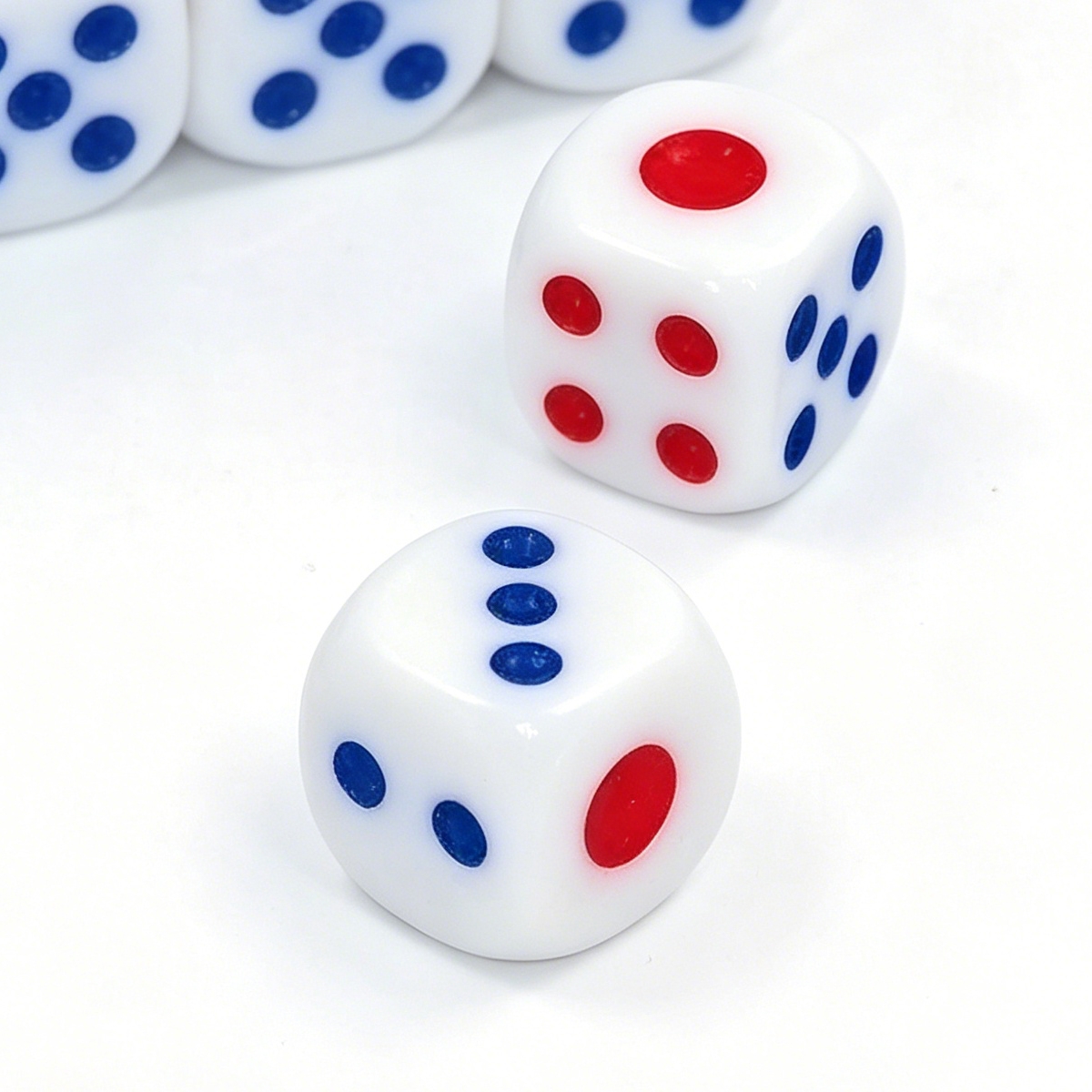

White Mahjong Dice with Red and Blue Pips Overview
White Mahjong Dice with Red and Blue Pips are designed to solve a simple but important problem in tabletop play: players need clear, easy-to-read dice that roll reliably and stand out on the table. The bright white body creates strong contrast, while the red and blue pip markings make face values easier to identify at a glance. That combination is useful in fast-paced games, classroom counting activities, and any setting where quick visual recognition matters.
This style of gaming dice fits a wide range of use cases, from casual board games to promotional game sets and educational activities. Based on the visible product details, these are standard cube-shaped six-sided dice with rounded edges, a smooth polished surface, and color-marked pips that improve visibility compared with plain black markings. The overall design is practical, familiar, and easy to integrate into many gaming formats.
Product Structure and Visual Features
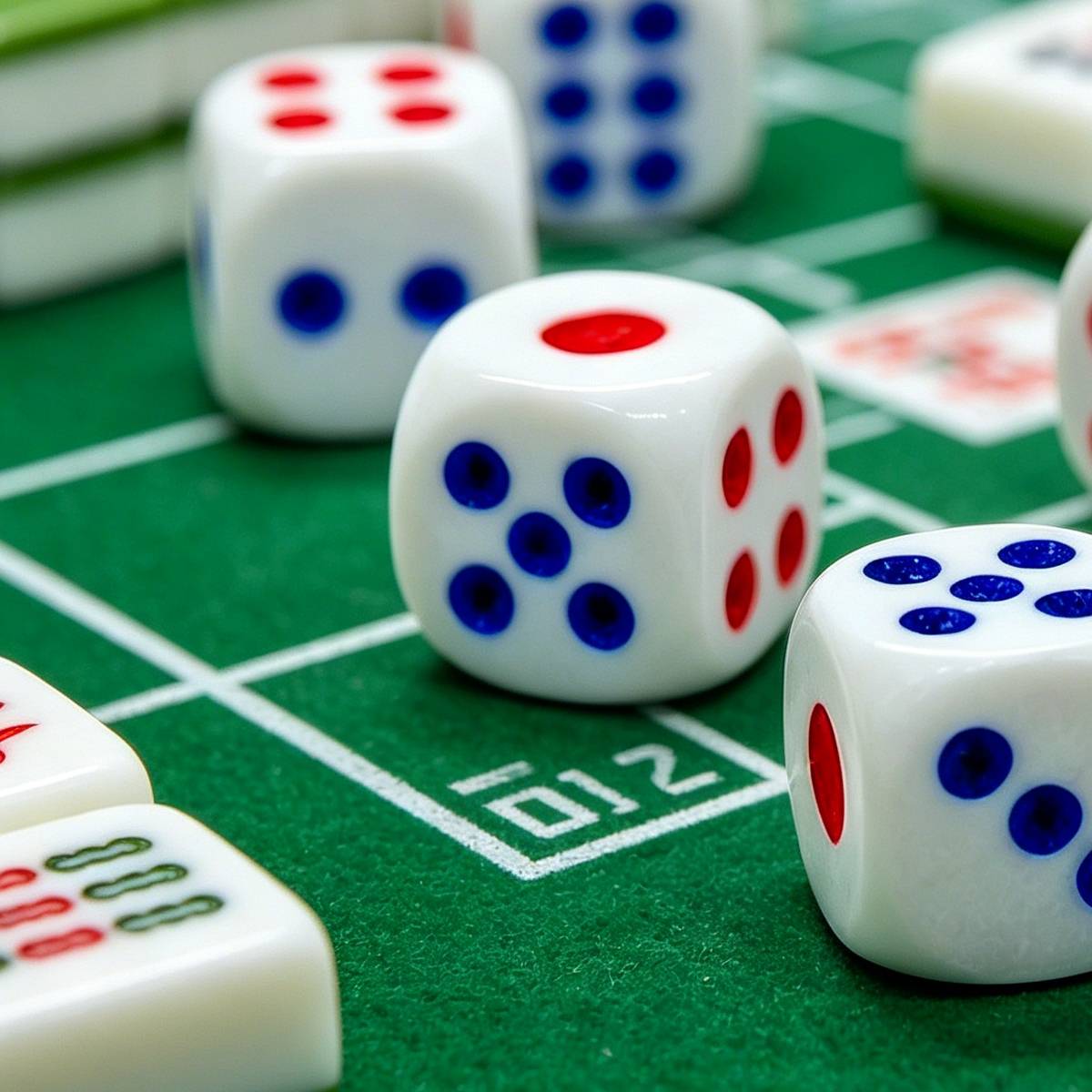
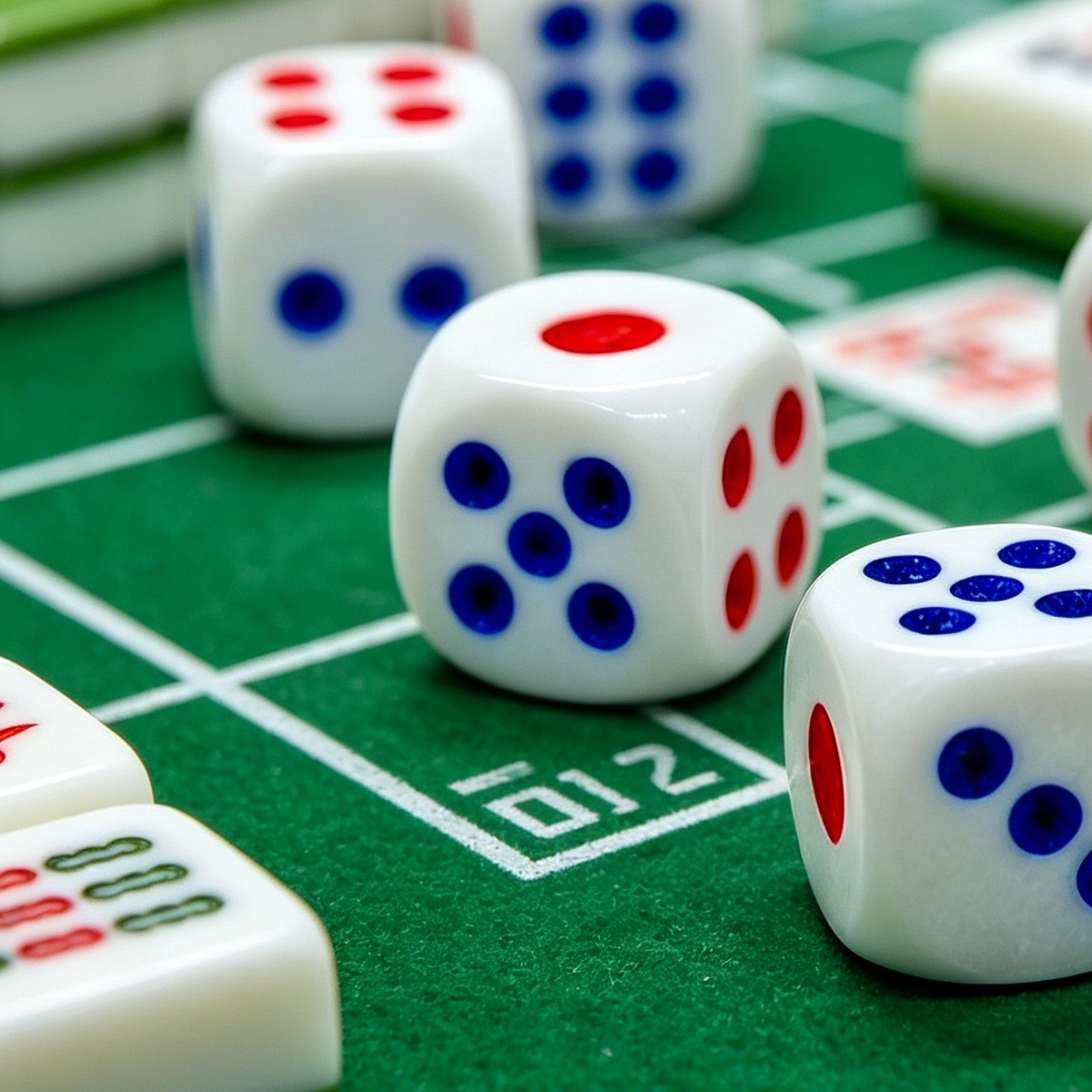
The dice follow the standard six-face geometry used in most tabletop gaming applications. Each unit is cube-shaped, with softened corners and rounded edges that help create a more comfortable hand feel and support a smoother roll. The surface appears glossy and uniform, which gives the dice a clean look and helps them stand out on darker game boards, felt surfaces, or wood tables.
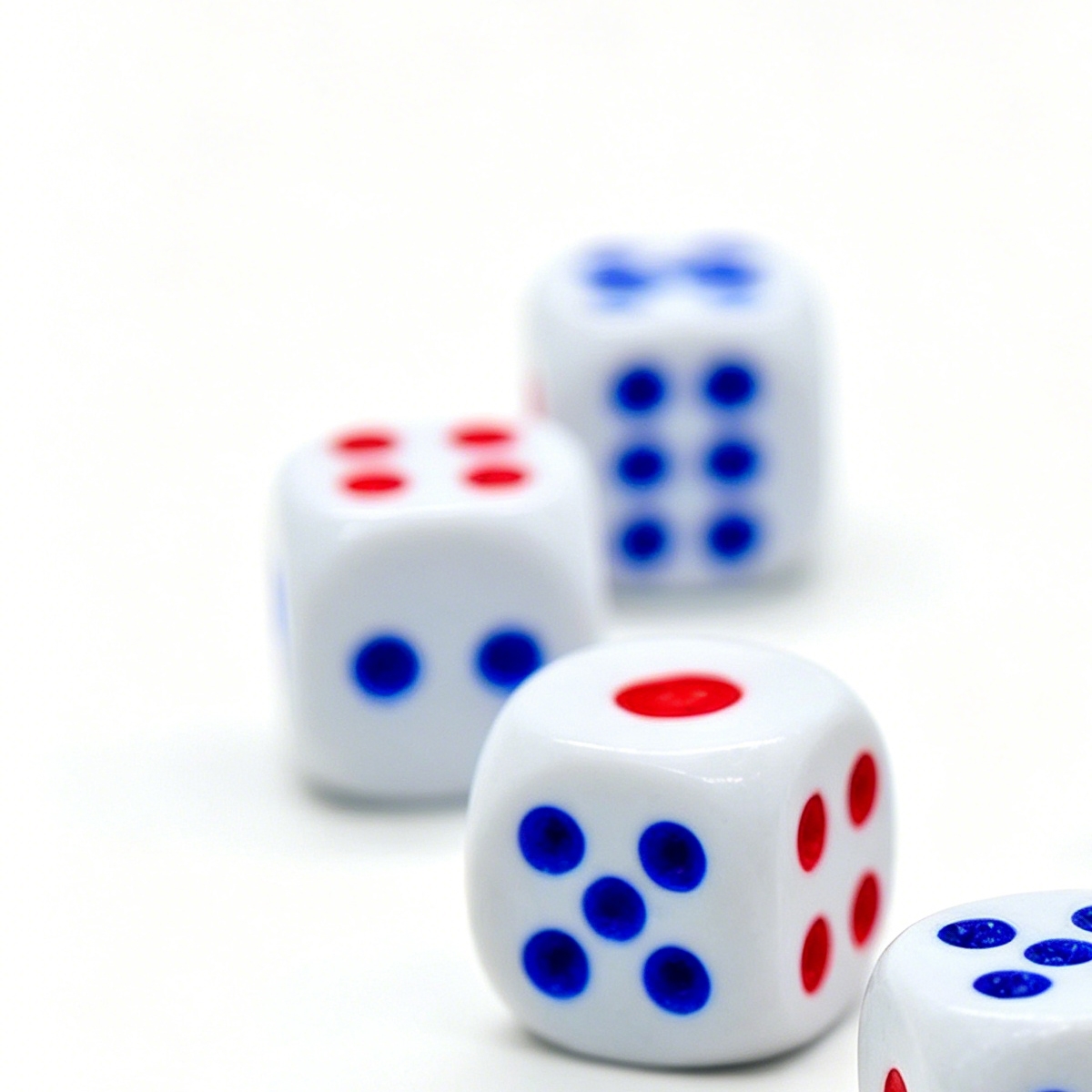
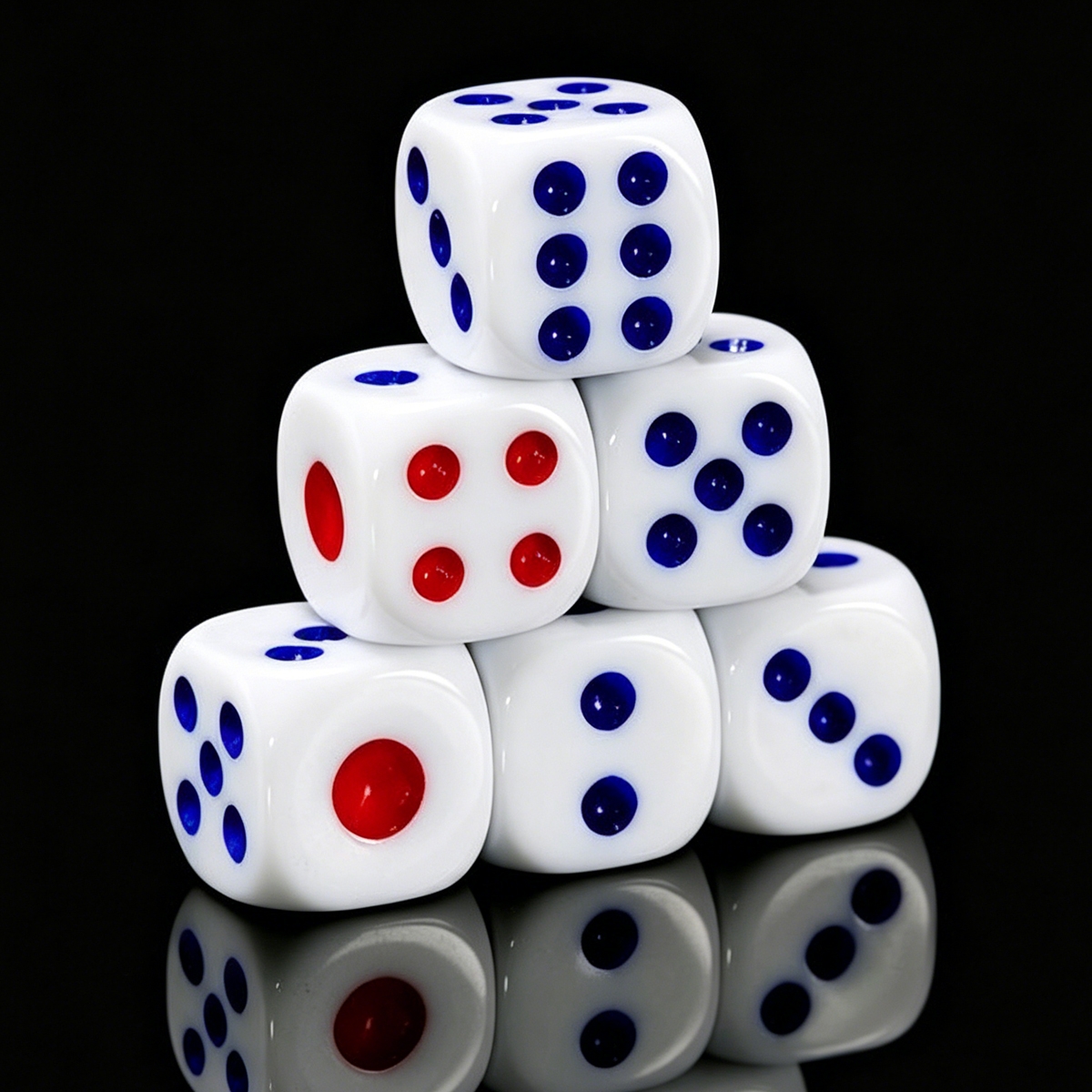
The visible face markings use two colors, red and blue, rather than a single neutral tone. That color contrast can be useful for players who need to identify values quickly, or for games that rely on visual differentiation between sets. Because the image shows individual dice only, without packaging or accessory items, the product should be viewed as the dice component itself rather than a complete game kit.
Key Specifications and Capabilities
From the visible information, the most reliable product characteristics are straightforward: white body color, red and blue pips, smooth glossy finish, and standard six-sided dice form. These features support general gaming use where dependable random number generation is the main requirement. The dice are suitable for rolling, scoring, selecting turns, and other basic game actions that depend on a fair and recognizable die face.
While the exact size, weight, and material composition are not provided, the product appears to be made from a molded plastic or resin-like material. That type of construction is commonly used for gaming dice because it supports repeatable shape consistency and a polished finish. Buyers should confirm exact dimensions and batch quantity before placing orders for standardized game sets or custom projects.
Visible product advantages
Clear face visibility, standard dice geometry, rounded corners, and a clean white base all contribute to ease of use. In practical terms, these attributes make the dice suitable for quick play sessions, classroom use, and promotional events where a neat presentation matters as much as function. The repeated dice shown in the image also suggest a set-based format, though the exact quantity is not specified.
Materials and Finish Options
The image suggests a white plastic or resin body with a smooth, glossy finish. That finish is valuable for both appearance and handling. A polished surface can make the dice feel more refined in the hand and easier to wipe clean after frequent use. For high-traffic applications such as game lounges, event booths, or educational classrooms, that is a practical benefit.
The colored pips appear to be red and blue, which can be created in several ways during manufacturing, such as molded-in coloring, painted marking, or filled recesses. Because the exact process is not visible, buyers should treat the marking method as unconfirmed. If a project requires a specific look, it is worth asking whether the pips are color-filled, printed, or inlaid, since that can affect wear resistance and visual consistency over time.
Manufacturing Process
These dice are likely produced through a molded manufacturing process, which is standard for large-volume gaming dice. Injection molding is commonly used for plastic dice, while cast resin methods are also used in some product lines. After forming the cube, the faces are finished to achieve the smooth exterior seen in the image. The pip markings are then added through drilling and filling, surface coloring, or molded coloration, depending on the production method.
Because only visual information is available, the exact process cannot be confirmed. Still, the visible consistency of shape and finish suggests a controlled manufacturing workflow rather than a handmade or irregular product. That matters for buyers who want uniform dice behavior across a larger set.
Application Scenarios
White Mahjong Dice with Red and Blue Pips can be used in a broad range of settings. In tabletop gaming, they function as standard randomizers for movement, damage calculation, point scoring, and turn selection. In educational environments, they can support counting, number recognition, addition exercises, and simple probability lessons. Their strong color contrast makes them especially helpful for younger learners or anyone who benefits from more readable markings.
They can also work well in promotional games, event giveaways, and custom branded game sets. The clean white base provides a neutral visual platform that pairs well with different table themes and game formats. For betting-style or casino-inspired casual games, the dice offer a familiar look while the red and blue pips add a distinct visual identity.
Quality Control Considerations
For gaming dice, quality control usually centers on geometry, surface finish, marking clarity, and consistency within a batch. Buyers should look for dice that appear evenly shaped, with no visible warping, rough edges, or incomplete pip details. The image suggests a polished and uniform appearance, which is a positive sign, but a final procurement decision should still include sample checking when the dice will be used in repeat-play environments.
Other practical checks include how the dice sit on a flat surface, whether the markings remain clear under normal lighting, and whether the finish feels smooth without visible defects. If the product is intended for repeated handling, buyers may also want to confirm durability of the color markings and surface resistance to wear.
Customization Guidance for Buyers
For OEM or private-label projects, the most common customization points for this type of dice include body color, pip color, size, finish level, logo application, and packaging format. A buyer might request a different base color for brand matching, or change the pip colors to improve contrast with a specific game theme. If the dice are being used for an educational product, the markings may also need to align with curriculum or age-group requirements.
When discussing customization, it helps to define the intended use first. A classroom set may prioritize readability and durability, while a promotional item may focus on visual appeal and branding. If the dice must match an existing product line, ask for samples before confirming a full run. This reduces risk around color tone, pip size, and surface gloss.
What Buyers Should Confirm Before Ordering
Several details are not visible in the image and should be confirmed during procurement. These include exact die dimensions, material specification, quantity per set, marking method, packaging, and any compliance requirements tied to the target market. If the dice will be used in professional gaming environments, buyers should also verify whether the product meets the relevant standards for their application, since no regulatory certification is shown here.
It is also wise to confirm how the red and blue pips are produced, because that affects both appearance and long-term durability. For high-use applications, a more durable marking method may be preferable. For retail presentation, consistent surface gloss and color matching can be equally important.
Why This Dice Format Works Well
The appeal of this product is its balance of clarity and versatility. The white body creates a clean background, the red and blue pips add visual distinction, and the standard cube shape keeps the dice compatible with a wide range of games. There is nothing complicated here, which is often exactly what buyers want from a core gaming component.
Whether you are sourcing dice for a board game line, a classroom activity kit, a promotional event, or a general tabletop supply order, this format offers a practical starting point. It is simple to use, easy to understand, and visually distinctive without being overly specialized.
Request a Quote or Sample
If you are evaluating White Mahjong Dice with Red and Blue Pips for your next project, request a sample or quotation with your required size, quantity, and customization needs. Sharing the intended use helps suppliers recommend the right material, finish, and marking method for your application. For OEM sourcing, clear specifications at the start make the ordering process faster and reduce the chance of mismatch later.
Send your target dimensions, preferred packaging, and branding requirements to begin a practical discussion about production options. A well-defined dice specification is the fastest way to move from concept to repeatable supply.