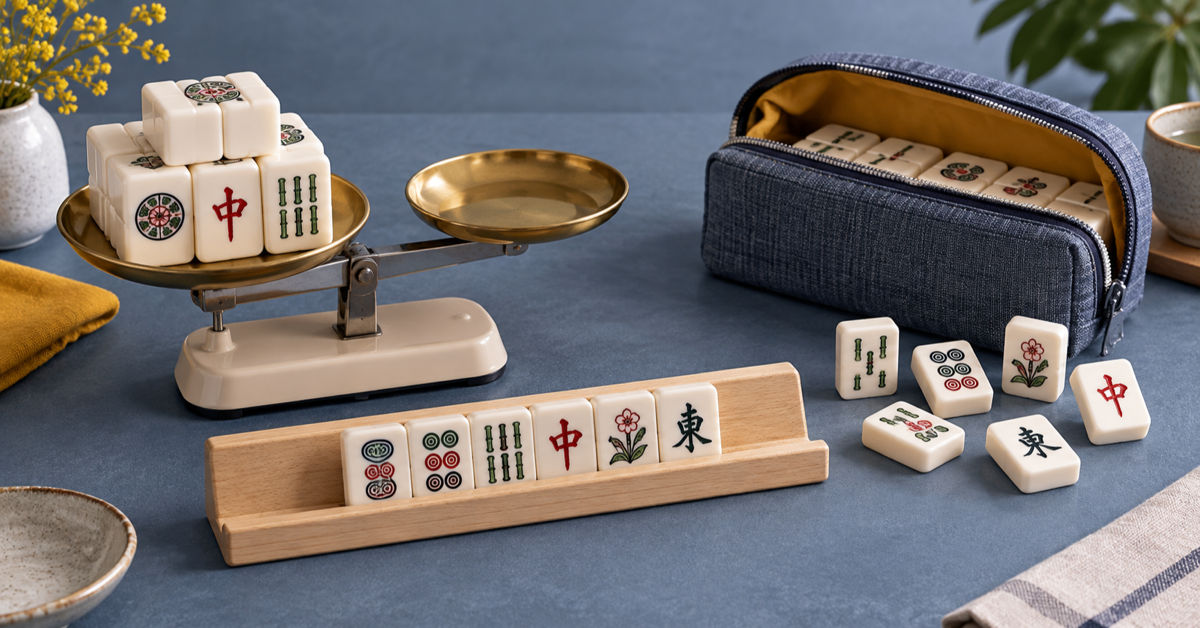

American Mahjong Accessories: A Simple System for Play, Storage, and Travel
The best American Mahjong accessories are the ones that remove a small problem from every game night. Dice should be easy to find, racks should fit the tiles, a mat should stay useful on the table, and the case should keep everything together between sessions. This guide maps the accessory system around a JOKKOL set so players can buy one useful piece at a time instead of collecting mismatched items.
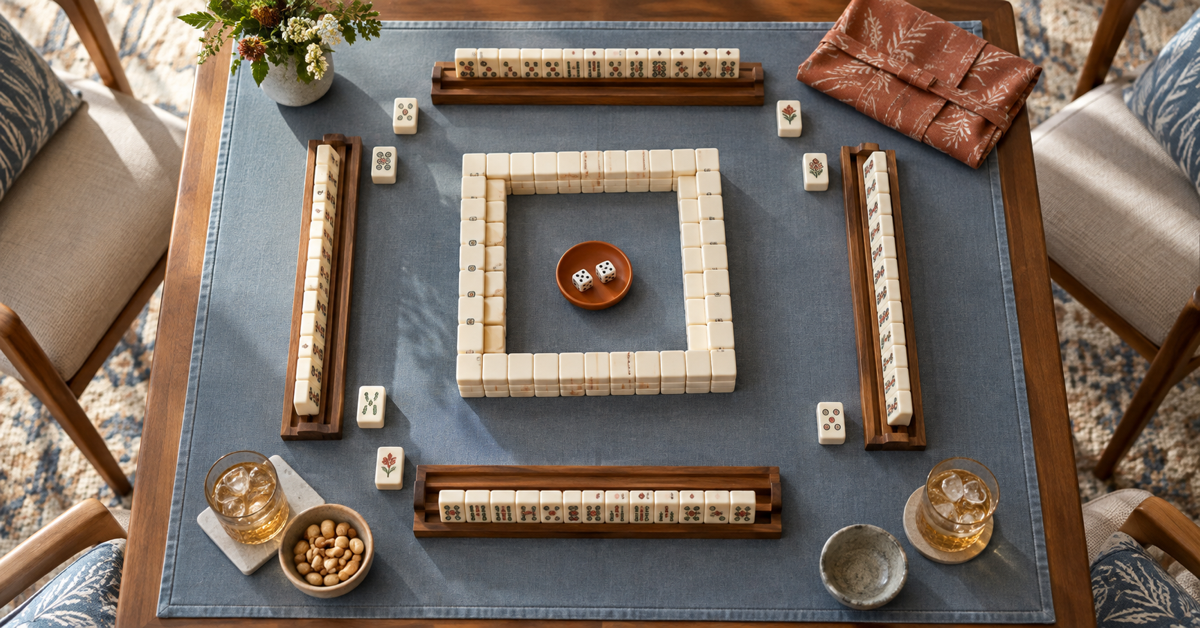
Start with the four-player table
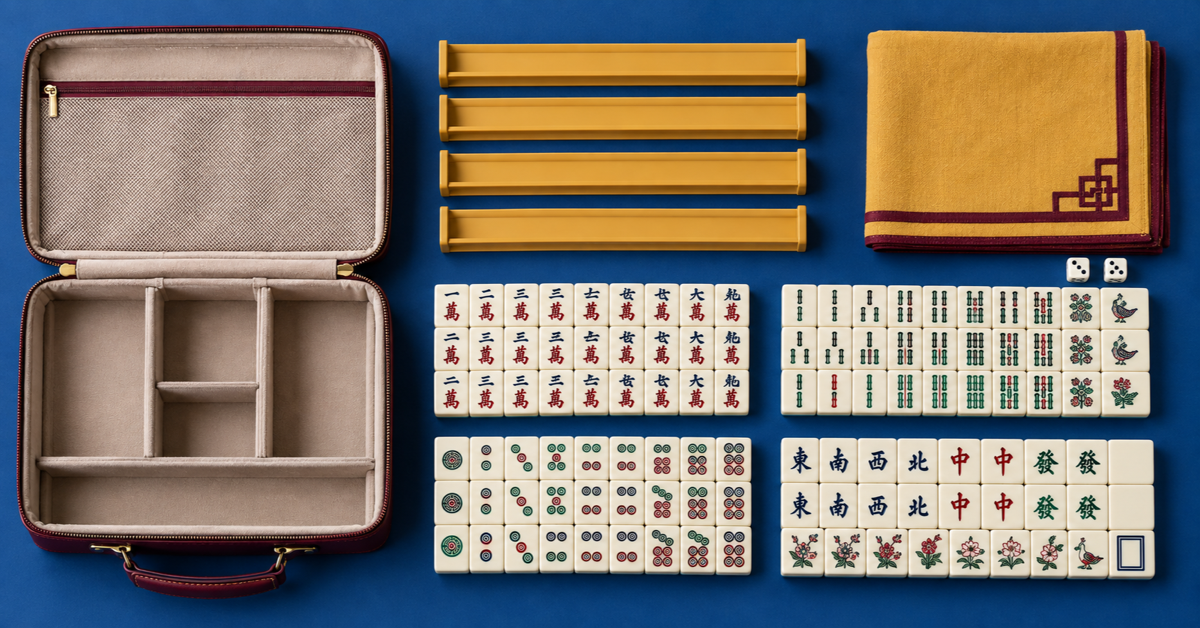
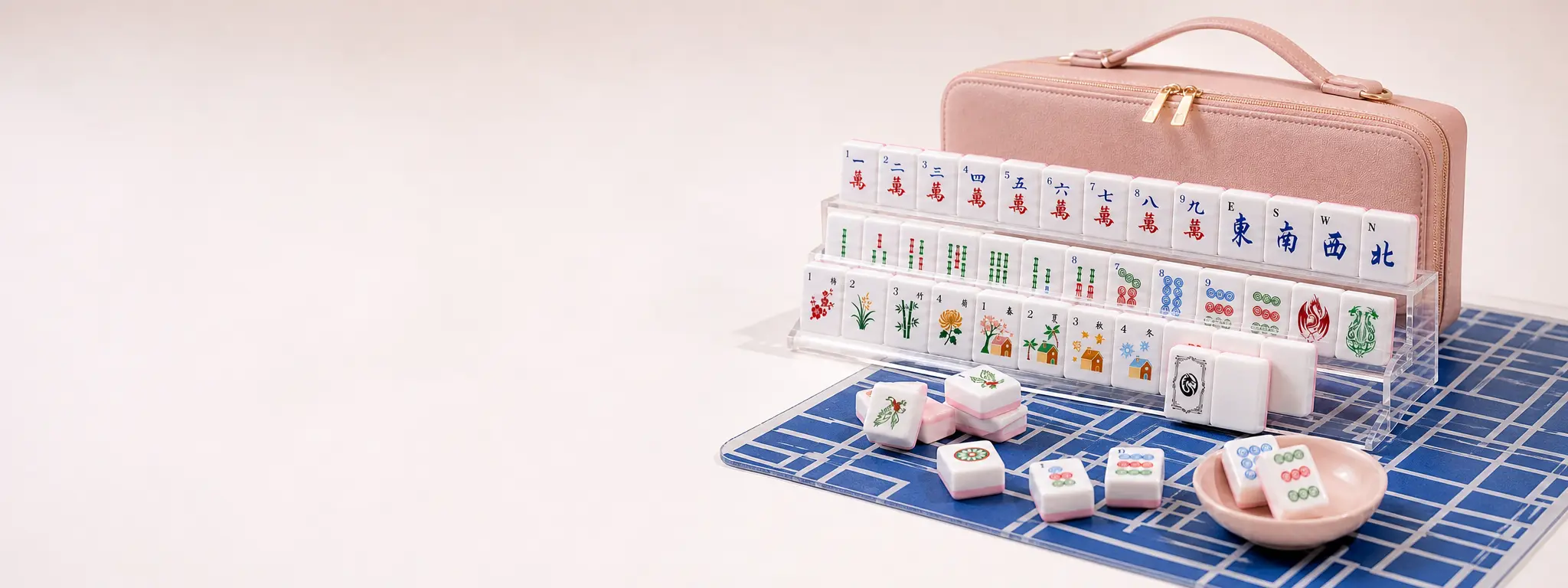
Before buying anything, list what your group already owns. A complete setup may include tiles with Jokers, four racks, pushers, dice, a mat, a rule reference, and a case. “Complete” can mean different things in different listings, so compare the actual inclusion list.
Use this quick inventory:
| Accessory | What it solves | What to confirm |
|---|---|---|
| Racks | Keeps each hand upright and private | Channel width and tile fit |
| Pushers | Moves the wall in a controlled way | Height, grip, and matching set |
| Dice | Supports the opening procedure | Quantity and readable markings |
| Mat | Defines the area and cushions the table | Dimensions, surface, and care |
| Rulebook | Gives a new group a shared reference | Version and scope |
| Case | Protects and transports the set | Compartments and packed size |
This inventory keeps a small missing accessory from becoming a last-minute purchase.
Dice are small but easy to lose
Mahjong dice are used during the opening procedure your group follows. Keep them in a small compartment or pouch instead of loose beside the tiles. When ordering replacement dice, check their markings and quantity; do not assume any board-game dice will feel or look right with your set.
JOKKOL offers Mahjong dice as a separate accessory, which can be useful for a club, teacher, or player who wants a spare set. Store the dice away from tile faces so they do not rub against the printed surfaces during travel.
Cases protect the whole system
A carrying case is more than packaging. It determines whether the tiles, racks, pushers, dice, mat, and rule reference return to the same place after play. Look for compartments or dividers that prevent loose pieces from moving across the tile faces.
For a travel case, compare the packed dimensions with the shelf, car space, or club cupboard where it will live. A case that is difficult to lift or close will eventually be left open, which defeats the purpose of organized storage.
Replacements need a compatibility check
A lost tile is not always interchangeable with a random replacement. Back color, face artwork, dimensions, and finish can vary between sets. The same is true for racks and pushers: a channel made for a different tile depth may hold too tightly or let the row lean.
Before requesting a replacement, send the supplier:
- A clear photo of the tile or accessory
- The set name or purchase reference, if available
- The tile height, width, and depth
- The back color and visible print details
- Your delivery country and quantity needed
This information gives the supplier a better chance of matching the original piece.
Protect tiles during cleaning
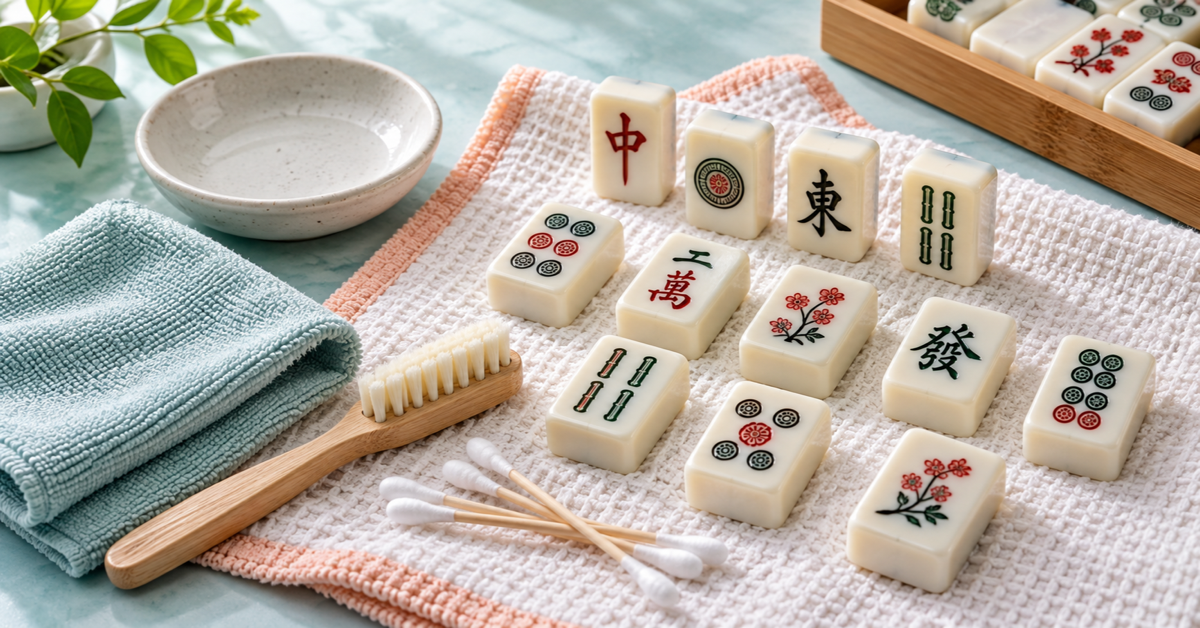
Start with a soft, dry cloth. If the supplier provides a cleaner recommendation, follow it. Avoid abrasive pads, strong solvents, and loose metal objects near printed faces. Food and drinks are part of many game nights, so wipe residue promptly rather than letting it dry on a glossy surface.
Do not pack damp accessories in the case. Let a mat, rack, or pusher dry fully, then return each item to its compartment. That simple pause helps protect both the finish and the case lining.
Build a compact travel routine
When a set moves between homes, use the same five-step reset:
- Count the tiles and Jokers.
- Put racks and pushers in their designated slots.
- Return dice and the rule reference to the small compartments.
- Roll or fold the mat according to its care instructions.
- Close the case and check the handle before lifting.
Take a photograph of the open case once the layout is correct. A new host or club volunteer can use the photo to repack the set without guessing.
Choose add-ons around your actual use
There is no need to buy every accessory at once. The most useful American Mahjong accessories are the ones that fit your actual routine. A beginner may start with a complete set and add a mat after a few sessions. A weekly group may need replacement racks or an extra rulebook. A host may value a case that keeps the table ready to carry. A distributor or private-label buyer may need a written specification sheet before ordering in volume.
JOKKOL's About page describes OEM and ODM support, including custom logo printing, packaging, private-label products, and exclusive designs. For custom work, confirm the approved artwork, dimensions, quantities, and inspection points in writing. For home play, browse the JOKKOL Mahjong products or contact JOKKOL about matching accessories.
FAQ
What accessories do I need for American Mahjong?
Start with a compatible tile set, four racks, dice, and a current rule reference. Pushers, a mat, and a carrying case make setup and storage easier.
How many dice do you need for American Mahjong?
Use the quantity required by the rules your group follows and confirm the product listing. Keep the dice with the set so they are not lost between sessions.
How should I store American Mahjong tiles?
Keep tiles in a case or divided box, separate from loose metal pieces and damp accessories. Return every component to the same compartment after play.
Can I buy replacement Mahjong tiles?
Often, yes, but compatibility matters. Send a photo, measurements, back color, and set reference before ordering a replacement.
What is the most useful accessory for a new player?
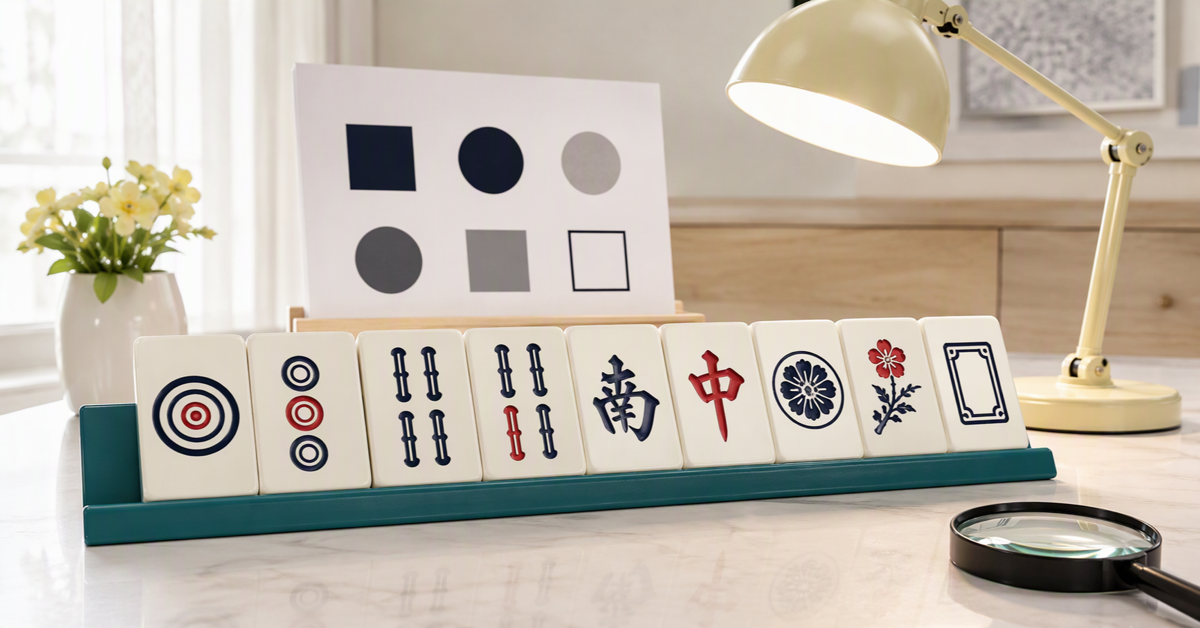
Racks are usually the first helpful add-on because they keep a hand upright, private, and easier to sort. A mat and pushers can follow once the group has a regular table routine.