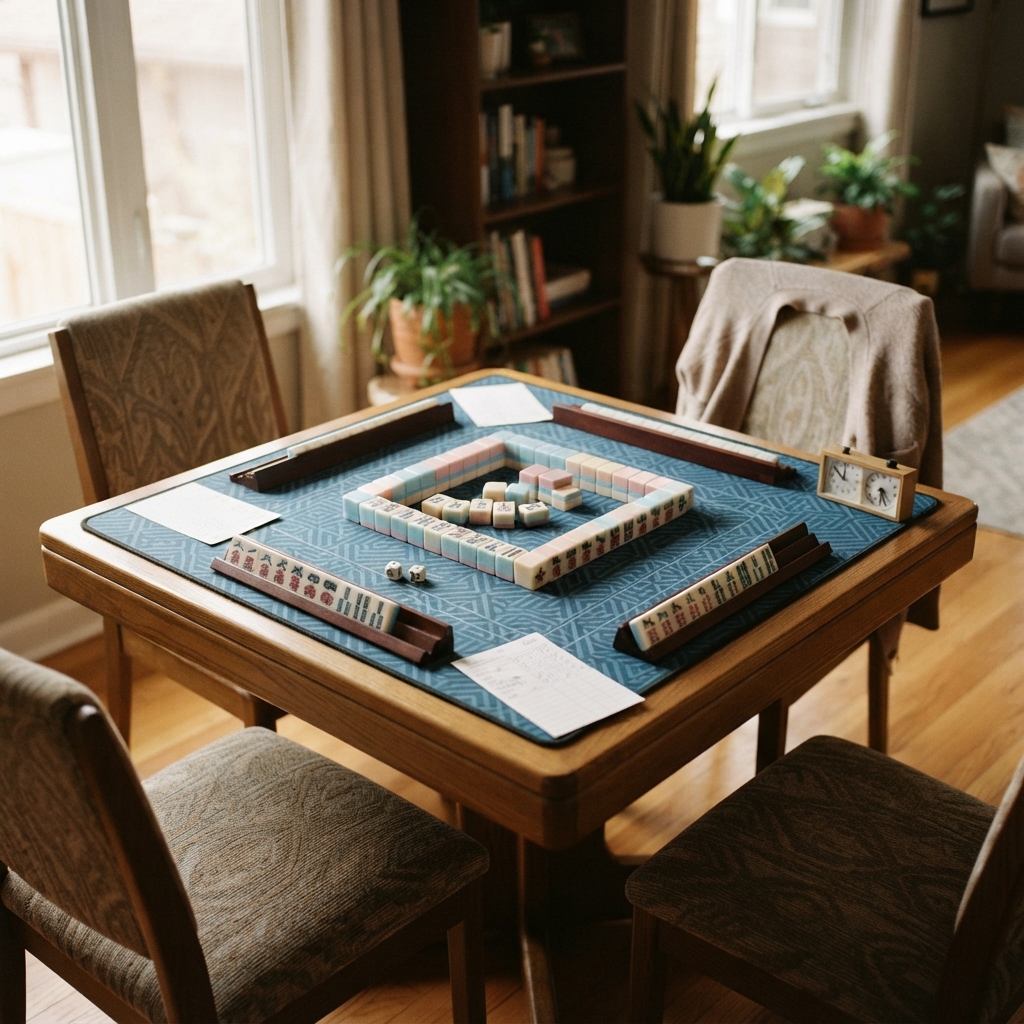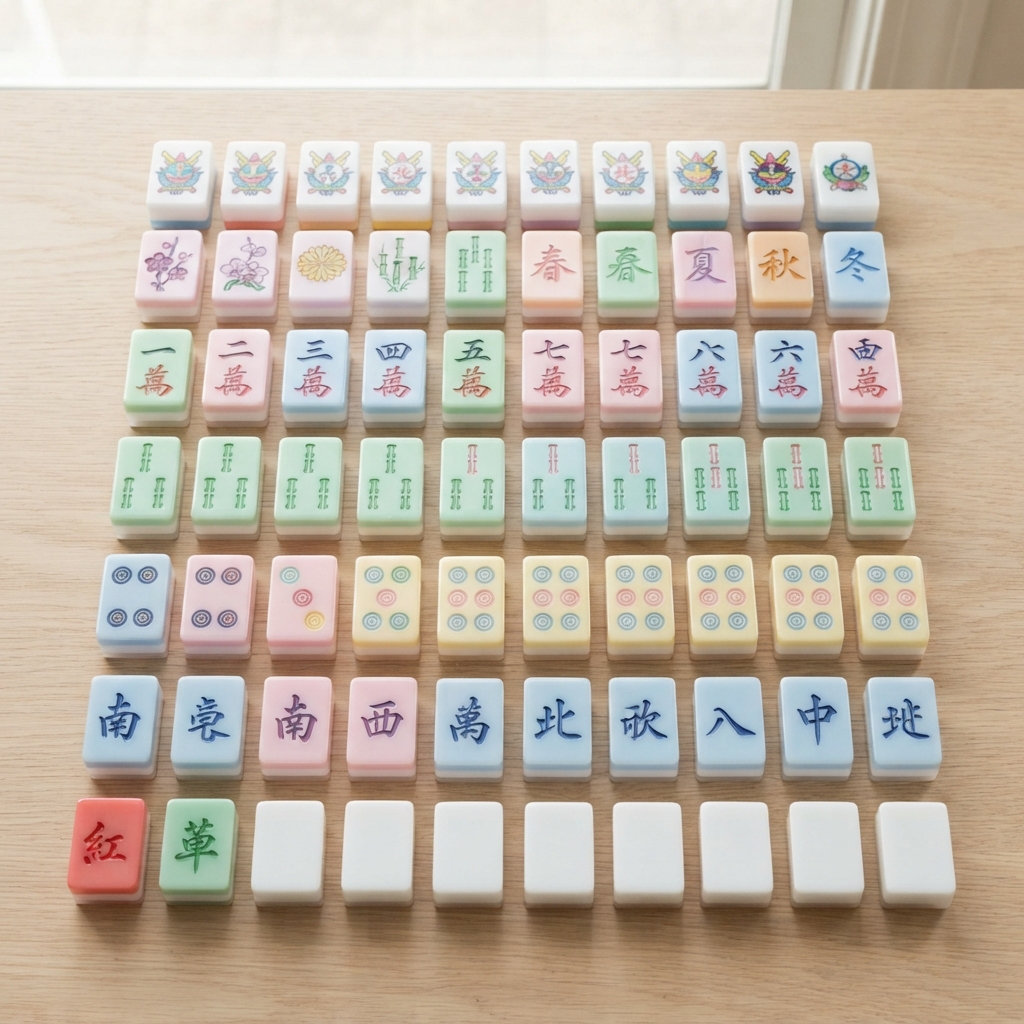

A mahjong tournament is mostly logistics. The rules are the rules your group already plays, but a tournament adds a clock, a seating plan, a scoring record and enough equipment that no table stalls waiting for dice. Groups that skip those four pieces usually end up with a long afternoon, three unfinished games and an argument about who was ahead.
This guide walks through hosting a mahjong tournament for four to twenty-four players in a home or club room: the format, the timing, the table set-up, the scoring sheet and the equipment list. It assumes American mahjong under National Mah Jongg League style rules, and it notes where a Chinese or riichi group should change the plan.
Choose the Format Before You Send Invitations
The format decides everything else, including how many players you can accept. Three formats cover most home and club events.
- Round robin: every player meets a rotating set of opponents across fixed rounds. Fair, easy to explain, and the best fit for 12 to 24 players.
- Single-elimination bracket: winners advance, losers stop. Fast and dramatic, but half the room is idle after round one, which is a poor experience for a social afternoon.
- Open play with a scorecard: no bracket at all. Players rotate tables and accumulate points. Lowest admin load, and the easiest format for a first event.
For a first tournament, the open play with a scorecard is the sane choice. It needs no bracket software, tolerates late arrivals and keeps everyone playing. Move to a round robin once you know your regulars will arrive on time.
Set the Clock: Rounds, Games and Breaks
Time is the constraint that makes or breaks the day. A four-player American mahjong game takes roughly 25 to 40 minutes with experienced players and closer to 50 with beginners. Build the schedule from that number rather than from optimism.
| Block | Duration | What happens |
|---|---|---|
| Check-in and briefing | 20 minutes | Seat assignments, rule card check, scoring explanation |
| Round 1 | 45 minutes | One game per table, with a hard stop at 40 minutes |
| Break | 15 minutes | Scores collected, tables reset, seats rotated |
| Round 2 | 45 minutes | New seating, same hard stop |
| Lunch or long break | 45 minutes | Scores posted so far, disputes resolved |
| Round 3 and Round 4 | 45 minutes each | Final rotations, then awards |
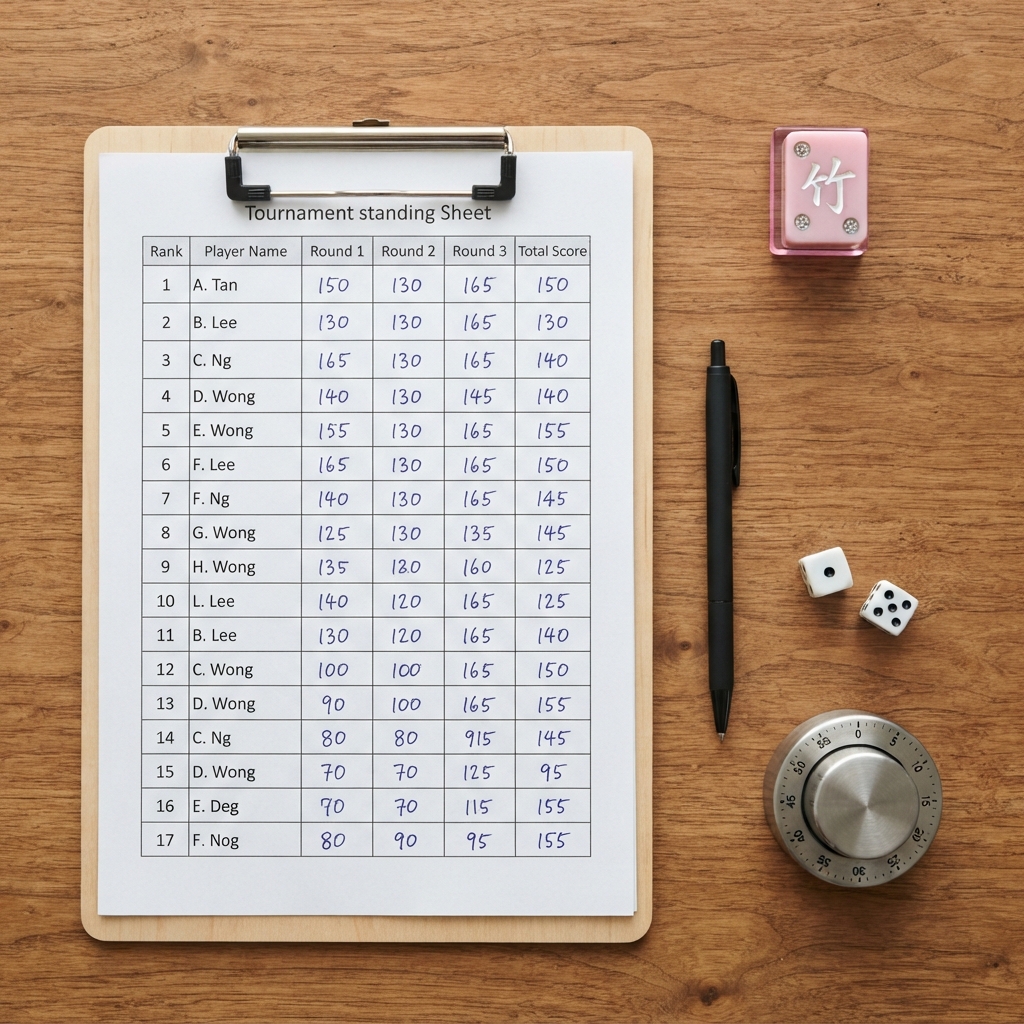
Four rounds is a full day: about five hours including breaks. Three rounds plus a long lunch makes a comfortable half-day event. Whatever you choose, announce the hard stop in the briefing and enforce it. An unfinished game is scored as it stands, with the points on the table at the whistle.
Tables, Seating and the Room
Four players need a square surface of about 34 to 36 inches, which is why a card table works and a narrow dining table does not. Our guide to mahjong table size gives the measurements to check, including height and chair clearance, before you commit a room.
Layout matters as much as table size. Leave at least 30 inches between tables so chairs can pull out without collision, and keep a clear route for the person collecting scorecards. A room that fits four tables in a tight grid will feel crowded within an hour, and dropped tiles under a neighbour's chair slow every round.
Assign seats rather than letting players choose. Rotate seats between rounds so no one keeps the same wind position all day, and post the rotation where everyone can see it. A printed sheet taped to the wall beats a verbal announcement every time.
The Equipment List for a Full Room
Equipment failures are the most common reason a round starts late. Count the kit per table, then add one spare set of consumables for the room.
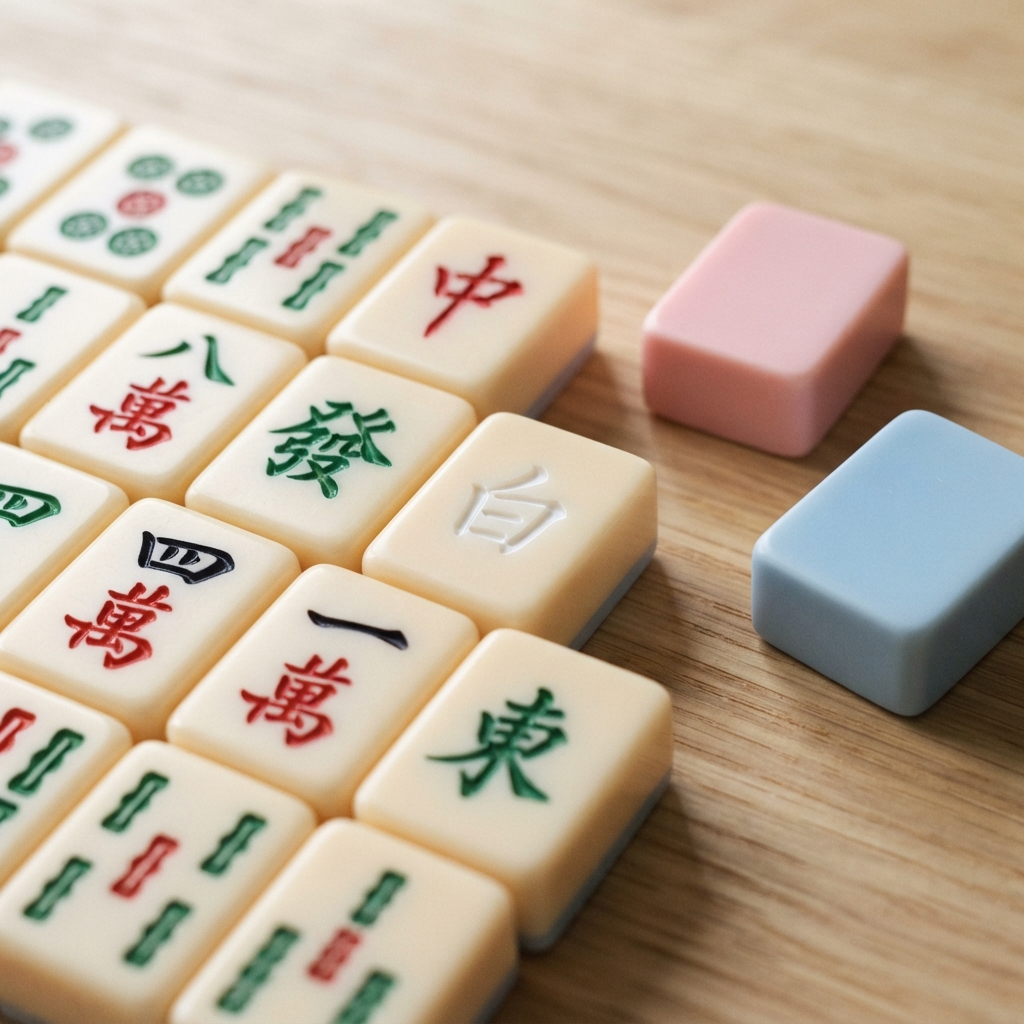
- One complete tile set per table, with the full playing inventory plus spares. Verify the breakdown before the event using our guide to how many tiles are in a mahjong set.
- Four racks and four pushers, matched to the tile thickness.
- Two dice per table, with a spare pair in the organiser's box.
- A rule card per player, from the current year. Players should bring their own, and the organiser keeps two spare cards per table.
- A mat per table if the surface is hard or the room is noisy.
- A scorecard per table plus a pen, and a printed standing sheet for the wall.
- A small tray or bag per table for tiles set aside during the Charleston.
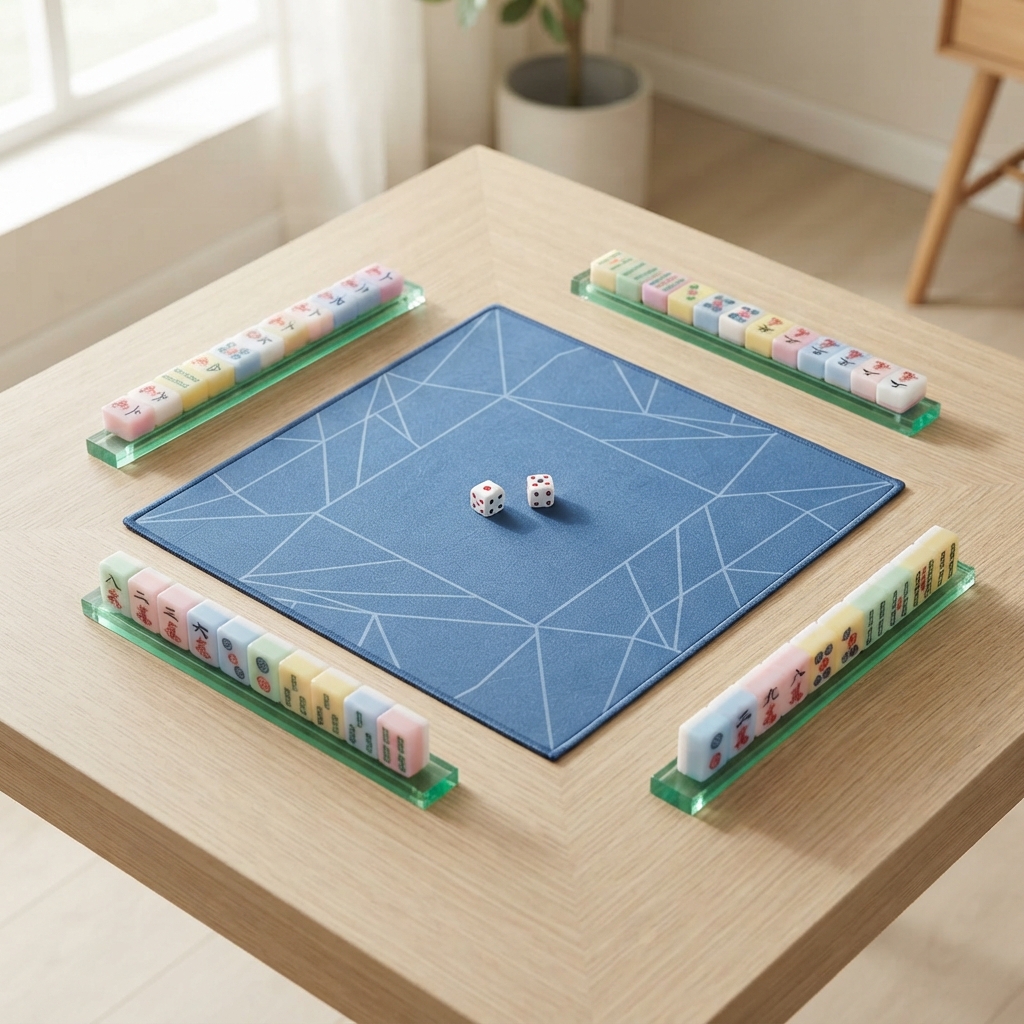
Matching equipment across tables is not cosmetic. Racks hold tiles at slightly different depths, and a player moving from one table to another will notice immediately. If your club owns one make of rack, buy the same make for every table. Our guide to mahjong racks and pushers covers the compatibility checks, and a translucent rack such as the green rack and pusher set is easy to inventory because the tiles show through.
A mat does three jobs in a tournament room: it defines each player's area, it cuts the clatter of tiles on a hard table, and it stops tiles sliding into a neighbour's rack. The blue gaming mat is a practical club option because the printed border marks the play area, which helps beginners keep their wall straight.
Rules Briefing That Prevents Arguments
Every dispute in a home tournament traces back to something that was not said at the start. Cover these six points in the briefing, and say them out loud rather than assuming experience.
- Which rule set applies, and which card year. Point players to the current card and to a reference such as these American Mah Jongg rules based on National Mah Jongg League standards.
- Whether the first Charleston is compulsory and whether a second Charleston is allowed.
- How jokers may be used, and how a joker exchange works at your tables.
- What happens when time is called mid-hand.
- How a scoring dispute is raised, and who decides.
- Whether phones stay off the table.
Print the answers on one page and put a copy on each table. If a question is not covered, the answer is "play continues and the organiser decides afterwards", not a table-wide debate.
Scoring and the Standing Sheet
Keep scoring simple enough that a player can fill it in during the break. For most home events, three numbers per player per round are enough: the score of the hand they won, the number of games played, and any penalty for a rules breach.
Post standings after every round. Visible standings change behaviour for the better: players know where they stand, and the room stops speculating. A printed sheet with columns for round, table, score and running total is more reliable than a phone app in a room with poor signal.
Ties need a rule decided in advance. The usual order is most wins, then highest single-hand score, then fewest penalties. Write it on the standing sheet so no one has to negotiate at the end of the day.
Running the Room on the Day
One organiser can run up to six tables if the schedule is tight and the briefing was clear. Beyond that, add a floor helper whose only job is to reset tables and collect scorecards.
Three habits keep the day moving. Start rounds on time even if one table is still settling. Collect scores at the table rather than waiting for players to bring them. And keep a visible clock, because "ten minutes left" said once is heard by half the room.
For the table-level routine, the same sequence every round prevents lost tiles and confused walls. Our four-seat table set-up guide is a usable checklist for volunteers who have never dealt before.
What Changes for Chinese or Riichi Play
The structure above transfers, but the details do not. Chinese mahjong uses 144 tiles and scores by hand pattern with no card, so the briefing should cover scoring limits and how a drawn hand is handled. Riichi uses 136 tiles, adds riichi sticks and dora, and often runs faster per hand, which allows shorter rounds.
Tile counts change the equipment list, not the table size. A 144-tile set still needs four racks on a 36-inch surface. What changes is the spare policy: Chinese and riichi sets rarely ship with jokers, so a lost tile is a real replacement problem rather than a swap from the spares bag.
A Short Checklist for the Week Before
- Confirm the player count and the number of tables you can seat with 30 inches of clearance.
- Count every set against its rule-set inventory, and count racks, pushers and dice per table.
- Print the schedule, the standing sheet and the one-page rules summary.
- Check the card year on your loaner cards; outdated cards cause more confusion than any other single item.
- Decide the tie-break and write it down.
- Assign a volunteer to each table for reset and score collection.
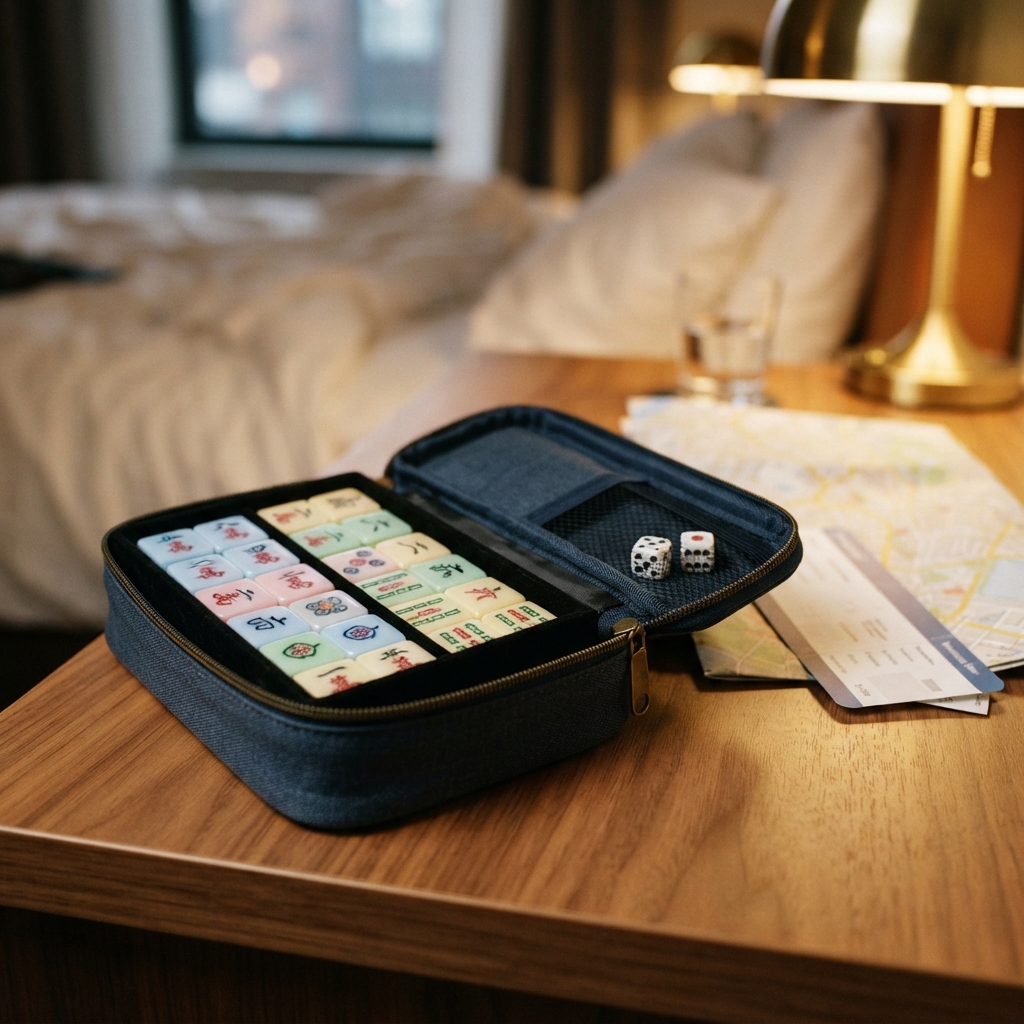
Clubs that run events regularly often keep a tournament box with the printed sheets, spare dice and two complete sets. It removes the week-before scramble entirely.
Frequently Asked Questions
How many players do I need for a mahjong tournament?
Four is the minimum, since one table is a game. Eight to twenty-four players is the comfortable range for a home or club event, because seating rotates cleanly and the organiser can still manage the room.
How long does a mahjong tournament take?
Plan about five hours for four rounds of 45 minutes with breaks. Three rounds plus a long lunch fits a half-day event of roughly three and a half hours.
Do players need their own rule cards?
Yes. Ask each player to bring the current year's card, and keep two spare cards per table so a forgotten card does not stall a round.
How should I score a mahjong tournament?
Record the hand score, the games played and any penalties per round, then post running totals. Decide the tie-break before the event, usually most wins followed by highest single hand.
What is the best format for a first tournament?
Open play with a rotating seat plan and a scorecard. It needs no bracket software, tolerates late arrivals and keeps every player in a game all afternoon.
Can I run a tournament with mixed experience levels?
Yes, if you seed each table with at least one experienced player and brief the rules aloud. Expect beginner tables to run 10 to 15 minutes slower, so build that into the round length.
How many tile sets do I need per table?
One complete set per table, with the full playing inventory for the rule set plus spares. Keep one spare dice pair and a small bag of replacement tiles for the whole room.
Should the Charleston be compulsory?
Under National Mah Jongg League rules the first Charleston is compulsory. If your club plays a house variant, state it in the briefing and print it on the table sheet.
Conclusion
A mahjong tournament runs on four decisions: format, clock, seating and equipment. Get those right, brief the rules out loud, and the day takes care of itself. The rules your group already plays do not need rewriting; they need to be written down and applied consistently at every table.
Start with a three-round event, one organiser and a printed standing sheet, then grow the room once the routine is familiar. If you are equipping a club rather than a single table, browse our mahjong sets and accessories for matched racks, mats and dice, and contact us with your table count and rule set so the kit arrives complete.