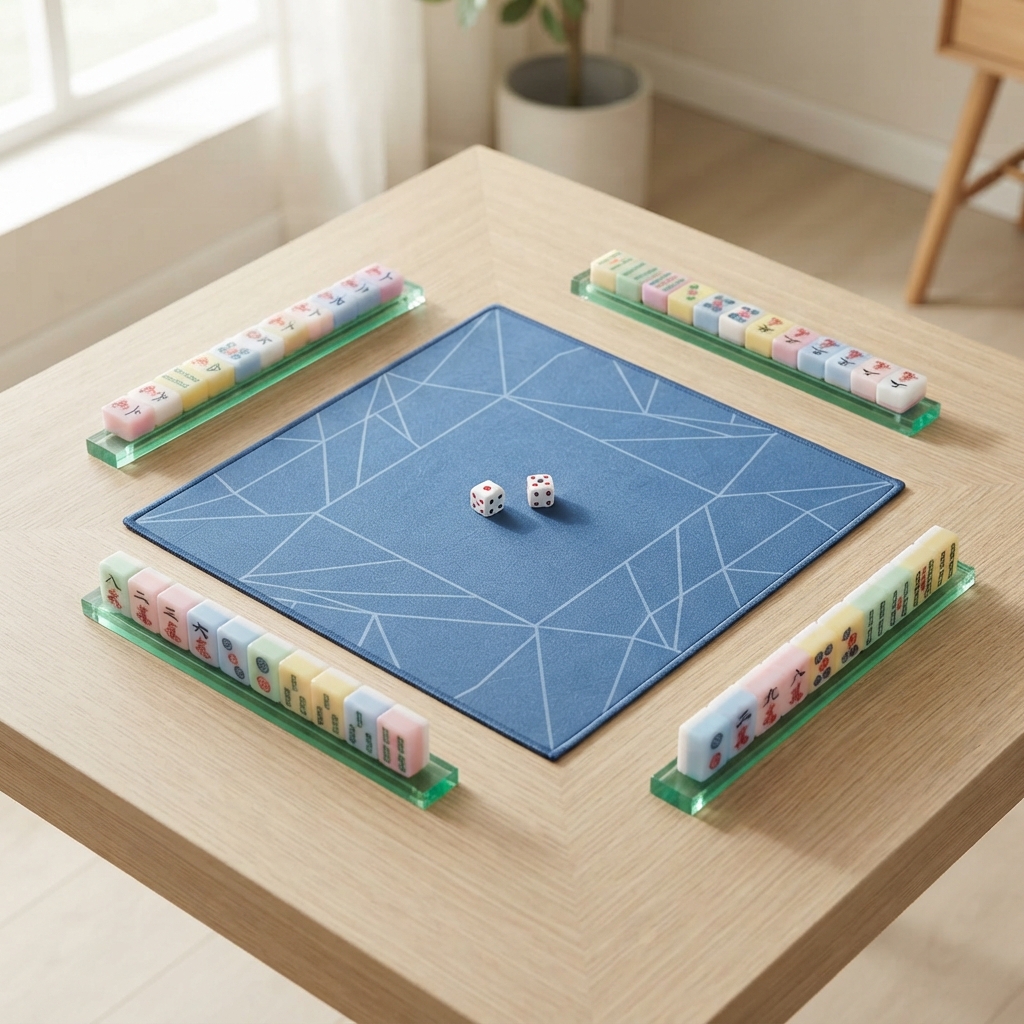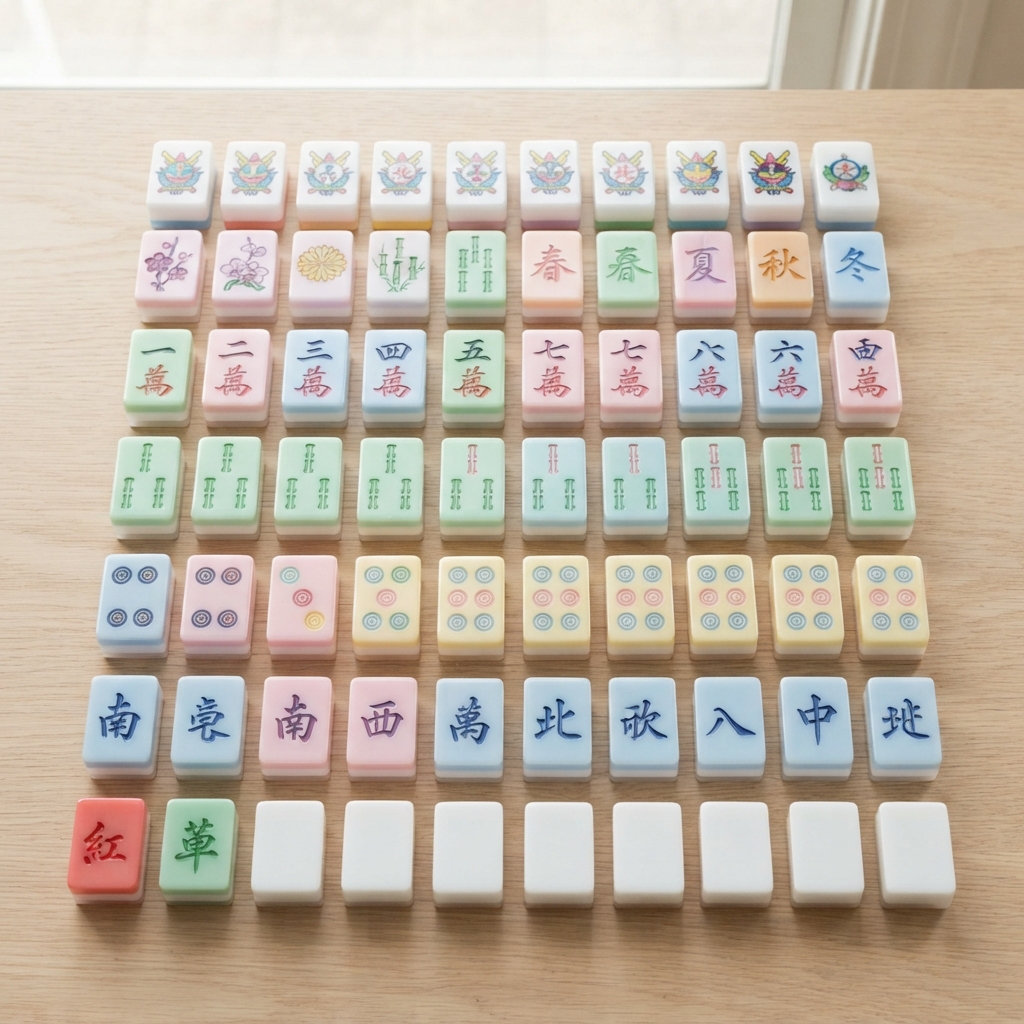

A mahjong set wholesale order usually starts long before the purchase order: with a sample, a written specification, and a quantity plan that matches the packaging you actually want. Buyers who skip those three steps end up renegotiating colour mix, carton marking and replacement parts after production has already started.
This guide sets out what the first quote should cover, how colour mix drives order size, what to lock down in a custom mahjong set order, and where the compliance details belong so a container does not sit at the border over a missing mark.
Mahjong Set Wholesale: What the First Quote Should Cover
A useful quote is a specification, not a price. If a supplier replies with a single number and no line items, the cheapest-looking offer is usually the one with the most assumptions hidden inside it.
| Line item | What to specify | Why it changes the price |
|---|---|---|
| Tile specification | Material, dimensions, face print method, back colour | Different materials and print methods carry different tooling and run costs |
| Tile count | 144, 152, 160 or 166, with the full breakdown | Count drives material volume and packing time |
| Racks and pushers | Included or separate, colour, quantity per set | Accessories are often quoted as a separate line |
| Packaging | Folding carton or rigid box, insert type, print | Rigid boxes and moulded inserts cost more than a printed carton |
| MOQ | Per colour, per packaging format, per custom element | The smallest orderable quantity is rarely one number |
| Sample | Pre-production sample and approval step | Sampling is a cost and a schedule item, not a formality |
| Marking | Country of origin, barcode, batch code, importer details | Marking work happens at packing and cannot be added later |
| Shipping terms | Which Incoterm applies and who arranges freight | Unclear terms hide cost in the wrong column of your landed cost |
Ask for the MOQ on each line rather than for the set as a whole. A supplier may be able to run 500 sets in one back colour but require a much larger run for a custom box, and that difference decides whether a small first order is viable.
Wholesale Mahjong Sets: Order Size and Colour Mix
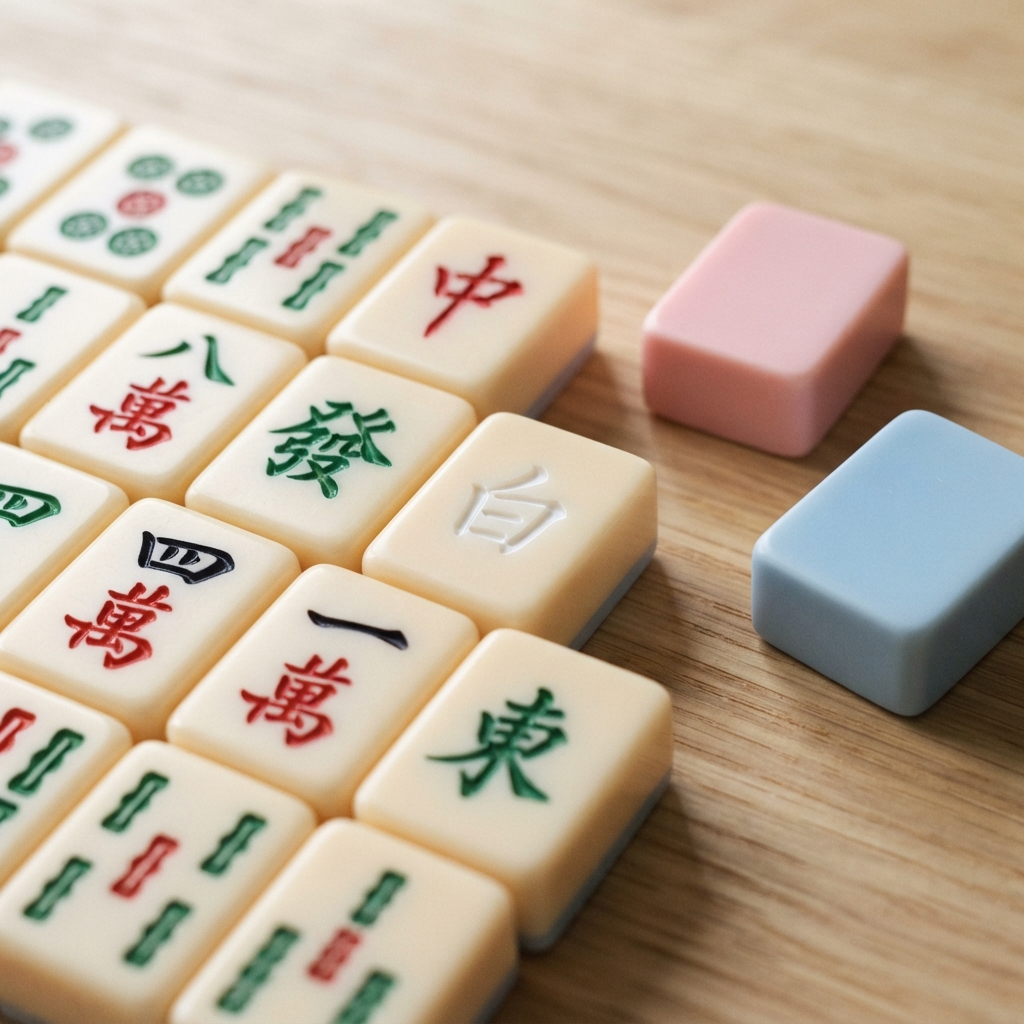
Wholesale mahjong sets are usually sold by colour, and colour is where order planning gets difficult. A retailer that wants four back colours in equal numbers is asking for four smaller production runs, not one large one, and the MOQ applies to each.
- Decide whether you need every colour on day one, or whether a lead colour plus a reorder is enough.
- Ask how the supplier counts a mixed order: per colour, per carton, or per pallet.
- Keep the accessory colours consistent across the range so a reorder still matches.
- Plan a spare-parts allowance for jokers and blanks, because replacement demand starts as soon as the first set sells.
If the numbers only work at a single colour, start there. A focused first order that arrives on time beats a broad range that is split across three production slots. That is the practical core of mahjong set wholesale planning: settle the colour count before you settle the total.
Choosing a Mahjong Set Supplier
A mahjong set supplier should be able to answer questions about the tile, the packaging and the paperwork in the same conversation. When you evaluate one, ask for evidence rather than adjectives:
- Which parts of the set are made in-house and which are bought in.
- How a pre-production sample is produced and what it includes.
- Whether packaging artwork and insert design are handled by the supplier or by you.
- How replacement tiles and spare jokers are supplied after the order.
- Who prepares the carton marking and barcode data.
Our own company profile is the version of this we can answer directly: more than 20 years of manufacturing experience, in-house design and development, and OEM and ODM work that runs from concept through packaging and logistics.
Custom Mahjong Set Order: What to Specify
A custom mahjong set order fails on small omissions. Write the spec before the sample, not after it, and include every element that someone will have to manufacture or print.
- Tile: face dimensions, thickness, corner radius, material, weight target.
- Face artwork: suit symbols, character style, joker design, flower set.
- Back colour: reference sample or colour code, plus an acceptable tolerance.
- Count: the exact breakdown, including spare jokers and blanks.
- Accessories: racks, pushers, dice, mat, rule card, and which of them ship in the box.
- Packaging: box type, insert, print, and how the set is presented when opened.
- Marking: origin marking, barcode, batch code and any retailer-specific label.
Custom tooling is the item most often underestimated. If the design needs a new mould, that cost and its lead time belong in the plan from the first conversation, not in a revision three weeks later.
Mahjong Set MOQ: Why It Exists and How to Plan Around It
A mahjong set MOQ exists because the expensive parts of production are setup, not assembly. Print runs, mould changes, box printing and insert tooling all have a minimum economic size, and the MOQ is where those costs stop dominating the unit price.
There are three practical ways to plan around it. First, standardise: choose a tile and box format the supplier already runs and put your branding on the packaging. Second, consolidate: order one colour across several SKUs instead of several colours of one SKU. Third, stage: take a smaller first order in the standard configuration, sell through it, and use the reorder to fund the custom packaging.
What does not work is asking for a custom box, a custom colour and a custom tile in a small quantity and expecting the mahjong set wholesale price of a standard set. The setup cost has to land somewhere.
Bulk Mahjong Tiles vs Complete Sets
Some buyers need complete retail sets; others need bulk mahjong tiles to build or repair sets. The two orders look similar on a price sheet and behave very differently in a warehouse.
| Factor | Bulk tiles | Complete set |
|---|---|---|
| Unit cost | Lower per tile | Higher, because accessories and packaging are included |
| Packaging | Bulk cartons or trays | Retail box with insert |
| Retail readiness | Not shelf-ready | Shelf-ready once marked |
| Replacement use | Ideal for spares and repairs | Needs disassembly to harvest parts |
| Order planning | Driven by tile count and colour | Driven by colour mix and box MOQ |
| Best for | Repair services, set builders, accessory makers | Retailers and brand owners |
A common compromise is to order complete sets plus a carton of loose tiles in the same colours, so replacements ship from stock instead of from a new production run. For a mahjong set wholesale buyer, the real question is whether the order has to be shelf-ready on arrival or whether you are supplying parts.
Private Label Mahjong: Packaging and Marking
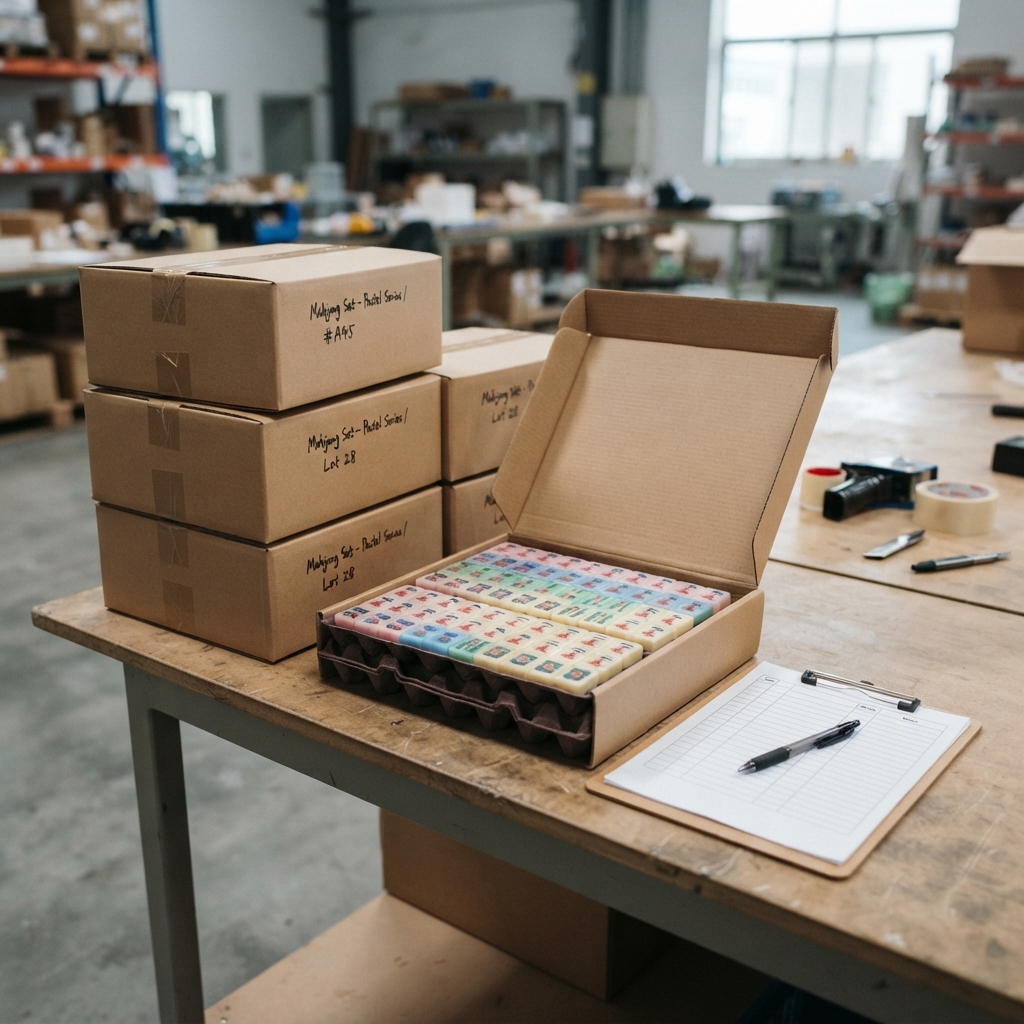
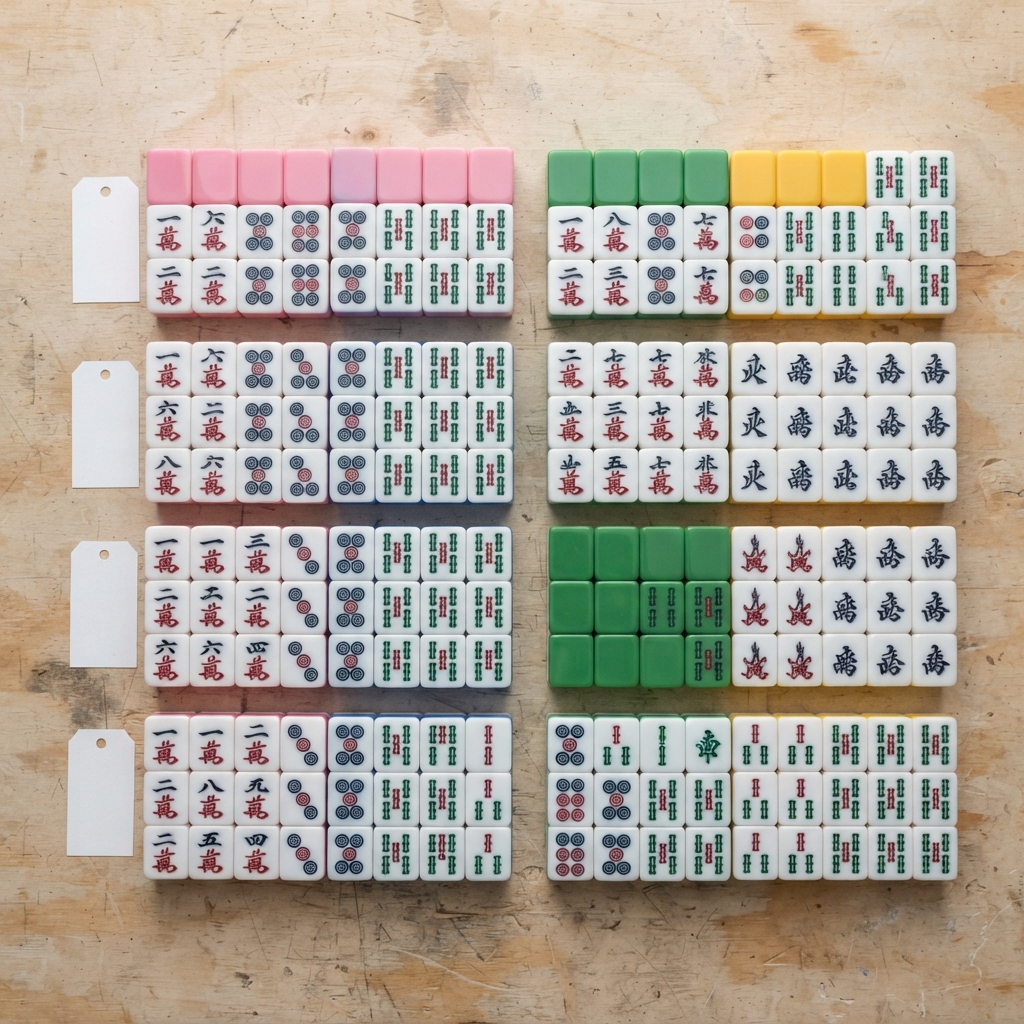
Private label mahjong work is mostly packaging work. The tile is often a standard body with your artwork; the box, insert, label and carton are where the brand lives, and where import compliance is decided.
In the United States, 19 CFR Part 134 sets out country of origin marking requirements for imported articles, and the mark must be legible and permanent enough for the ultimate purchaser. The regulation is published in full by the eCFR. Treat that as the starting reference and confirm the specific treatment of your product with your customs broker, because origin rules depend on where the article is manufactured, not where the box is printed.
- Decide where the origin mark goes before the packaging artwork is finalised.
- Keep the barcode, batch code and importer details on the same panel so packing staff check one area.
- Check that a sticker-based mark will survive handling if you are not printing directly on the box.
Sample Approval Checklist
Approve a sample against a written list, not against a photograph. The list below covers the points that most often change between a sample and a production run.
- Tile dimensions match the spec within the agreed tolerance.
- The count and breakdown match the order, including spare jokers and blanks.
- Back colour matches the reference under daylight, not only under office lighting.
- Print registration is centred on every face in the sample, not just the top tile.
- Edges are clean and consistent, with no visible mould marks.
- Racks hold a full 13-tile row without overhang.
- The box closes without pressure and the insert holds the tiles in place when shaken.
- Marking and barcode are present, legible and in the agreed position.
How We Support Wholesale and OEM Orders
Our about page describes the capability we can speak to directly: more than 20 years of manufacturing experience, design and development, and OEM and ODM services that include custom logo printing, private label products, customised packaging, original product development and custom mould creation.
For brand owners and distributors, the practical starting point is a written brief: tile spec, count, colour, packaging direction and target quantity. Send that through our contact page, and we can respond to the specification rather than to a guess. Distributors who want to resell rather than private-label can also review the distribution programme.
Two existing guides are worth reading before you write the brief: our breakdown of how many tiles are in a mahjong set for the count, and our guide to mahjong set packaging for the box and insert.
Common Wholesale Mistakes
Most mahjong set wholesale problems trace back to a gap between the brief and the order. These are the gaps that cost the most.
- Quoting a set without a tile breakdown. The count is part of the product, not a detail.
- Assuming one MOQ. Colour, packaging and custom elements each carry their own minimum.
- Skipping the pre-production sample. A photo is not an approval.
- Leaving marking until packing. Origin and barcode work belongs in the artwork stage.
- Forgetting replacement inventory. Spare jokers and blanks sell out before the sets do.
- Comparing landed cost on unit price alone. Freight, duty and marking change the ranking.
Frequently Asked Questions
What is the minimum order for a mahjong set wholesale order?
It depends on the configuration. Standard colours and packaging carry a lower minimum than a custom box or a new tile mould, and each line should be quoted separately.
Can I order mixed colours in one shipment?
Usually yes, but the MOQ is typically applied per colour, so a four-colour order may count as four production runs.
Do I need a custom mould for private label mahjong?
Not always. Many private label programmes use a standard tile body with custom face artwork and packaging, which avoids tooling cost.
Who is responsible for country of origin marking?
The importer is responsible for compliance. The supplier should provide the manufacturing origin and apply the mark as instructed, and the importer should confirm the requirement with a customs broker.
How long does a wholesale order take?
It depends on sampling, tooling and packaging. Ask for the schedule in stages, with sample approval as its own milestone.
Can I get replacement tiles after the order?
Ask before you order. A supplier that keeps spare jokers and blanks in the ordered colours makes replacements far easier.
Is bulk tile pricing always cheaper than complete sets?
Per tile, usually, but bulk tiles arrive without racks, packaging or retail readiness, so the saving depends on what you still have to add.
What should a first order include?
One lead colour, standard packaging, a spare-parts allowance, and a written spec that matches the approved sample.
Conclusion
A mahjong set wholesale order is decided by three documents: the spec, the approved sample and the marking plan. Get those right and the price conversation becomes a comparison of like for like rather than a negotiation over assumptions.
Start with the tile count and the packaging format, then ask for the MOQ on each line separately. If you want a second pair of eyes on a brief, send the spec through our contact page; we can tell you which parts are standard and which will need tooling or a larger run.