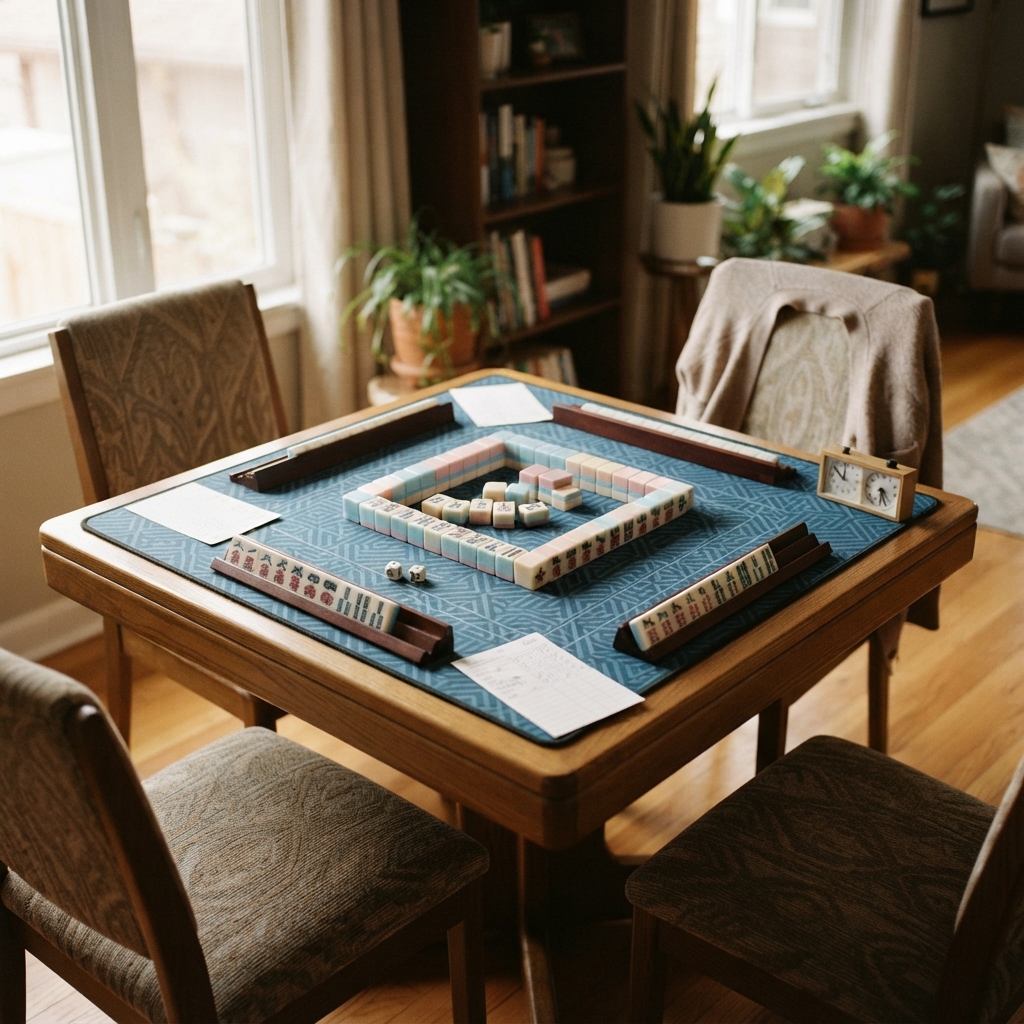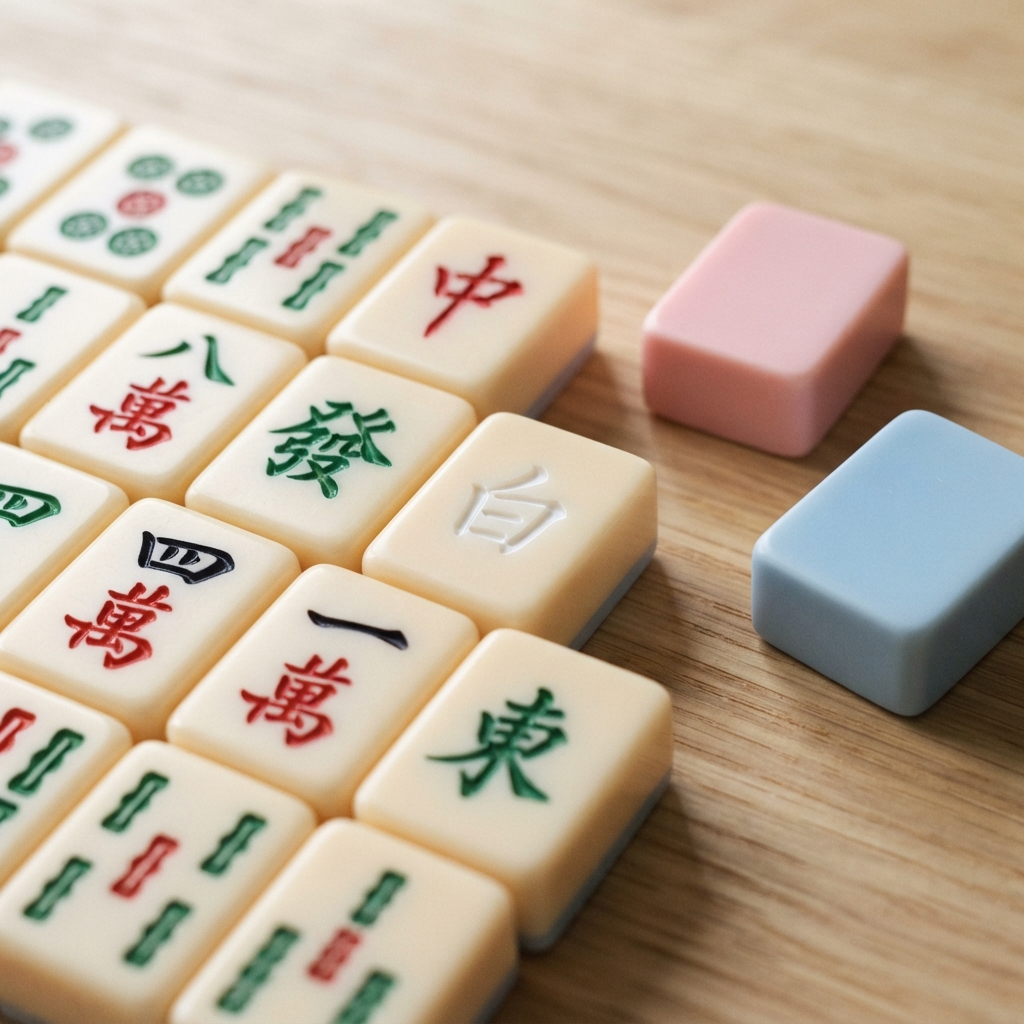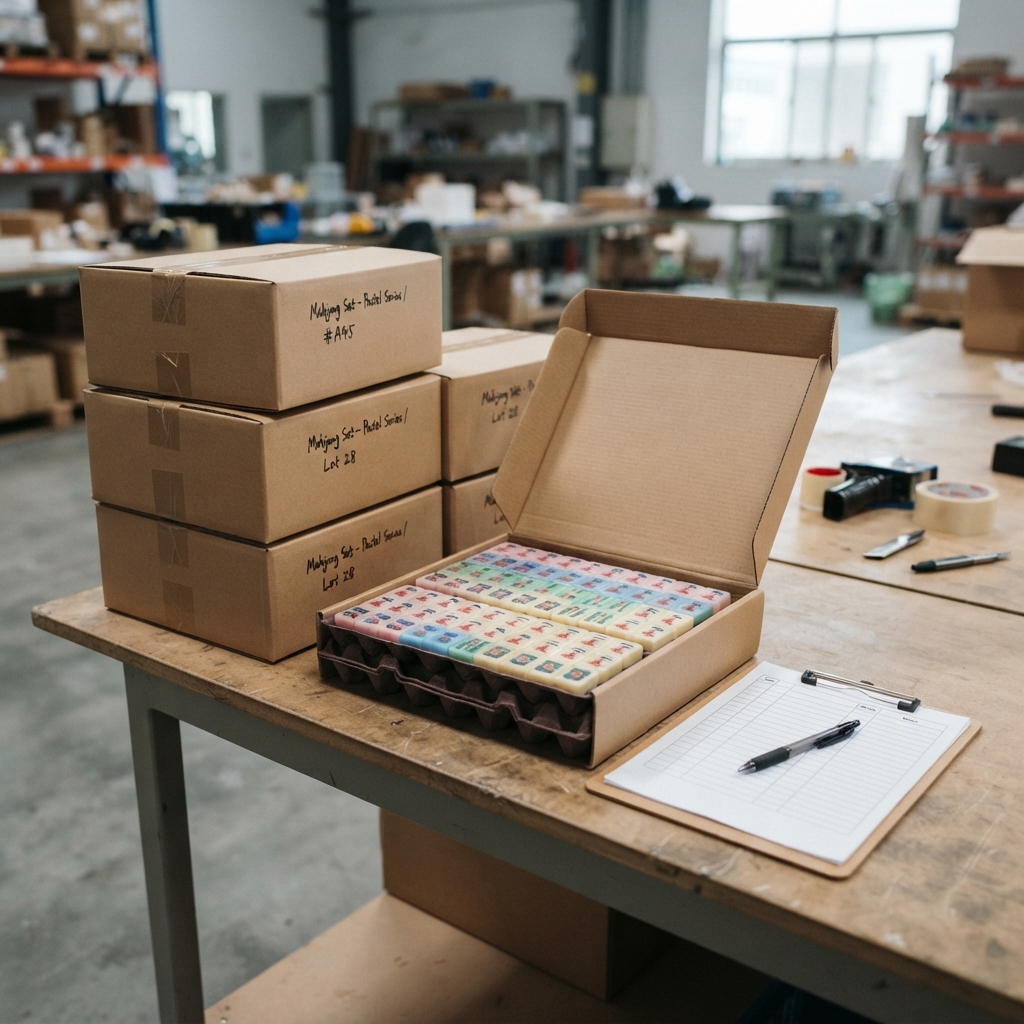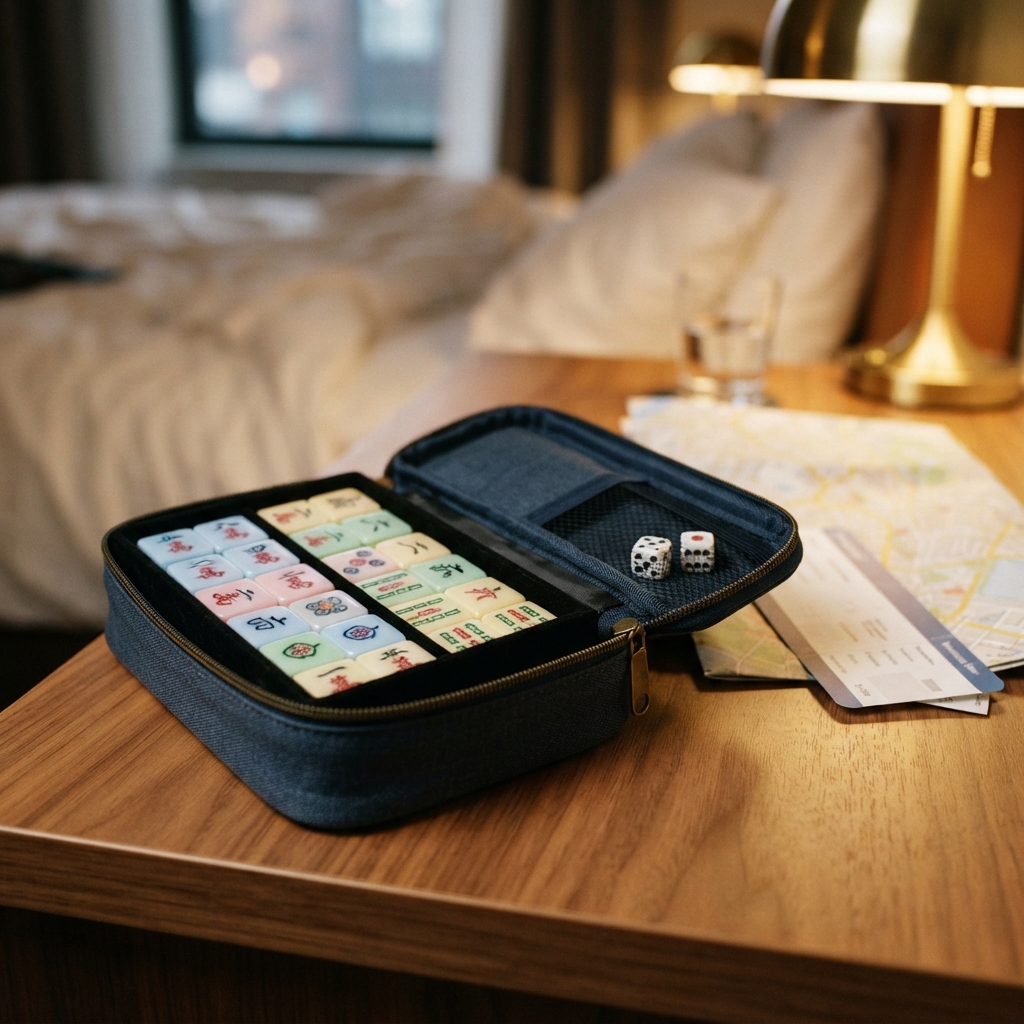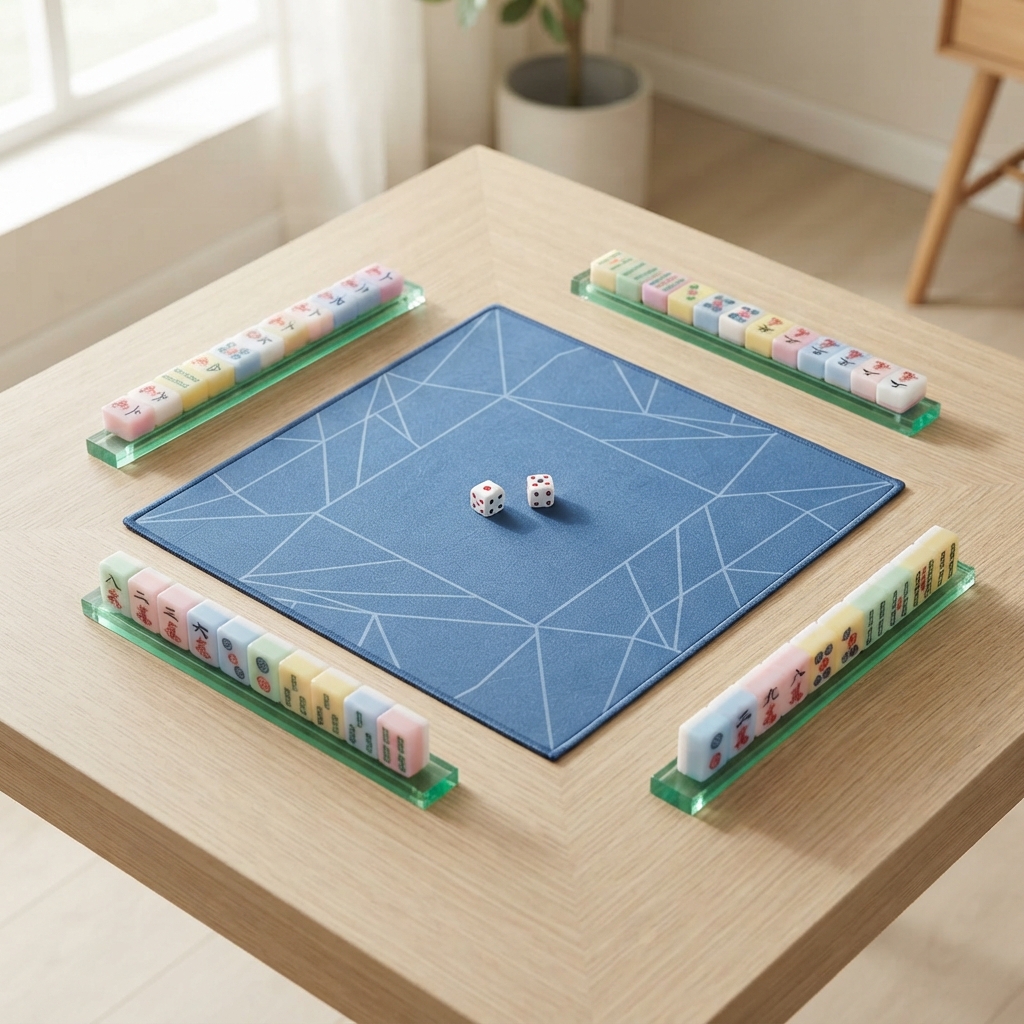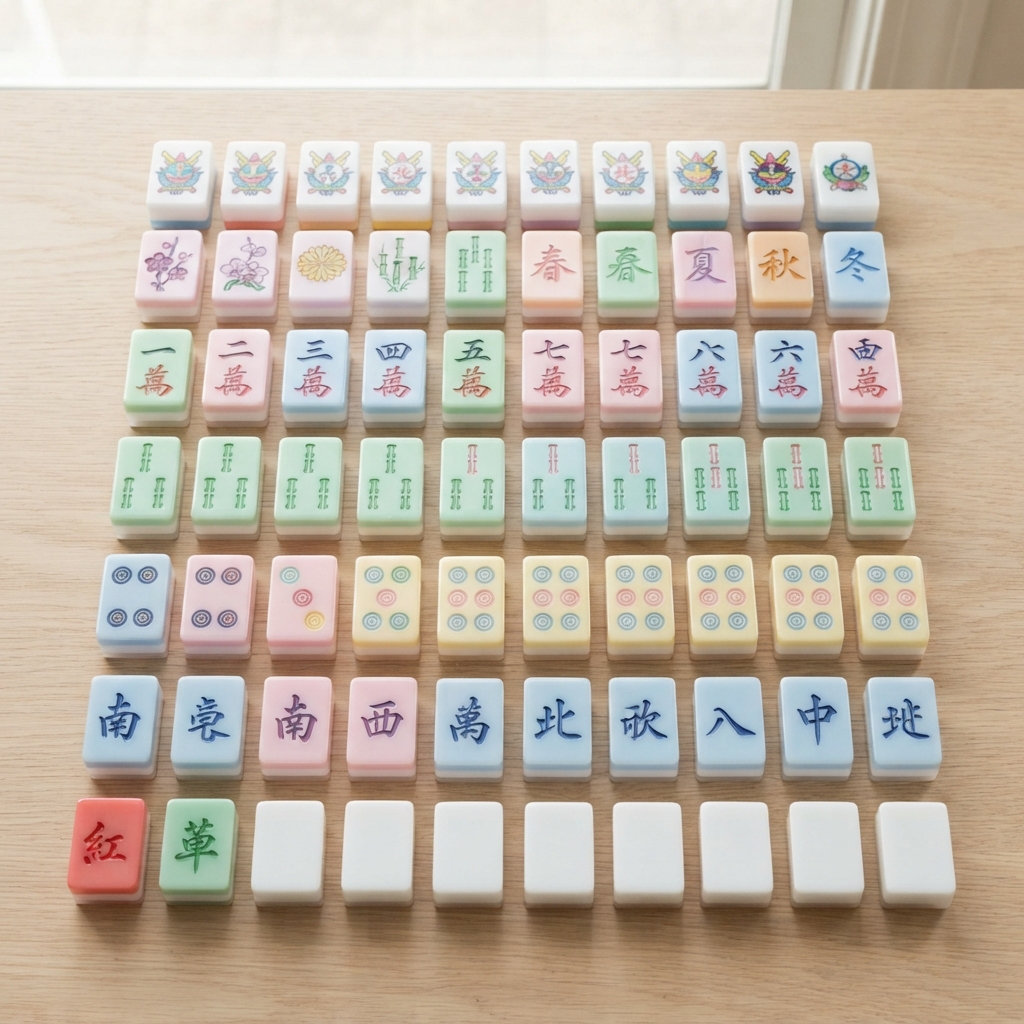

Mahjong set packaging has three jobs at once: hold 160 hard acrylic tiles so they cannot move, present the set as something worth opening, and carry the labeling an importer or retailer needs. Most damage complaints trace back to the insert rather than the printing, which is why the inside of the box deserves the same attention as the artwork.
This guide breaks down a retail-ready mahjong box component by component, explains what parcel transit testing actually simulates, and lists the checks worth running before you approve a packaging sample.
A custom mahjong box is judged three ways: whether the tiles arrive intact, whether the set photographs well, and whether the carton clears the compliance desk. Good mahjong set packaging covers all three before anyone designs the artwork.
What Mahjong Set Packaging Has to Do
A mahjong set is an awkward product to pack. The tiles are dense, hard and glossy, and a 160-piece set weighs far more than its volume suggests. The racks, pushers, dice and rule card add shapes that do not nest neatly. Good mahjong set packaging solves three problems in one structure:
- Protection: no tile movement, no face-to-face abrasion, no crushed corners.
- Presentation: the box has to look like a gift on a shelf or in an unboxing video.
- Compliance: origin marking, barcode, batch code and carton data that a retailer or customs broker will ask for.
When one of those three is skipped, the failure is predictable. A beautiful rigid box with a loose tile tray arrives with scuffed faces. A perfectly protected set in a plain carton never gets photographed. A gift-worthy box with no origin marking gets held at the border.
Inside a Retail-Ready Mahjong Set Box
Most American-style sets sold at retail share the same basic architecture. The materials change with price point, but the jobs do not. Every mahjong set packaging layout starts from this list.
| Component | Typical material | Job |
|---|---|---|
| Outer box | Rigid greyboard with printed wrap, or printed folding carton | Shelf presence and crush resistance |
| Tile tray | Molded pulp, PET, or EVA foam | Holds every tile in a fixed cell |
| Rack pocket | Die-cut board, folded paperboard, or foam cutout | Stops racks and pushers pressing on tile faces |
| Accessory bag | PE bag with desiccant sachet | Dice, spare jokers and blank tiles kept together |
| Rule card sleeve | Folded paper or card pocket | Keeps the rule card flat and visible on opening |
| Master carton | Double-wall corrugated | Protects several retail boxes through parcel handling |
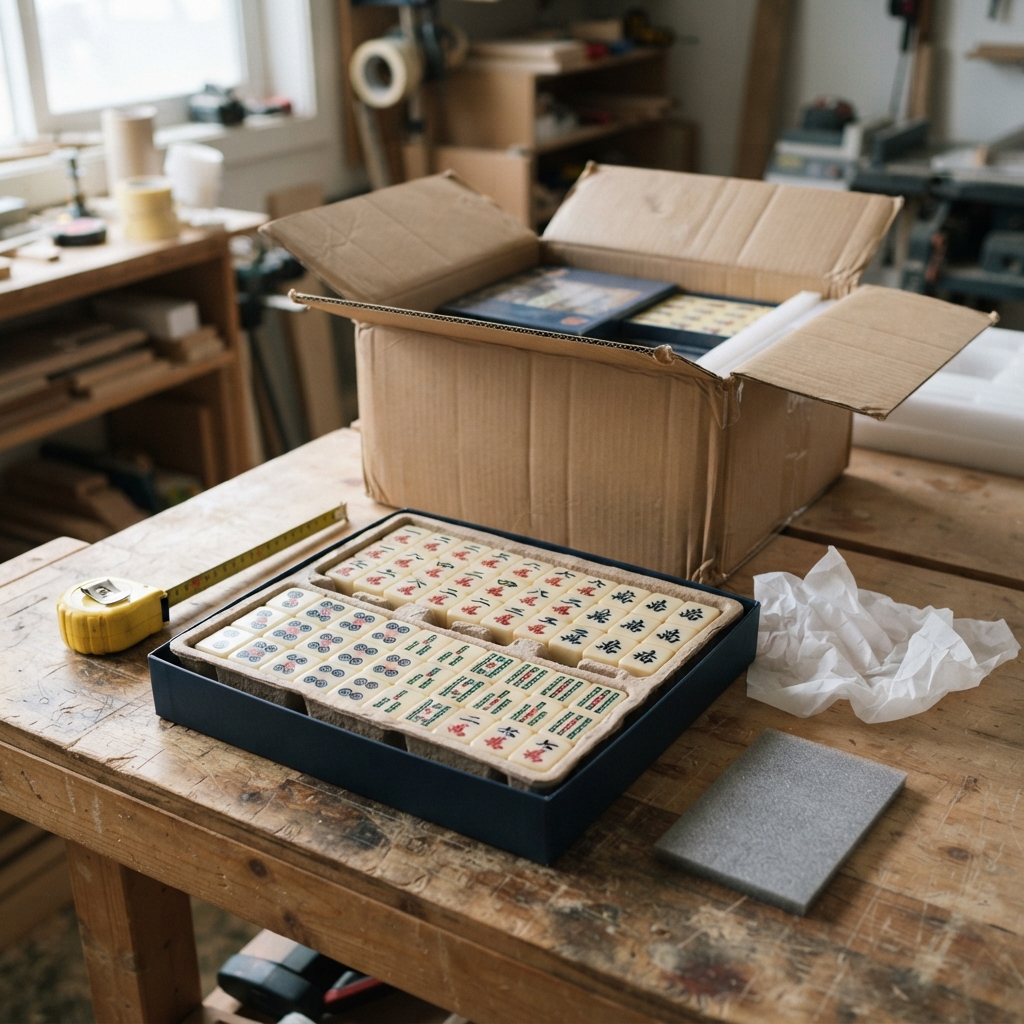
Tile Trays: The Part Buyers Underestimate
The mahjong packaging insert decides whether the set arrives playable. A tray with oversized cells lets tiles slide; a tray with tight cells can crack a tile edge when the lid is closed. The goal is a light friction fit, where each tile stays where it was placed but can still be lifted out with two fingers.
Three materials dominate, and each has a trade-off:
- Molded pulp is the cheapest and most recyclable option. It is soft enough to protect faces, but its dimensional tolerance is looser, so it suits standard sets rather than premium ones.
- PET gives a precise, transparent tray that shows the tiles through a window. It protects well but can crack in cold or under a heavy stack, and it is the least forgiving of a tile that is slightly out of specification.
- EVA foam offers the best protection and the best unboxing feel. It is also the most expensive, and poor foam can leave dust on glossy faces.
Two layout rules matter more than the material. First, keep tiles back-to-back or on edge rather than face-to-face, because printed faces rubbing against each other are what scuff. Second, give the jokers and blank spares their own labelled cells; when spares share a loose compartment with playing tiles, players mix them into the wall and later blame the set for a missing piece.
A quick test tells you more than a specification sheet: close the box, hold it shut, and shake it gently next to your ear. Any rattle means the tray needs another millimetre of material or a divider.
Transit Testing: What ISTA 3A Testing Actually Simulates
Retail packaging is usually designed for a pallet. E-commerce packaging is handled by people and machines many times before it reaches a doorstep, which is a different kind of stress. That is the gap ISTA test procedures are written to close.
ISTA 3A covers individual packaged products weighing 70 kg (150 lb) or less when prepared for shipment through a parcel delivery system. The procedure simulates the hazards a parcel meets in that network: drops and impacts, random vibration, compression from stacked parcels, and atmospheric conditioning. For a mahjong set, the drop and vibration steps are the ones that expose a weak tray, because a heavy tile stack under vibration will find any gap in the insert.
Ask a supplier for the actual report rather than the word "tested". A useful report names the procedure, the laboratory, the test date, the exact SKU and packaging revision, and the result. If the insert, tile thickness or box size changes, the old report no longer describes the product, and a retest is the only honest answer.
Carton Marking and Country of Origin
Packaging is also a compliance document. In the United States, 19 CFR Part 134 implements the country of origin marking requirements of 19 U.S.C. 1304: imported articles must be marked with their country of origin in a way the ultimate purchaser can find and read. A private label brand does not remove that requirement, because the marking describes where the goods were made, not who sells them.
In practice, a mahjong set usually carries origin marking on the retail box and on the master carton, with the importer named as the responsible party. Beyond origin, the retail box needs a scannable barcode and a batch or date code, and the master carton needs SKU, quantity, dimensions, gross weight and the same batch reference. Marking rules have exceptions and depend on the specific article and trade program, so confirm the wording with a customs broker rather than treating a template as legal advice.
Moisture, Dust and Acrylic Care in Transit
Acrylic tiles are hard but not scratch-proof. A single grain of grit trapped between two faces during a long sea freight can leave a visible line. Three small decisions prevent most of it: bag the tiles or line the tray with a soft, lint-free material; keep printed paper from pressing directly on faces, since ink can transfer in heat; and add a desiccant sachet to the accessory bag and to the master carton in humid shipping seasons.
Heat is the other quiet risk. Prolonged exposure to high temperatures in a container or a warehouse is bad for acrylic and for adhesives in the box. Storage guidance belongs in the retailer notes, not only in the factory's internal documents.
Unboxing Without Overpackaging
Premium sets often carry three layers: a printed sleeve, a rigid box and a foam insert. Each layer adds cost, weight and material, and buyers increasingly notice. A two-layer build with a well-printed rigid box and a molded pulp tray can look expensive while shipping lighter, and a smaller box reduces dimensional weight, which is charged by volume rather than by scale weight.
Retail ready packaging is judged on the shelf and at the doorstep, so the number of layers should be a deliberate choice. Recyclability claims need evidence. "Eco" printed on a box that is glued to a plastic tray is a claim a retailer may ask you to prove, so decide the material story before the artwork, not after.
Cost Drivers in Mahjong Set Packaging
Packaging quotes vary widely because the same box can be built in very different ways. These are the levers that move the price of mahjong set packaging.
| Driver | What raises the cost | How to control it |
|---|---|---|
| Box construction | Rigid greyboard, magnet closure, thick wrap | Use a folding carton for lower price points |
| Insert material | EVA foam, custom-cut PET, flocking | Molded pulp with a tissue liner for standard sets |
| Print finishes | Foil stamping, spot UV, embossing, extra Pantones | Limit Pantones and keep one special finish |
| Hand assembly | Hand-placed tiles, ribbons, tissue wrapping | Design the tray for machine loading |
| Spare parts packing | Separate bags and labels for jokers and blanks | One bag with a printed divider card |
| Carton size | Oversized box charged at dimensional weight | Right-size the box to the tile footprint |
Checks Before You Approve a Packaging Sample
- Shake test: close the box and listen for tile movement.
- Open and close the box twenty times; the lid should still sit flush.
- Load four racks and pushers into their pocket and confirm they do not touch tile faces.
- Confirm jokers and blanks sit in labelled, separate cells.
- Scan the barcode with a phone at arm's length, not only with a warehouse scanner.
- Read the country of origin marking on the retail box and the master carton.
- Compare printed colour with the approved proof in daylight, not under office lighting.
- Run a drop and vibration test through a laboratory using the procedure your channel requires.
- Record the packed weight and outside dimensions, because they set your shipping cost.
- Keep one sealed sample and photograph it; it becomes the reference for the production run.
Common Packaging Mistakes
- Shipping the retail box as the shipping carton. A gift box is not built for parcel drops.
- Printing the tile count before the breakdown is locked. A 160-piece claim on a box that ships 152 playable tiles creates returns.
- One loose accessory compartment. Jokers and blanks migrate into play and go missing.
- No tolerance for tile thickness. A tray cut to the exact tile dimension will crack edges on the thick end of the run.
- Barcode on a dark or curved panel. It scans in the lab and fails at the retailer's dock.
- No batch code. Without it, a reorder cannot be traced to a production run.
How We Approach Packaging
Shenzhen Wenwei Technology Co., Ltd. has more than 20 years of manufacturing experience with acrylic mahjong products, and packaging is part of the same development process rather than an afterthought. Our OEM work covers custom logo printing, private label products, customized packaging and exclusive brand designs; our ODM work covers original product development, custom mold creation, and artwork and packaging design through to a complete product solution.
The same process serves a single custom mahjong box for a new brand and larger mahjong set wholesale orders for distributors, because the tile breakdown and the shipping channel drive the structure either way.
Two examples show how the packaging brief follows the product. Our Pink-Back American Mahjong Tile Set with Jokers uses rectangular tiles with softened corners, a smooth glossy white face and pink sidewalls, plus a printed JOKER tile, and the listing shows it in stock at USD 340.00. Two packaging consequences follow: the tray has to hold those glossy faces apart so they do not scuff, and the pink backs make any shade variation between tiles obvious the moment the box is opened. A rack and pusher set, such as our translucent green rack and tile pusher set, needs its own pocket so the racks never rest on tile faces. You can see the current range on our products page.
Frequently Asked Questions
Does a mahjong set need a rigid box?
Not always. A rigid box protects better and photographs well, but a printed folding carton with a good insert can be adequate for lower price points and ships lighter.
What is the best insert for acrylic mahjong tiles?
EVA foam protects best, PET gives the most precise and presentable tray, and molded pulp is the most economical and recyclable. The right choice depends on price point and how the set will ship.
What does ISTA 3A testing involve?
ISTA 3A testing simulates parcel delivery for individual packaged products up to 70 kg (150 lb), covering drops, vibration, compression and atmospheric conditioning.
Does private label packaging change country of origin marking?
No. Country of origin marking under 19 CFR Part 134 describes where the goods were made, so a private label brand still ships with origin marking on the retail box and master carton.
How do I stop mahjong tiles from chipping in transit?
Fix each tile in its own cell, keep faces from rubbing together, line the tray with a soft material and add desiccant so grit and moisture do not become abrasives.
Can I print my logo on the box and the tiles?
Yes. Custom logo printing, private label products and customized packaging are part of our OEM services, and artwork and packaging design are part of our ODM work.
What information belongs on the master carton?
SKU, quantity, dimensions, gross weight, batch or date code, and the country of origin marking, so the retailer and the customs broker can both read the shipment.
How many spare tiles should be bagged with a 160-piece set?
A 160-piece American set typically carries 152 playing tiles plus two spare jokers and six blanks; keep the spares in a labelled bag so they are never dealt into a game.
Conclusion
Good mahjong set packaging is an engineering decision before it is a design decision. Fix the tiles in place, test the packed set the way a parcel network will treat it, and put the origin marking and carton data where a retailer can find them. Artwork then sits on top of a structure that already works.
If you are developing a set for your own brand, start with the tile breakdown and the shipping channel, then build the box around them. You can browse our mahjong sets and accessories or send us your packaging requirements with the piece count, tile size and retail price point you are targeting.