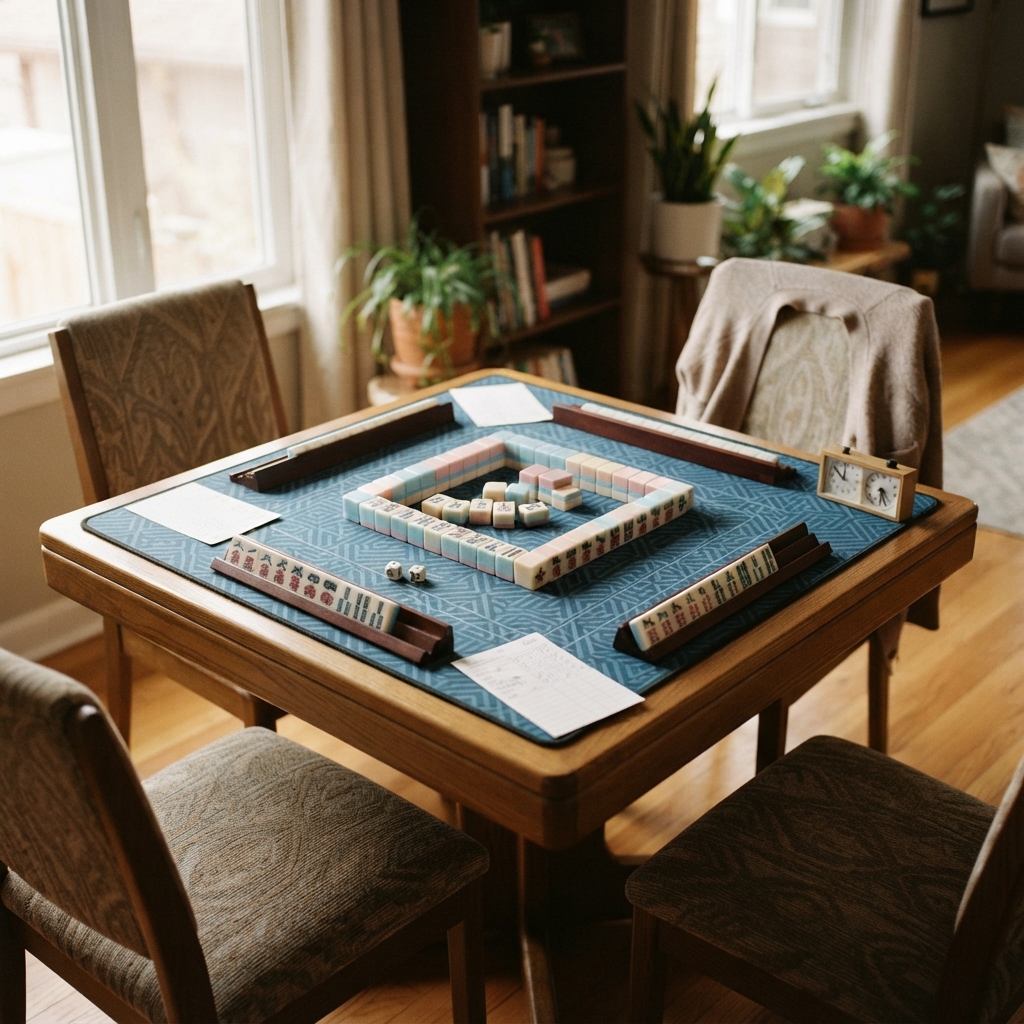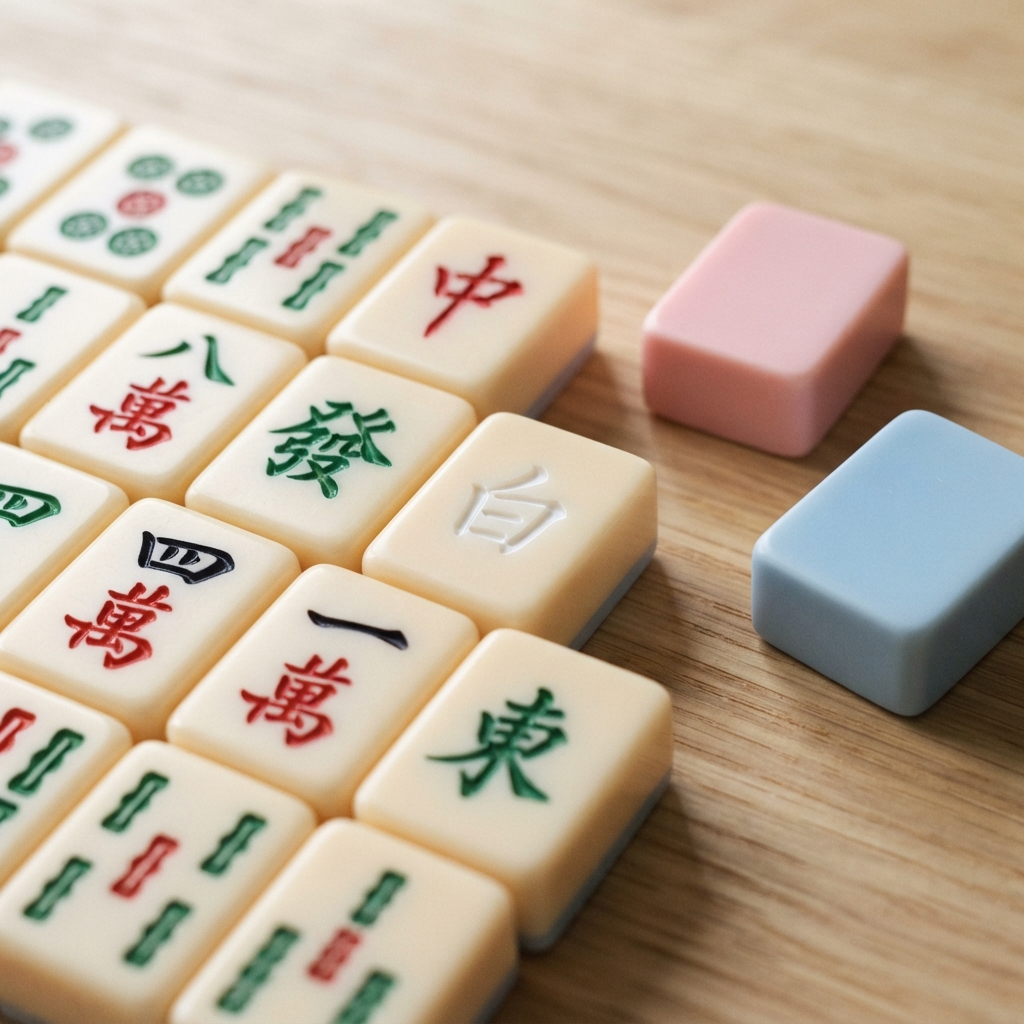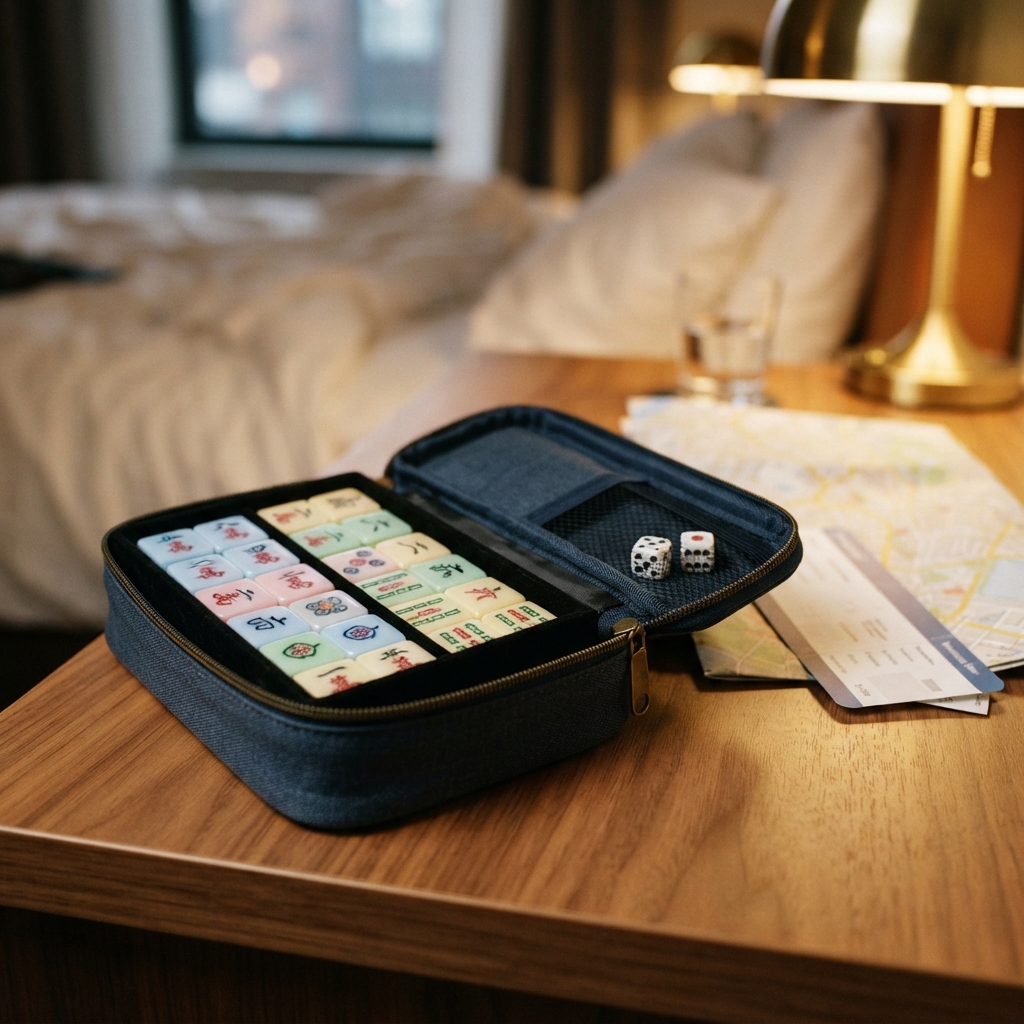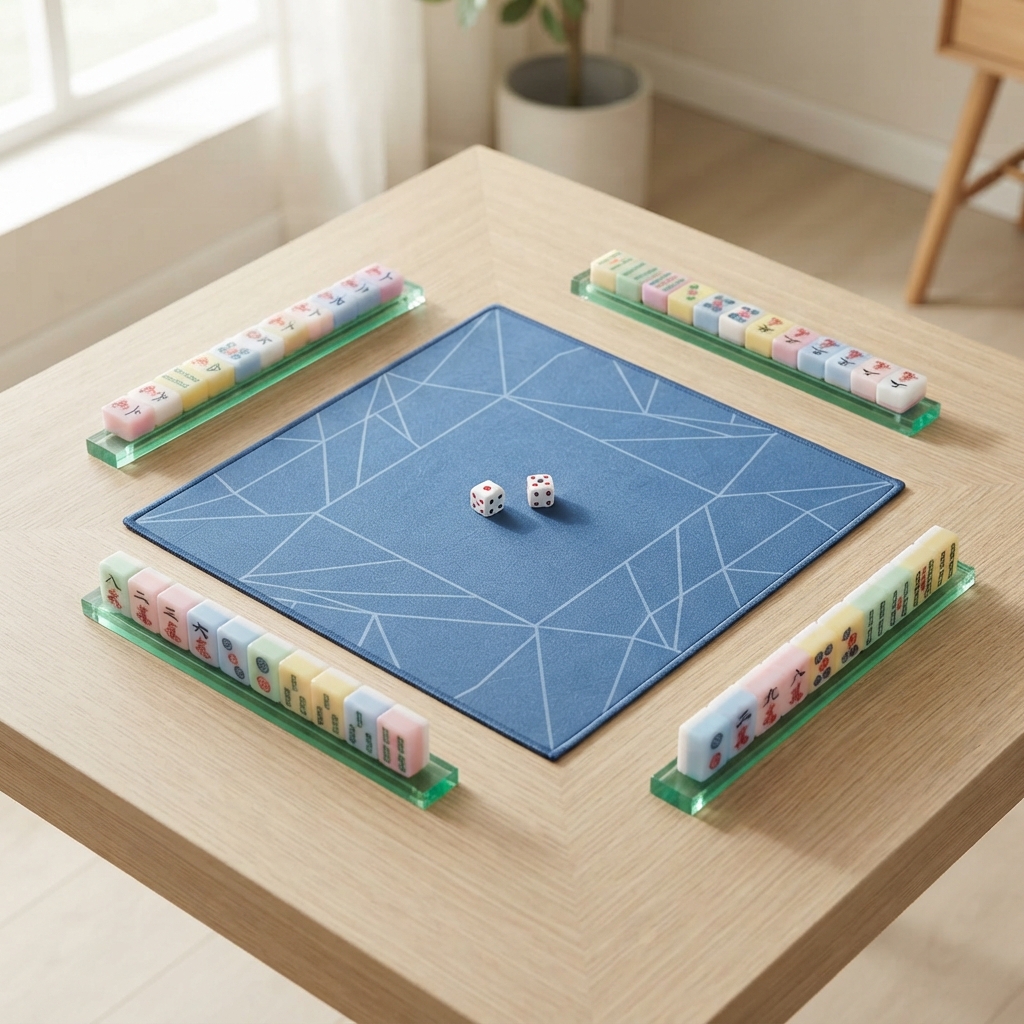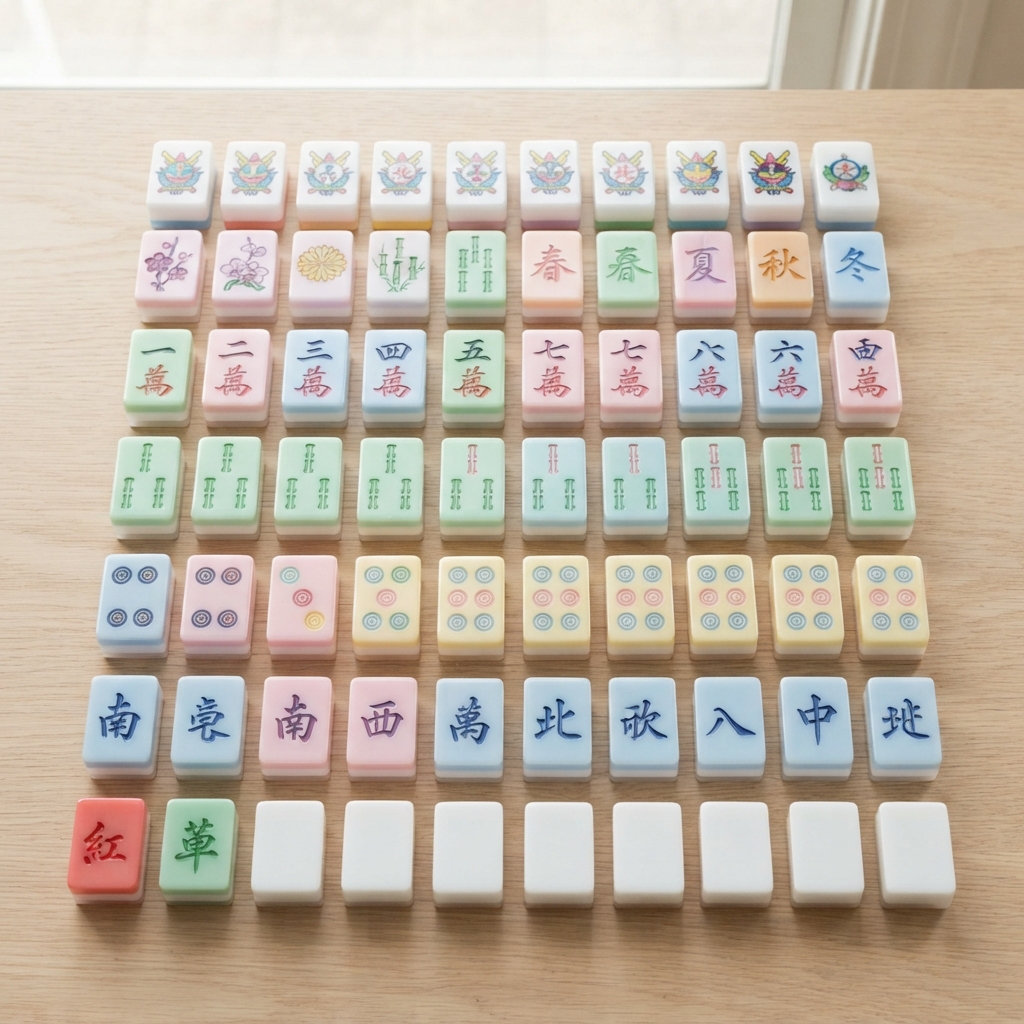

Mahjong tile printing is the step that turns a blank acrylic or melamine body into a playable tile, and it is the part of a set buyers inspect most closely without knowing what to look for. Two sets can share the same tile size, the same 160-piece inventory and the same back colour, yet one reads cleanly across a table for a decade while the other shows a soft edge and a drifting symbol after a season of play.
This guide explains how mahjong tile face printing actually works, what print registration and ink adhesion mean in practice, and which checks to run on a sample before you approve a custom run. It is written for buyers, brand owners and club organisers who need to judge a set on evidence rather than on a catalogue photo.
What Mahjong Tile Printing Actually Decides
Every face on a tile carries three jobs: identify the tile, survive handling, and match the rest of the set. Printing decides all three, because the graphic layer is the only part of the tile a player touches, sorts and reads. The body of the tile can be excellent and still deliver a poor experience if the printed face is off-centre, low in contrast or thin enough to wear through.
That is why a print specification belongs in the purchase order alongside the tile count and the dimensions. When a buyer writes "160 tiles, 1.26 x 0.91 x 0.67 inches, pink back" and stops there, the supplier has no agreed standard for the faces, and the first sample becomes the de facto standard whether it is good or not.
The Four Print Methods Used on Mahjong Tiles
Most sets on the market are decorated by one of four methods. Each produces a different look, a different cost floor and a different failure mode.
| Method | How the face is made | Strength | Watch for |
|---|---|---|---|
| Pad printing | Ink transferred from an etched plate by a silicone pad | Sharp single-colour symbols at volume | Thin coverage on large solid areas; colour drift between runs |
| UV digital printing | Ink jetted onto the face and cured instantly with UV light | Full colour artwork, photographic detail, low setup cost | Visible dot texture; adhesion depends on surface preparation |
| Sublimation or film transfer | Printed film bonded to the face under heat and pressure | Even colour over large areas and rounded edges | Edge lift, haze over white faces, batch colour shift |
| Engraving with colour fill | Groove cut into the tile, then filled with pigment | Long service life; the symbol is physical, not just ink | Higher unit cost; fill can sit proud or shallow if the depth varies |
None of the four is automatically better. A club set that will be shuffled weekly for years rewards engraving or a well-bonded print. A gift set that lives in a case and comes out twice a month can use UV printing for artwork that would be impossible to pad print. The mistake is accepting a method without agreeing on the test that proves it.
Print Registration: The First Thing to Inspect
Registration is the alignment of the printed graphic with the tile body. On a mahjong tile it shows up in three ways: whether the symbol sits centred on the face, whether multi-colour elements line up with each other, and whether the print is square to the tile edges.
A quick check needs no equipment. Stand ten tiles from the same suit on edge in a row and look along the top. The symbols should sit at the same height within a millimetre or two. Then turn the row face up and check the margins on both sides. A set that drifts left on some tiles and right on others will feel sloppy during sorting, even if no single tile looks wrong.
Registration matters more on tiles with fine detail. Dots with concentric rings, character tiles with stacked strokes, and joker artwork with small text all expose misalignment that a simple bamboo symbol would hide. If your design depends on fine line work, ask for the registration tolerance in writing and inspect exactly those tiles.
Ink Adhesion and Face Durability
Adhesion is whether the ink stays on the tile. It is the difference between a printed face and a printed face that survives a hundred shuffles. The failure usually starts at the edges of the graphic, where a thin ink film lifts and then flakes as tiles slide against each other.
Surface preparation decides most of the outcome. Acrylic and melamine both resist ink, so a supplier needs a consistent pre-treatment step before printing, and a consistent cure afterwards. UV printing cures in seconds under a lamp, which is fast but unforgiving: an under-cured face looks perfect on day one and abrades in month three. Suppliers who understand this will talk about lamp power, pass count and adhesion testing rather than about colours alone.
For background on how a UV print layer is expected to behave on a tile body, this overview of mahjong tile UV printing describes the ink-to-substrate relationship and the durability claims suppliers make. Treat those claims as a starting point for your own test, not as a substitute for it.
The practical test is simple and slightly destructive, which is why it belongs on a sample rather than on a finished order:
- Rub one face hard with a dry thumb for thirty seconds. Ink that dulls or transfers is not bonded.
- Press a strip of clear tape across a symbol, smooth it down, then lift it. Pigment on the tape means poor adhesion.
- Scratch lightly with a fingernail across a printed edge, not the middle. Edges fail first.
- Wipe a face with a damp cloth and mild soap, dry it, and compare with an untouched tile from the same sample.
A sample that survives all four checks is a reasonable candidate. A sample that fails any of them will fail in the field, and no amount of packaging will compensate.
Colour Control Across a 160-Tile Set
Colour is where a set either looks intentional or looks assembled from two batches. The risk is not that red is slightly wrong; it is that red is slightly different on tile forty and tile one hundred and twenty, so the set reads as uneven when laid out.
Two variables drive this. The first is ink batch: a supplier who prints a full run from one mixed batch gets consistency, while a supplier who tops up mid-run may not. The second is the tile body itself, because a warm white face and a cool white face render the same ink differently. If the body colour varies, the print will appear to vary even when the ink does not.
Ask for a colour standard that travels with the order, whether that is a physical approved sample kept by both parties or measured values on a reference tile. Then check a spread of tiles, not the top of the stack: pull tiles from the first, middle and last tray of the carton and compare them side by side in daylight. Under warm shop lighting, small shifts disappear.
How to Run a Print Inspection on a Sample
A structured inspection takes about twenty minutes and catches most of what matters. Work through it in the same order every time so results are comparable between suppliers.
- Count the sample against the agreed inventory: 36 dots, 36 bams, 36 craks, 16 winds, 12 dragons, 8 flowers, 8 jokers for American play, with the agreed spare count on top. Our guide to how many tiles are in a mahjong set lists the breakdown by rule set.
- Lay out one suit in four rows of nine and check that every face is legible from a seated distance of about 20 inches.
- Check registration on the most detailed tiles in the set, not the simplest.
- Run the adhesion tests on two tiles you are willing to retire.
- Compare colour across the first, middle and last tray.
- Inspect the non-printed faces and edges for handling marks, because a scuff on a white face reads as a print defect in photographs.
- Photograph defects at close range with a scale reference, and send the images with the sample review notes.
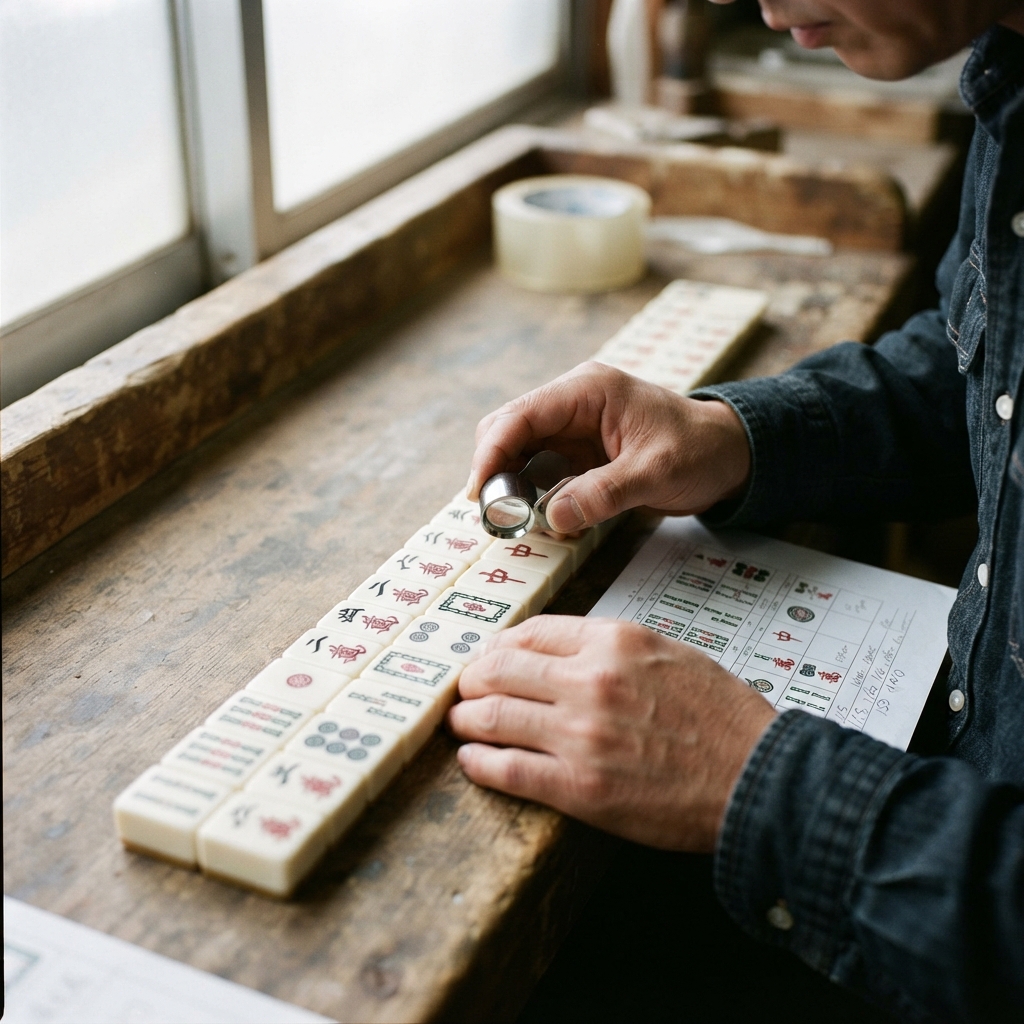
Keep the approved sample. It is the only reference that resolves a dispute six weeks later, and it is the standard your supplier should hold for the production run.
Print Defects and What They Mean
| Defect | Likely cause | What to do |
|---|---|---|
| Symbol off-centre on some tiles | Fixture or jig alignment drifting between passes | Reject the sample; request a jig check and a new sample |
| Soft or feathered symbol edges | Ink viscosity, pad wear, or print head distance | Ask for a sharpness standard on a reference tile |
| Ink rubs off at the edges | Weak pre-treatment or incomplete cure | Treat as a fail; do not accept a promise of a stronger top coat only |
| Colour mismatch between trays | Mid-run ink top-up or mixed body batches | Require single-batch ink and body colour sorting before print |
| Faint ghost of a symbol beside the real one | Double strike from a mis-fed pass | Reject affected tiles; ask for a first-article check each shift |
Most of these are process problems rather than design problems, which is good news: they can be fixed by tightening the process, and they should be caught on a sample rather than on a delivered pallet.
Custom Mahjong Tiles: What to Specify in the Brief
A print brief that prevents arguments covers seven points. Write them down before the supplier quotes, because each one changes cost and lead time.
- Method: pad print, UV digital, transfer or engraving, named explicitly.
- Artwork: vector files with outlined fonts, plus the exact face layout per suit and honour tile.
- Colour: reference values and the acceptable tolerance, not just "red".
- Registration: centring tolerance in millimetres and the tiles you will measure.
- Adhesion: the test method and the pass criterion, agreed in advance.
- Body: material, face colour and finish, since all three affect how print reads. Our guide to mahjong tile size covers the dimensional side of the same specification.
- Approval: who signs off the sample and how long it is kept.
Buyers sourcing a private label run often pair this print brief with a wider supplier audit. The American mahjong manufacturer evaluation checklist covers the factory questions that sit around the print line, from incoming inspection to final packing.
Pairing Print With Back Colour and Finish
Print does not exist in isolation. The back colour and the surface finish change how a face is perceived, and they change what a photograph of the set communicates.
A white face on a pink back reads warm; the same face on a blue back reads cooler, and small print can look thinner even when it is identical. Gloss finishes brighten colour but catch overhead light, which can wash out fine lines during evening play. A satin finish photographs with less glare and hides fingerprints better, at the cost of a little sparkle.
If you are choosing a set for a group rather than commissioning one, look at the pairing as a whole. The pink-back American mahjong tile set and the blue-back set with jokers use the same face layout on different backs, which makes them a useful side-by-side reference for how colour shifts perceived contrast. Both use four-layer acrylic bodies with a glossy printed face.
Print also affects replacement planning. If a tile is lost two years later, a replacement only matches when the print method, colour standard and body batch are known. That is why our guide to lost mahjong tile replacement starts with documenting the original rather than with ordering a lookalike.
Why Print Quality Shows Up in Packaging Too
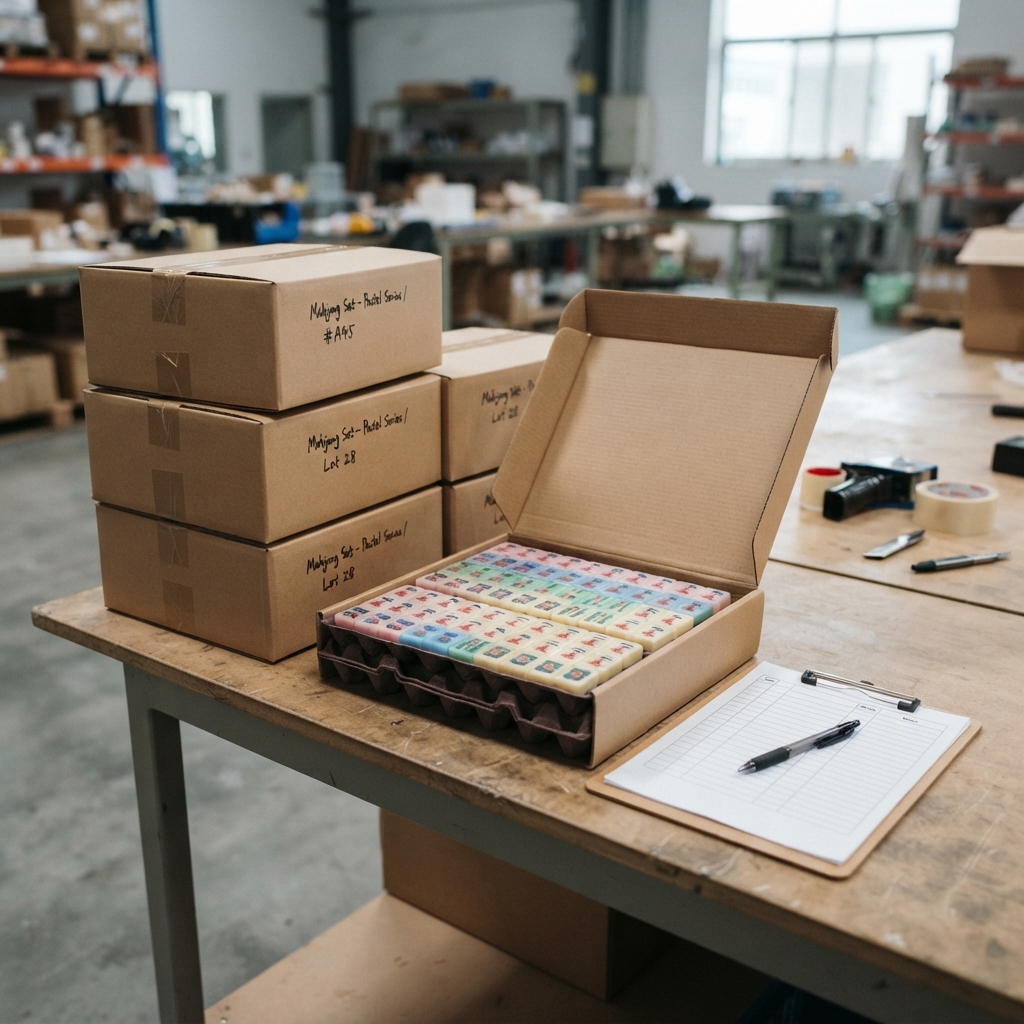
Print defects often appear after transit rather than before it, because tile faces rub against each other when an insert lets them move. A set that passed inspection at the factory can arrive with scuffed symbols if the tray allows lateral travel. The mahjong set packaging guide explains how insert design and transit testing protect a printed face, and why that protection is part of the print specification rather than a separate purchase.
A simple safeguard costs little: a tissue interleaf between stacked tiles, or a molded tray with a cell per tile. Ask for it when the order is placed, not after the first damage claim.
Frequently Asked Questions
What is mahjong tile printing?
Mahjong tile printing is the process of applying the suit, honour and bonus graphics to the tile body, usually by pad printing, UV digital printing, film transfer or engraving with colour fill.
Which printing method lasts longest on mahjong tiles?
Engraving with colour fill generally lasts longest because the symbol is cut into the body. A well-bonded pad print or UV print on a properly prepared face also holds up for years of home play.
How can I test print durability at home?
Rub a face with a dry thumb for thirty seconds, press and lift clear tape over a symbol, and scratch lightly along a printed edge with a fingernail. Any transfer or flaking means the ink is not properly bonded.
Why do tiles from the same set look slightly different in colour?
Usually a mid-run ink top-up, a change in body colour batch, or both. Pulling tiles from the first, middle and last tray and comparing them in daylight exposes the shift.
Is UV printing good enough for a premium set?
Yes, when the surface is prepared and the ink is fully cured. UV printing allows full-colour artwork, so the question is process control rather than the method itself.
What tolerance should I ask for on print registration?
Ask for a centring tolerance in millimetres and name the tiles you will measure, typically the most detailed ones. A written number is enforceable; "centred" is not.
Can I print a logo on mahjong tiles?
Yes. Logo printing is usually placed on the case, the tile back or a dedicated face, and it is quoted as part of a private label order rather than as a separate product.
Does print quality change the tile count?
No. Printing affects appearance and durability, not the inventory. American play still needs 152 playing tiles plus the agreed spares regardless of the print method.
Conclusion
Mahjong tile printing is a process decision with a visible outcome. Method, registration, adhesion and colour control determine whether a set reads cleanly and survives shuffling, and all four can be checked on a sample in about twenty minutes.
Before you approve a custom run, write the print standard into the brief, keep the approved sample, and test the faces rather than trusting the photograph. If you are choosing between existing sets, compare the printed face on both colours before you commit. You can browse the full range on our mahjong sets and accessories page, or send us your print specification with the tile count, face layout and back colour you need.