
American Mahjong Rule Card Guide: Read Hands with Confidence
An American Mahjong rule card can look like a wall of abbreviations when you first open it. The card becomes much easier once you know where to look for suits, numbers, groupings, and special symbols. This American Mahjong rule card guide gives new and returning players a repeatable way to read a line, check a hand, and keep the table moving. JOKKOL makes the physical side of that process pleasant with readable acrylic tiles, matching racks, and a clear place for the card beside the table.
Treat the card as the source of truth
American Mahjong uses a card of standard hands that changes by edition. The exact hands, wording, and permitted exposures on the current card should always control your game. Online summaries and memories from a previous year can be useful for learning vocabulary, but they are not a substitute for the card your group has agreed to use.
Before dealing, place the current card where all four players can read it. If a guest brings a different edition, decide which card governs the session. This small conversation prevents a late disagreement about a hand that looks familiar but has changed.
Learn the visual map of an American Mahjong rule card
Most players can scan faster when they recognize the card's repeating landmarks:
| Card element | What to look for |
|---|---|
| Section heading | The family of hands, such as year, like numbers, or winds. |
| Hand line | The exact sequence of tiles and groups required. |
| Suit or color cue | A shorthand that tells you which suit a symbol represents. |
| Value or multiplier | The payment or scoring note used by your table rules. |
| Exposure mark | A note showing whether the hand may be exposed. |
| Joker note | A reminder that Joker use can depend on the grouping. |
Do not try to memorize every section at once. Pick one section, trace one line from left to right, and say the groups aloud. The goal is to turn a dense card into a sequence of small checks.
Decode the tile shorthand before choosing a hand
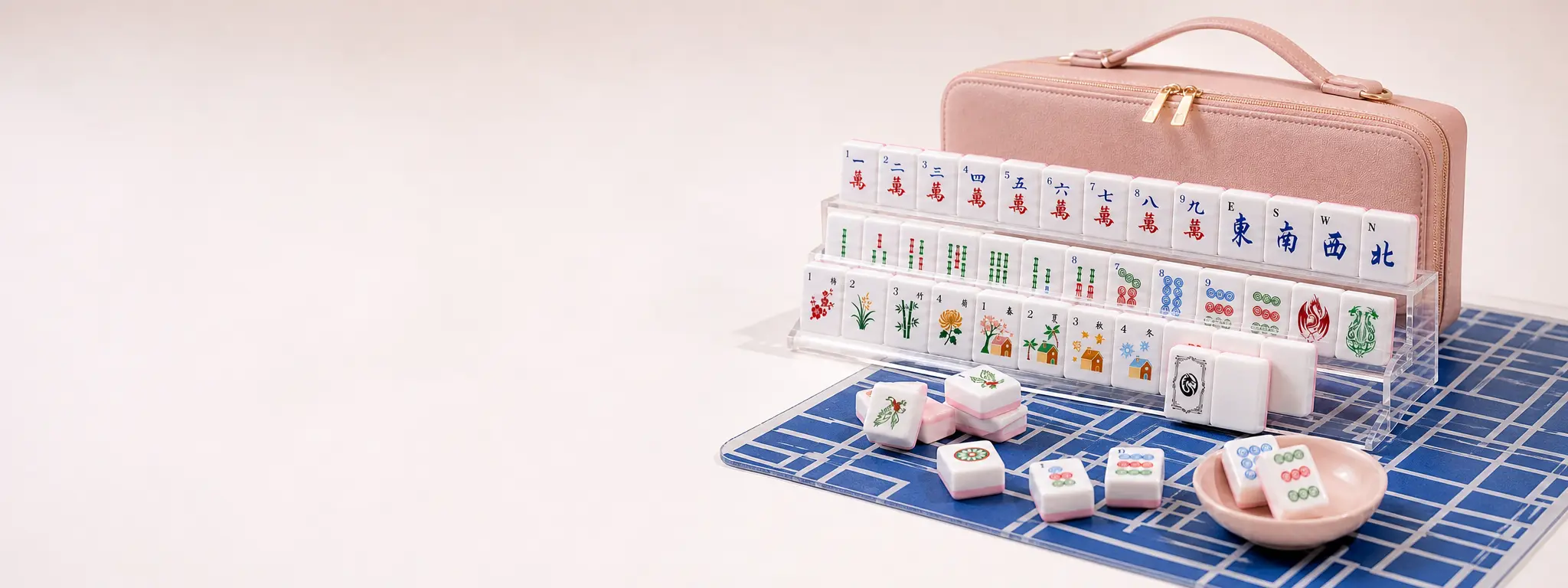
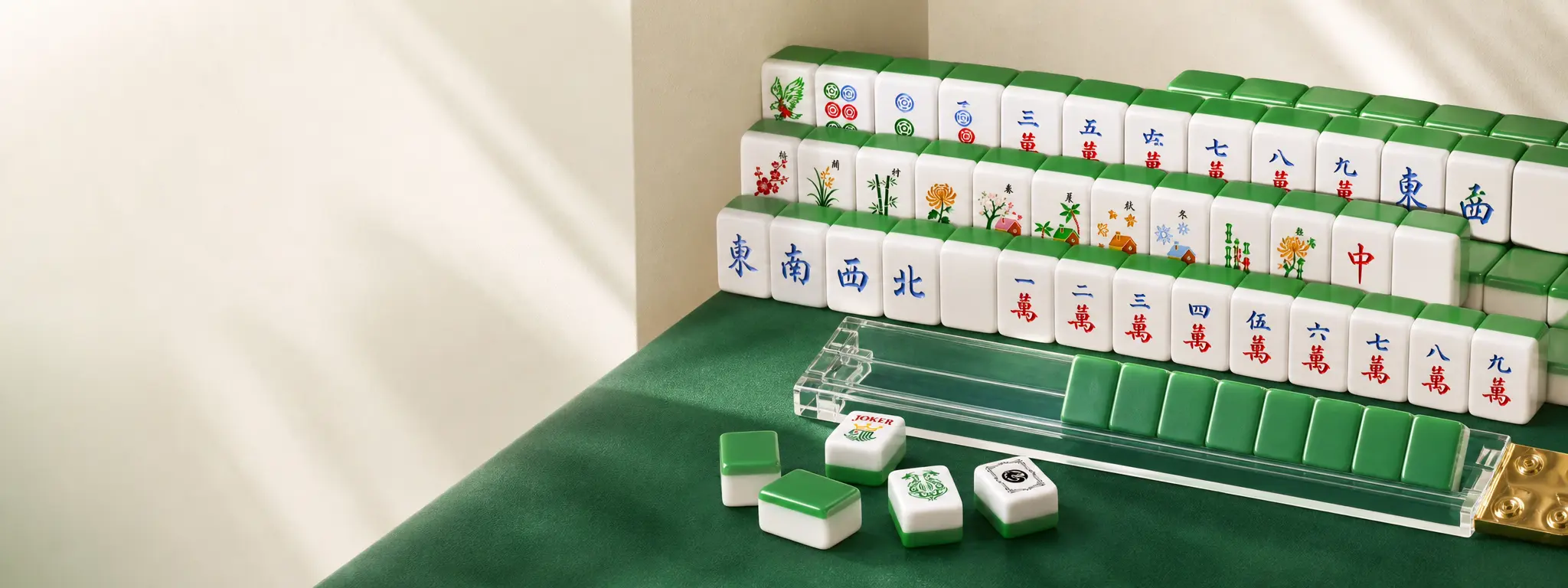
The card assumes that players know the ordinary tile families. Dots, Bams, and Craks are the three numbered suits. Winds are East, South, West, and North. Dragons are red, green, and white, with the white dragon often called Soap in American Mahjong conversations. Flowers and Jokers have their own roles and should be identified before you compare patterns.
If a symbol is unclear, place the matching physical tile beside the printed line. A JOKKOL set with high-contrast faces helps because the tile can be checked without turning the card into a guessing exercise. This is especially useful when a group includes a new player or someone who is learning in a room with bright overhead light.
Read one hand in four passes
When a line catches your eye, use the same four-pass method every time:
- Find the section. Confirm that the heading matches the kind of pattern you are considering.
- Count the groups. Separate pairs, pungs, kongs, singles, and any consecutive run shown on the line.
- Check the suits. Mark whether the line calls for Dots, Bams, Craks, winds, dragons, flowers, or a mix.
- Check exposure and value. Read the note at the end before deciding whether the hand is practical for your table.
This method stops a common mistake: seeing a familiar number pattern and missing that the line requires a specific suit or a concealed arrangement.
Understand Jokers and pairs carefully
Jokers are one of the features that make American Mahjong distinct, but their use is not identical in every grouping. A Joker may be useful in an exposed group when the current rules permit it; a pair is often treated differently. The American Mahjong rule card and your group's rule reference should answer the exact situation.
When a player replaces a Joker, pause long enough for everyone to see which tile is being exchanged and where the Joker returns. Keep the replaced tile visible until the table agrees that the hand still follows the line. Clear handling matters more than speed, especially in a learning game.
Compare possible hands without overcommitting
At the start of a round, mark two or three realistic lines rather than circling half the card. Ask:
- Which line uses the tiles already in my rack?
- How many unique tiles would I need to draw?
- Does the line require a concealed hand that conflicts with my first call?
- Are the needed suits still available, or have several appeared in discards?
- Is the hand understandable enough to explain if another player asks?
The best line is not always the one with the most attractive pattern. A flexible line that fits your actual tiles can be easier to develop than a clever pattern that needs several unlikely draws.
Keep the card readable during play
Use a flat spot on the mat or a small stand, and avoid covering the section your group is discussing with dice or discarded tiles. A pencil-sized bookmark or removable tab can help a teacher return to the same section without folding the card. Do not write permanent notes on a current card unless the publisher allows it; use a separate notebook for house reminders.
JOKKOL's Mahjong products include coordinated tiles and table accessories that leave room for a shared card. For a rules reference or a replacement-friendly setup, contact JOKKOL with the tile and accessory details your group already uses.
A five-minute practice drill
Take one hand line and set out only the tile families it names. Read the line aloud, hide one required tile, and ask another player which group is incomplete. Then repeat with a Joker in a permitted group and a Joker in a pair. This quick drill builds card fluency without requiring a full game.
FAQ
Do I need a new American Mahjong rule card every year?
Use the edition your group has chosen. Because standard hands can change by edition, confirm the current card before a new season or organized event.
How do I read symbols on an American Mahjong rule card?
Start with the section heading, identify the tile families, count the groups, and then read the exposure and value notes. Place physical tiles beside the line while learning.
Can Jokers be used in every American Mahjong hand?
No. Joker use depends on the grouping and the current rules. Check the card and your group's rule reference before exposing a Joker.
What is the easiest section for a new player?
Choose a section with familiar number patterns and fewer special notes. Practice one line slowly before comparing several sections.
Where can I find compatible tiles and racks?
Browse the JOKKOL American Mahjong collection and ask about compatibility when replacing an older set.