
How to Play American Mahjong: A Friendly First-Round Walkthrough
People often search how to play American Mahjong after seeing a table full of tiles, racks, and a card of hands. The first round feels easier when you understand the order of the table before trying to memorize every rule. This walkthrough covers the physical setup, the Charleston, drawing and discarding, calling a hand, and the small habits that keep a new group moving. JOKKOL's colorful American Mahjong sets and accessories are made for a table where the equipment is clear and the conversation can stay friendly.
Begin with the right version
American Mahjong is its own form of the game. Players commonly use a current standard-hands card, Joker tiles, and a Charleston in which unwanted tiles are passed around the table. Chinese, Japanese riichi, and other regional versions use different tile mixes and procedures. Agree on the version before the case is opened. A set that is beautiful but built for another rule system can make a first lesson confusing.
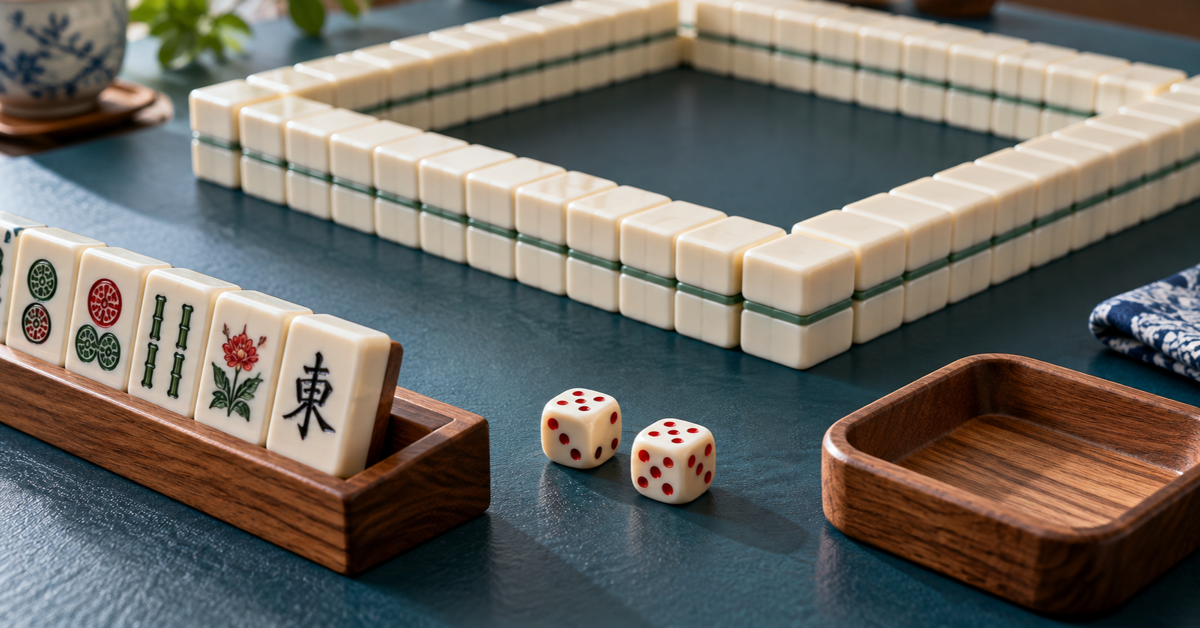
For a home game, place four racks around a comfortable table. Keep the rules card or rulebook visible, put the dice within reach, and leave enough room for four walls. A mat is optional, but it can give the walls a clear boundary and make a shared table easier to reset.
Set up the table in a repeatable order
Use the same sequence every time:
- Put one rack in front of each seat.
- Place the tiles face down and mix them gently.
- Build four walls according to the instructions your group follows.
- Keep the dice in the center until the opening roll.
- Put the current card where all four players can read it.
- Leave a small open area for discards and called tiles.
The goal is not a perfect display. It is a table that lets every player see their own hand, reach the wall, and follow the same signals.
Understand the opening and the Charleston
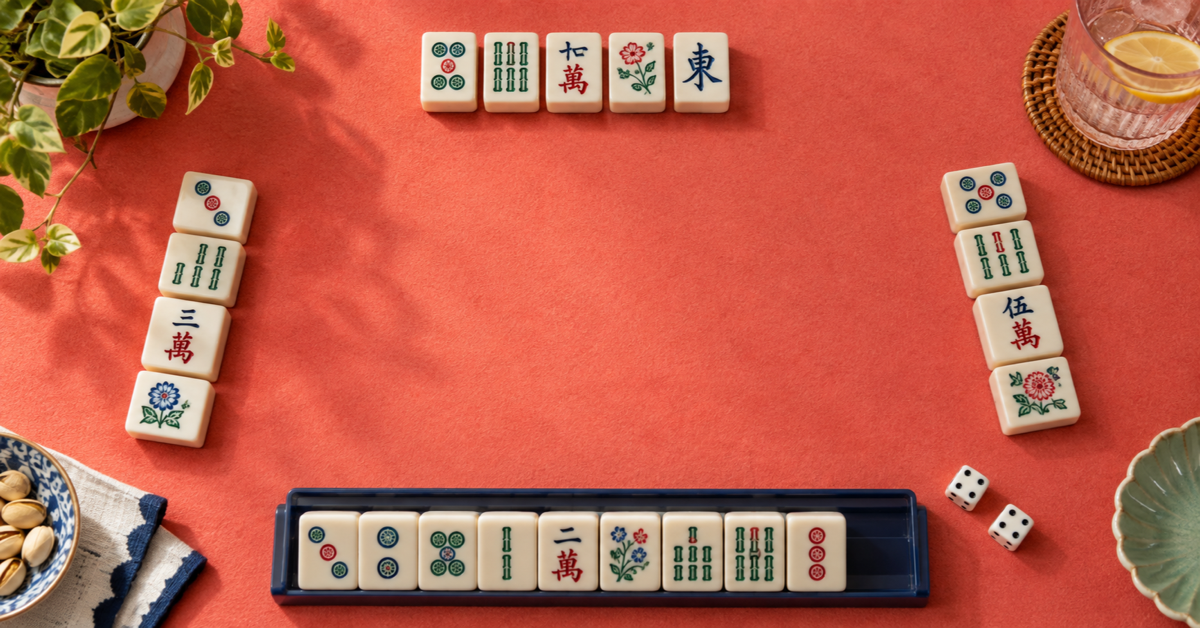
The opening roll determines the starting procedure used by your group. After the initial deal, players arrange their tiles on the rack and look for possible patterns on the current card. The Charleston follows: players pass unwanted tiles in an agreed direction, then make another pass. It is a sorting conversation as much as a rule step. New players should say the direction out loud and pass only when everyone is ready.
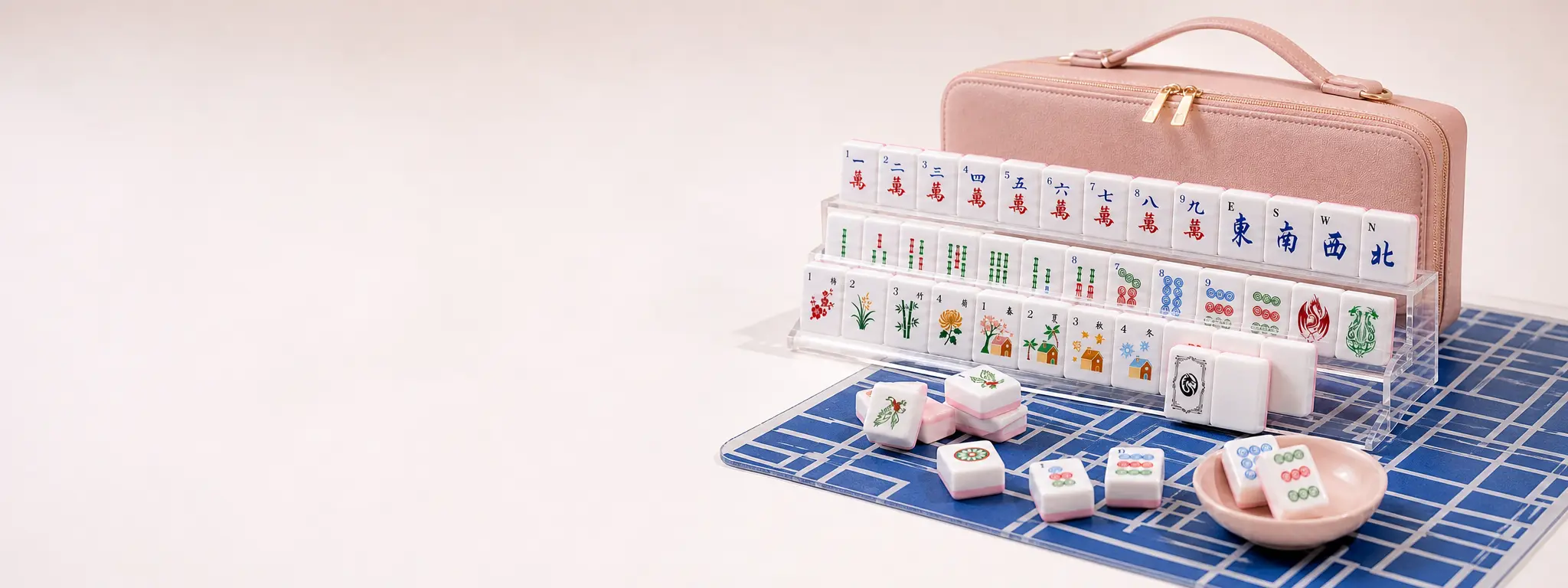
During a first lesson, do not rush the Charleston. Let players ask why a tile is being passed. A slow explanation now prevents repeated stops later, especially when someone is still learning the difference between Dots, Bams, Craks, winds, dragons, flowers, and Jokers.
Draw, decide, and discard
Once the Charleston is complete, the round settles into a rhythm:
- Draw the next tile when it is your turn.
- Compare the tile with the hand you are building.
- Keep it, exchange it in your rack, or discard it face up.
- Give the next player a clear pause to see the discard.
The card is the reference point for possible winning hands. Beginners often feel pressure to decide too quickly. It is fine to take a moment, read the pattern again, and keep the rack organized. A neat hand makes the next decision easier than a fast but tangled one.
What does it mean to call a tile?
Calling a tile means claiming a discard when your rules allow it. The player exposes the relevant group on the table, then continues with the correct turn order. A call changes what everyone can see, so announce it clearly and place the exposed tiles in a consistent direction. If your group is unsure about a call, pause and check the rule reference rather than guessing.
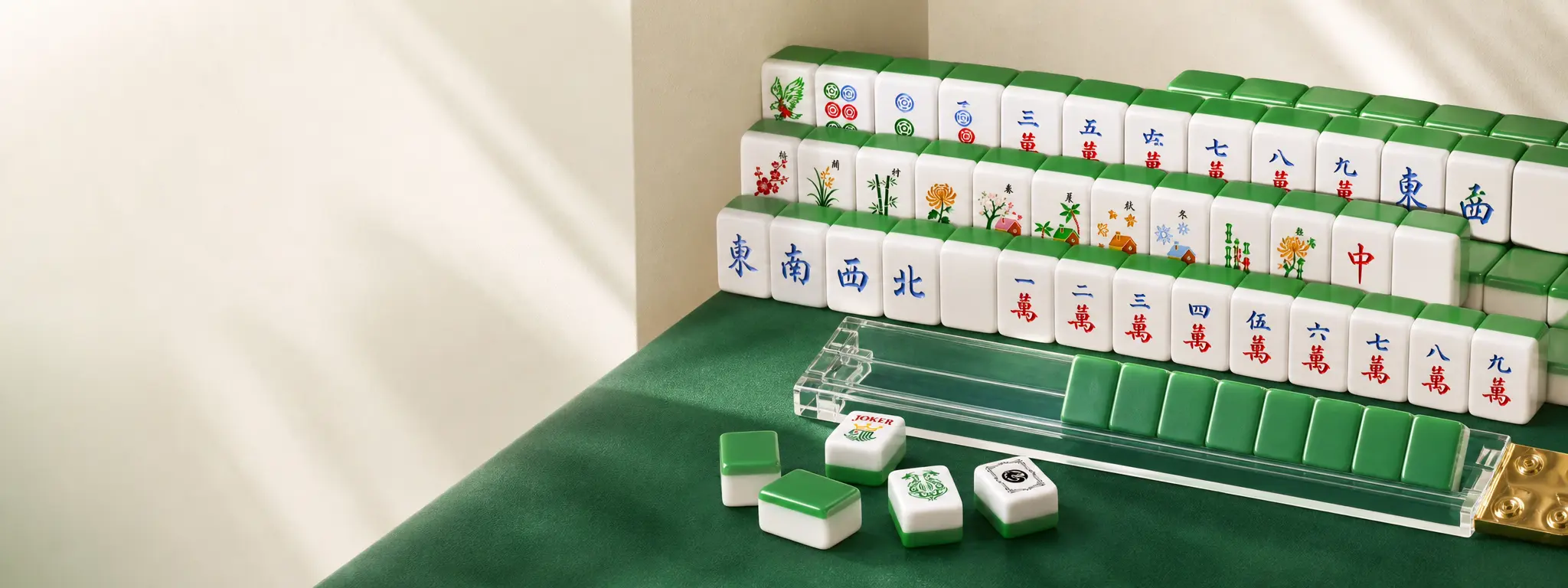
Jokers require special attention. They can be useful in some groupings, but they are not a universal substitute in every part of every hand. Keep the current card and your group's rule source beside the table, especially during early sessions.
How does a player win?
A player wins by completing a hand that matches a pattern on the current card and announcing Mahjong at the correct moment. The exact scoring and payment conventions vary by group. For a first game, focus on three fundamentals:
- The hand must match a listed pattern.
- The player must have the required exposed and concealed groups.
- The announcement must be clear before the next action changes the table.
After the hand ends, show the matching line on the card. This simple habit turns scoring into a shared check instead of an argument.
A small glossary for the first round
| Term | Plain-language meaning |
|---|---|
| Rack | The holder that keeps a player's hand upright and private. |
| Wall | The rows of face-down tiles prepared before play. |
| Charleston | A sequence of passing unwanted tiles before regular play. |
| Discard | A tile placed face up after a player draws. |
| Call | Claiming a discard when the rules permit it. |
| Joker | A special American Mahjong tile whose use depends on the hand and rules. |
| Exposed group | Tiles shown on the table after a call. |
Keep the first game welcoming
Choose one person to read the card and one person to keep the table order moving. Do not correct every small pause. Instead, agree on a short phrase such as “check the card” when someone is unsure. A dedicated mat can reduce sliding and define the discard area; racks and pushers can make the physical setup easier for a new player to copy.
JOKKOL offers American Mahjong tiles in several back colors, along with racks, pushers, dice, mats, and a rulebook. Browse the JOKKOL Mahjong collection for a coordinated setup, or contact JOKKOL when you need help matching accessories.
FAQ
How many people play American Mahjong?
The standard table has four players. Some groups use house rules for three-player practice, but agree on the variation before starting.
How many tiles do you start with?
The opening arrangement follows the American Mah Jongg rules your group uses. Use the current card and rule reference instead of assuming another Mahjong version's deal applies.
Is American Mahjong hard to learn?
The card and vocabulary take practice, but the table rhythm is learnable. Start with setup, tile recognition, and the order of a turn before studying advanced strategy.
Do I need a mat to play?
No. You can play on a clear, stable table. A mat can make wall placement, noise, and cleanup easier for regular game nights.
What is the best way to learn how to play American Mahjong?
Play one slow practice round with a teacher or patient group, keep the card visible, and use a readable set whose racks and accessories fit together.