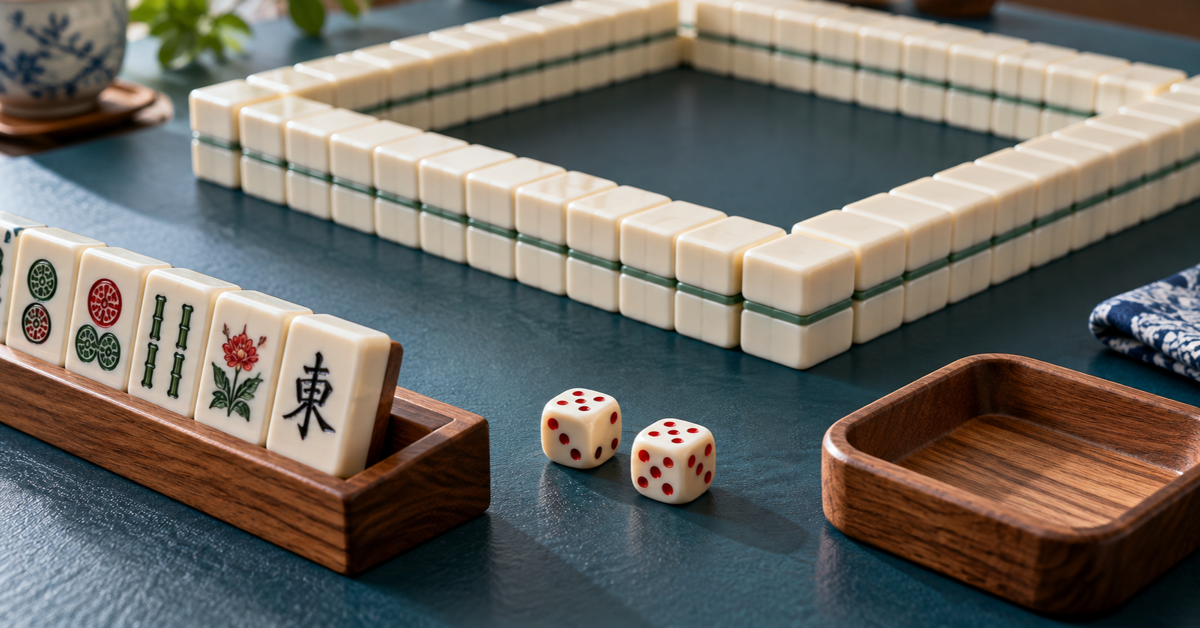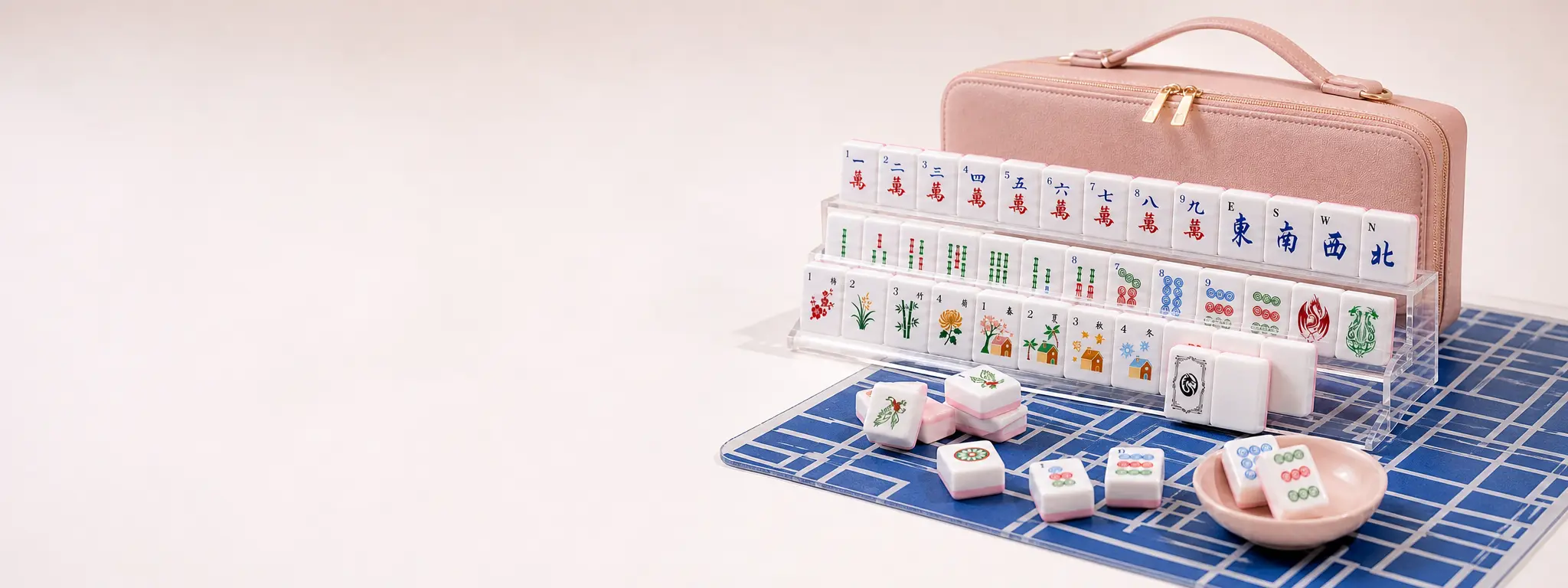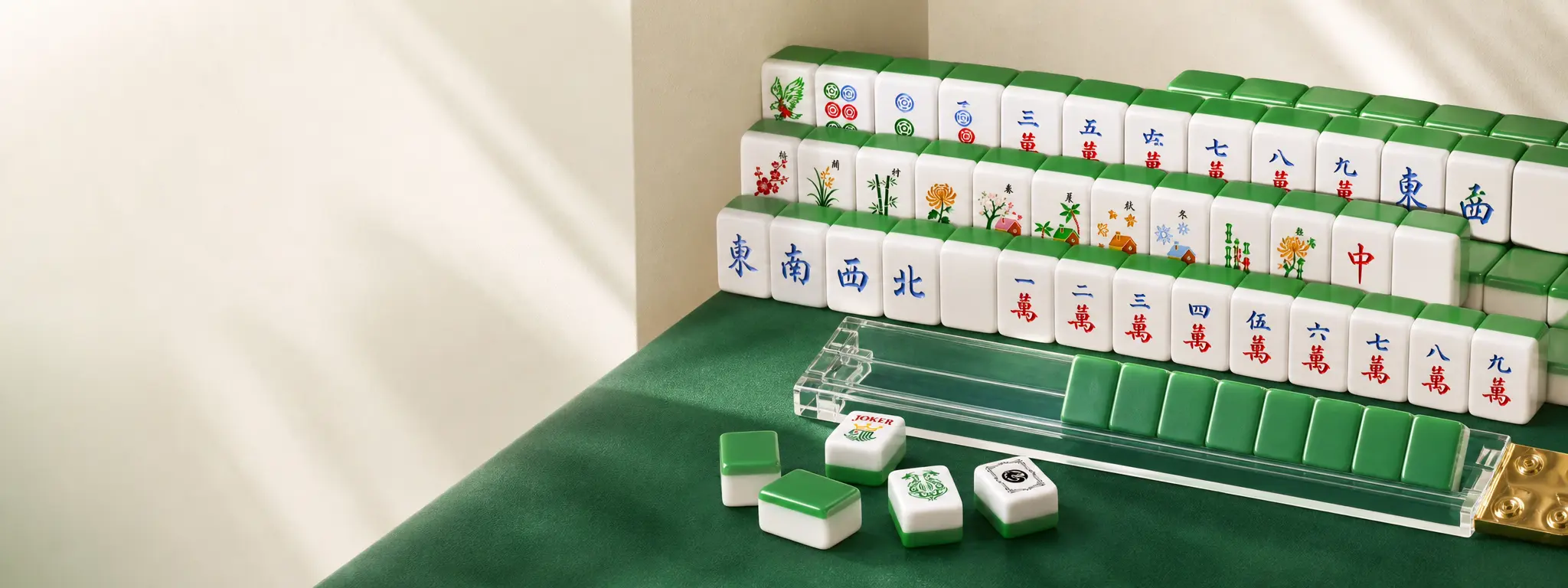

American mahjong Charleston rules are easier to learn when you separate the direction of each pass from the decision about which tiles to keep. In the usual NMJL-style sequence, the first three passes go right, across, and left. The optional second sequence goes left, across, and right. Each regular pass contains three tiles, and Jokers must not be passed. An optional courtesy exchange with the player opposite comes after the Charleston ends.
Use this as a practice session for four learners, not a replacement for your group's current card and rulebook. Put those references on the table. The aim is to finish a pass without losing count or revealing a tile, then gradually add hand selection. Speed can wait.
Put the passing route on paper first
Write the directions where all four seats can see them. Each player interprets right and left from their own seat, not from the host's viewpoint. Across means the person directly opposite. The National Mah Jongg League's overview identifies this preliminary tile exchange as one feature that distinguishes its American game.
| Stage | Direction from your seat | What to remember |
|---|---|---|
| First sequence, pass 1 | Right | Choose three non-Joker tiles. |
| First sequence, pass 2 | Across | Reconsider the hand before choosing the next three. |
| First sequence, pass 3 | Left | This is one of the permitted blind-pass opportunities. |
| Decision point | Pause | Any player can stop before the second sequence begins. |
| Second sequence, pass 1 | Left | Continue only when everyone has agreed. |
| Second sequence, pass 2 | Across | Keep the packet to three tiles. |
| Second sequence, pass 3 | Right | The other permitted blind-pass opportunity. |
| Courtesy exchange | Across | Optional; opposite players agree on an equal number, up to three. |
Some players use ROLLOR as a reminder: right, over, left, left, over, right. "Over" means across. The memory aid describes the full six-pass route, not a requirement to perform the optional second sequence every time.
The Mahjong 4 Friends Charleston guide provides another explanation of the sequence, blind passing, and the courtesy exchange. For a disputed or exceptional situation, consult the current official rules your group follows rather than treating a practice mnemonic as the final authority.
Round one: learn the motion without choosing a hand
For this drill, put aside the pressure to build a winning hand. Use three ordinary non-Joker tiles per player and rehearse the route face down. This is a handling exercise, not a legal deal or a scored game.
Have one person announce "right." Everyone points to the recipient first, then moves the packet. Repeat for across and left. Pause. If the group chooses to practice the second sequence, say that explicitly and continue left, across, right.
The physical separation matters. Keep an outgoing packet away from the rack and an incoming packet away from the previous exchange until you know what it is. When four people talk at once, two small piles can become surprisingly easy to confuse.
At the end, count the pieces used in the drill. If someone has two or four, trace the last exchange together. Do not correct the count by quietly borrowing a tile from another pile. You want to find the handling mistake while there are only a few pieces involved.
Round two: choose what to pass from a real deal
Now deal according to the group's rules and open the agreed hand card. Each player looks for one or two plausible directions based on the tiles already held. A tempting pair is useful only if it contributes to a hand you could actually build.
Try explaining the decision privately on a scrap of paper: "These tiles support this candidate; these three do not." You are not writing a full strategy essay. You are checking that a pass has a reason beyond disliking a suit or wanting to get moving.
For example, imagine you are considering a hand that needs a particular pair, and you already hold that pair. Breaking it merely to avoid thinking about the third outgoing tile deserves a second look. That does not mean pairs can never be passed. It means the candidate hand, not a blanket slogan, should drive the choice.
Keep Jokers out of the outgoing packet. Before moving it, count the three tiles and scan the faces once more. A brief final check is easier than resolving an accidental Joker pass after several people have already mixed the next packet into their racks.
After receiving tiles, reconsider the candidates. Useful arrivals may support the original choice or suggest a better one. Do not insist on the first idea just because you spent time finding it. Our beginner strategy article covers broader decision-making once this exchange feels familiar.
The blind pass: rehearse the arithmetic separately
Under the usual American mahjong Charleston rules, blind passing is available on the first left and the second right. It allows you to keep some or all of the tiles already in your rack by using unseen incoming tiles to complete the outgoing packet. The packet still contains three tiles.
| Tiles you choose from your rack | Unseen incoming tiles passed onward | Total sent |
|---|---|---|
| 3 | 0 | 3 |
| 2 | 1 | 3 |
| 1 | 2 | 3 |
| 0 | 3 | 3 |
The key word is unseen. Once you look at an incoming tile, you cannot pretend it was passed blindly. Nor does blind passing mean sending fewer than three pieces or taking an extra tile from the wall.
Practice with face-down packets before adding it to a real Charleston. Say, "I am using one from my rack and two unseen tiles," then check the total. Have an experienced teacher demonstrate how to handle the incoming packet at your table so you do not accidentally reveal its faces.
There is no obligation to use a blind pass simply because it is allowed. For the first practice session, learning the ordinary route may be enough. Add the option when everyone understands where it occurs and what stays concealed.
Stop at the decision point, not halfway through a motion
After the first sequence, give everyone a clear chance to decline the second. A player does not need to announce the contents of their hand to the table. Avoid reaching for another packet before the group has settled whether to continue.
The optional courtesy exchange is a different decision. It is with the player opposite, after the Charleston has ended. Agree on the same number of tiles, up to three, and do not pressure a partner into exchanging more than they wish to exchange.
During a learning session, make the boundary audible: "The Charleston is finished; does either opposite pair want a courtesy exchange?" That sentence prevents an optional exchange from being mistaken for another compulsory pass around the table.
An error clinic for the first lesson
"I thought left meant the host's left." Point from your own chair before the practice packet moves. The rule is relative to each player. A single diagram turned toward one seat can be confusing to the person opposite.
"I have one tile too many." Stop the exercise and reconstruct the most recent exchange. Check packets and racks before moving anything else. If it occurs in a real game, use the applicable rulebook or ask the teacher; do not invent a penalty from this training drill.
"I passed a tile and immediately wished I hadn't." That is a decision to review after the hand, not a reason to reach into somebody else's packet. Record the thought privately and consider what you missed when selecting the pass.
"All my tiles look useful." Read the candidate hands carefully. Similar-looking tiles may serve incompatible plans. If the timing permits a blind pass, understand that option; otherwise, make the best legal three-tile choice instead of passing a Joker.
"I cannot keep up with the others." Ask for a slower teaching round before beginning. In this exercise, one clear pass is more valuable than six rushed ones. Once the route is familiar, attention is free for the harder question of which tiles deserve to stay.
Equipment for practicing at home
Use a verified American tile inventory, readable faces, and enough clear table space for separate incoming and outgoing packets. Racks should support the tiles without hiding essential markings. No special "Charleston set" is needed.
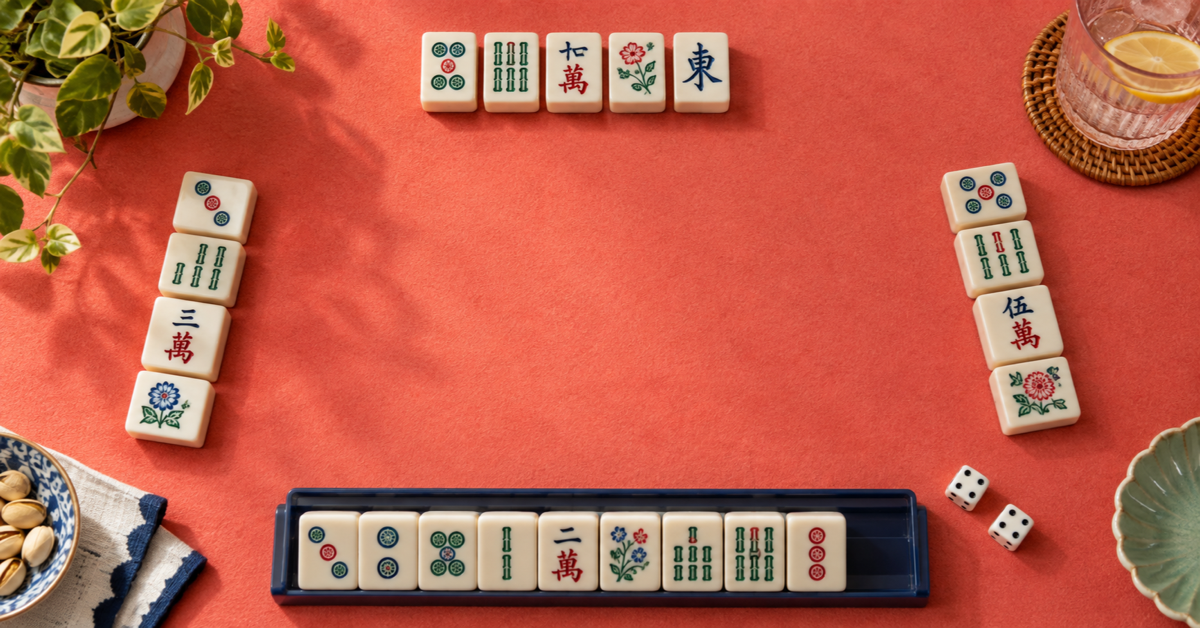
Display image, not a diagram of a legal deal or passing sequence.
You can browse JOKKOL American tile options and the rack and pusher collection. Before choosing, ask JOKKOL to confirm the model's inventory, dimensions, and included accessories. For the steps surrounding the exchange, return to the first-round walkthrough.
Five questions to check your understanding
Do I have to do all six passes?
No. The first sequence is the normal required Charleston; the second is optional and requires agreement. Pause after the first left rather than assuming everyone wants to continue. Consult the official rules for exceptional starting situations.
Can a Joker go into a Charleston packet?
No. Keep Jokers out of the tiles selected for passing. If one is passed accidentally, stop and consult the applicable rules or teacher promptly rather than quietly adjusting several hands.
Does a blind pass change the packet size?
No. You still send three tiles. The difference is that some or all may be unseen incoming tiles rather than pieces selected from your rack. Practice the arithmetic separately until that distinction is clear.
Must I take part in a courtesy exchange?
No. Opposite players agree whether to exchange and how many, up to three. It is not another compulsory Charleston pass. Both members of the pair exchange the same agreed quantity.
Should beginners memorize strategy before the directions?
Learn the route and handling first. Then practice choosing passes against the actual card. Trying to memorize every strategic exception while still confusing right and left makes the first lesson harder than it needs to be.
American mahjong Charleston rules become much less intimidating after a few deliberate rehearsals. Keep the first session narrow: correct direction, three tiles, no Jokers, and a clear pause before optional exchanges. The hand-building decisions can grow from there.