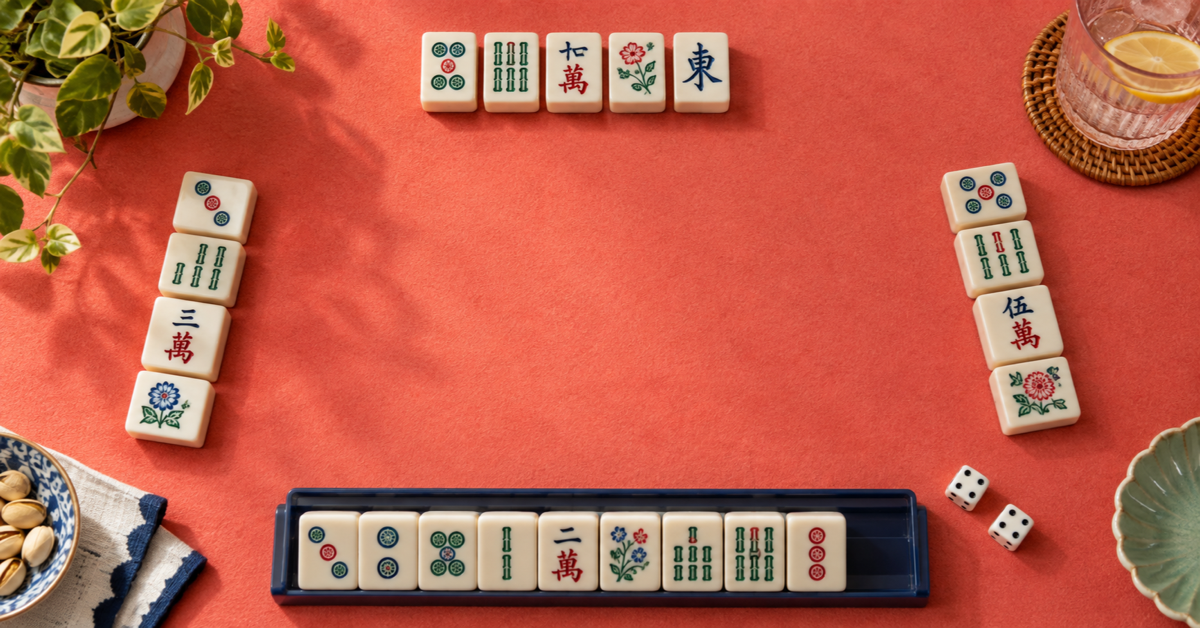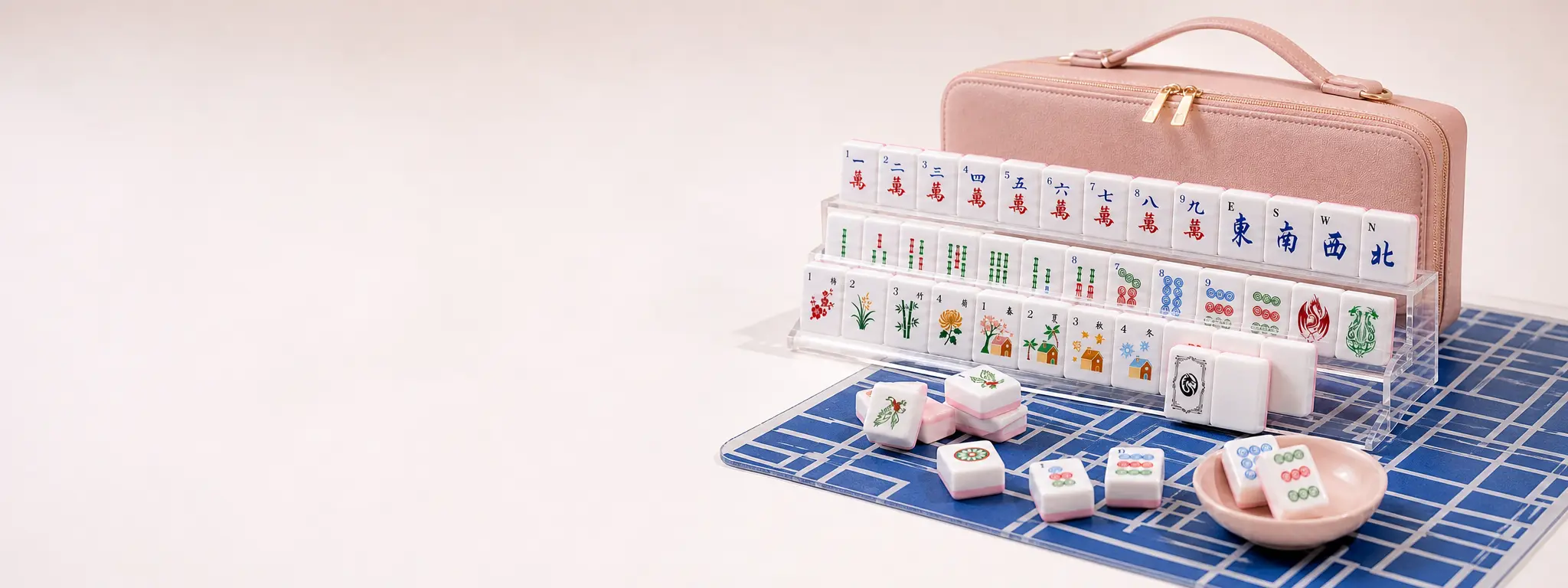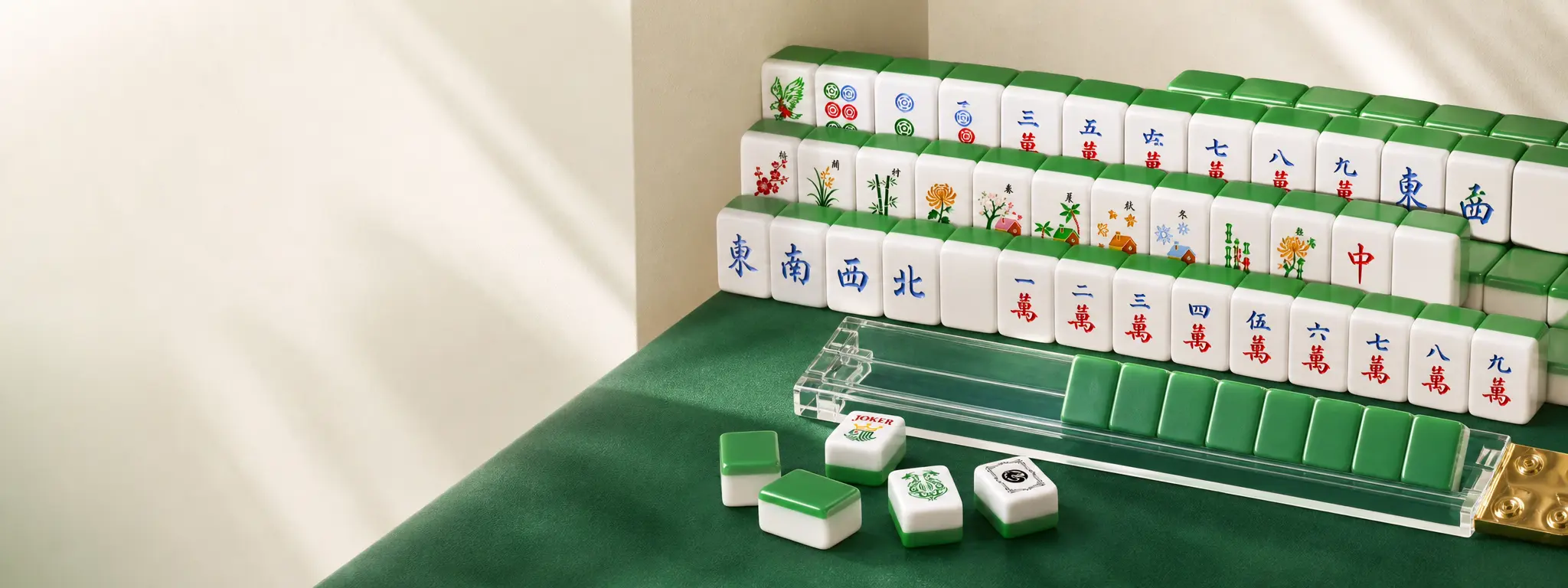

What are dice used for in Mahjong? In many games, they turn the start of a round into a visible, shared decision. The roll can help choose the dealer or first player, identify a wall, determine where that wall is opened, and establish the order that follows. The exact procedure belongs to the rules your group plays.
It is more useful to understand the roles the dice perform than to memorize one universal sequence. This guide organizes the setup into four jobs and provides a table routine that keeps the roll readable and repeatable.
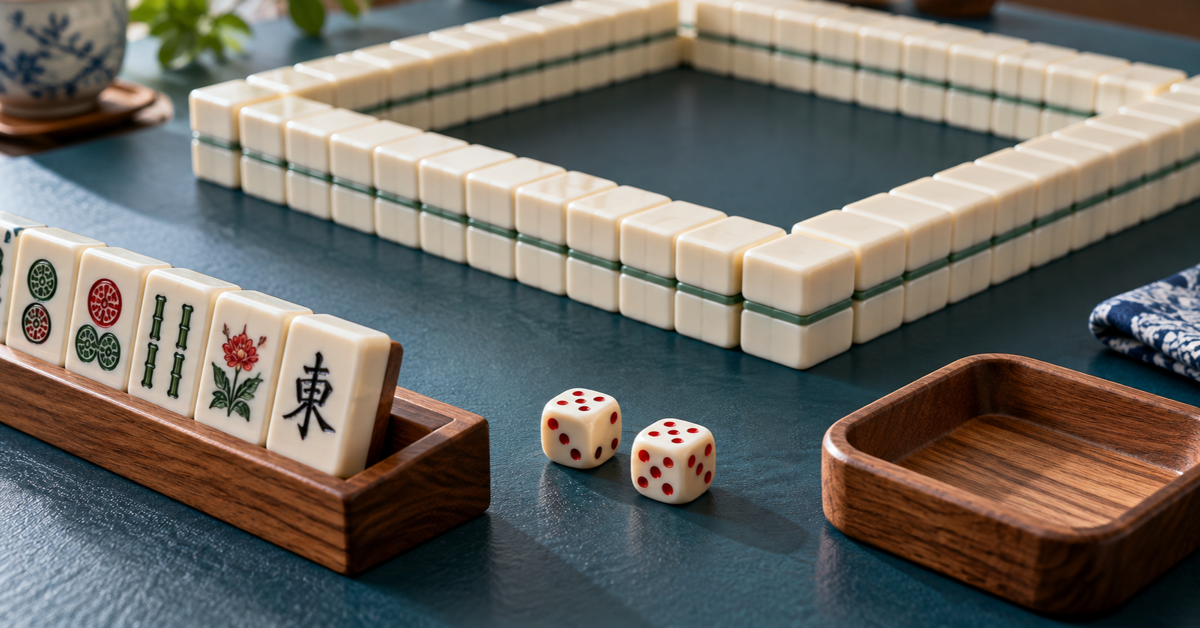
Display image: follow the group's current rules for the exact roll, counting direction, and wall opening.
Role 1: choose the starting player
The first job may be to decide who begins. Some groups roll to select a dealer or East seat; others begin with a player who was already designated. The highest number may win, the lowest may win, or ties may be handled another way.
Agree on the method before the dice leave the center of the table. A setup routine should not depend on memory after four people are arranging their racks. Put the current rule reference or house note where everyone can see it.
Role 2: identify the wall or starting side
Once the first player is known, the dice may be used again to identify which side of the square wall supplies the opening. A number can correspond to a seat or a direction in the group's rules. That result should be read aloud and physically pointed out before anyone counts tiles.
This is where two common errors happen:
Reading direction from the wrong seat. The speaker may say "right" while pointing from their own perspective. Everyone should confirm the named wall from their own position.
Counting from the wrong corner. Even when the correct wall is selected, the starting corner and counting direction may differ. Follow the group's rules rather than a generic memory aid.
Role 3: locate the break
The dice total can determine how many stacks or positions to count before the wall is broken. The purpose is not to make the setup mysterious; it is to create a fair, visible starting point.
Keep the wall intact while the count is announced. One player can count while another watches. If the group disagrees, stop before separating tiles. Rebuilding a wall is easier than reconstructing who dealt from which section after play begins.
How many dice are involved?
American Mah Jongg commonly uses three dice, although the exact quantity and procedure should come from the rules your group follows. Some other Mahjong variations use a different convention.
Pack the intended number with the set so the routine is never interrupted. If the dice are missing, replacing them with unrelated tabletop dice may create confusion if the markings, size, or quantity differ.
Role 4: set the order and begin dealing
After the break is located, the dice have completed their setup job for that round. Deal and draw according to the group's rules. Keep the dice visible until the first tiles have been distributed, then return them to a consistent place.
When the dealer rotates, repeat the same routine. A written setup card can include:
- Who rolls
- How many dice are used
- How the first player is chosen
- Which way the wall number counts
- Where the break begins
- Who deals first
- Where the dice are stored afterward
This card is especially helpful for a new player or a substitute host. It does not replace the official rules; it records the way that group applies them.
Build a repeatable table routine
Smooth setup comes from consistent physical habits. These work for many groups:
- Keep the dice in one small tray or bowl.
- Roll on the mat or a defined flat area.
- Let every die stop before reading the result.
- Announce the total and the chosen side.
- Point to the wall before counting.
- Leave the wall untouched until the count is agreed.
- Return the dice to the same compartment after dealing.
The routine should be easy to see and hear. If one player always rolls beyond the table, use a shallow tray. If the pips are hard to read, use dice with clear contrasting markings. Those are equipment improvements, not rule changes.
Keep the dice with the set
A small accessory is easy to lose during cleanup. Give dice their own pouch or case compartment, separate from loose metal objects and tile faces. Check that they are dry before packing them.
If the set travels, count the dice during the same reset used for tiles and racks. The American Mahjong accessories guide explains how to organize the full table system.
JOKKOL offers Mahjong dice as a category, with model details available on the current product page. Confirm the quantity and markings when ordering a replacement.
Troubleshooting a disputed roll
Stop the setup and reset the physical action. Ask the players to agree on what happened before another roll:
- Did a die leave the table?
- Did someone read the top instead of the face?
- Was the total added before both dice or all three stopped?
- Did one player count from a different corner?
- Was the number read as a side rather than a total?
If the group's rules do not answer the situation, use a fair house decision and record it on the setup card for next time. Do not invent a penalty or continue dealing while two people disagree about the wall.
Dice markings and care
Readable dice reduce arguments. Look for even pips, clear contrast, and a size that is comfortable to roll. Check that opposite faces and repeated numbers are legible under the room light.
Clean according to the supplier's guidance. Avoid soaking printed dice if the material is not designed for it. Store them away from sharp objects and heavy tiles that can scratch the faces.
What dice do not decide
The dice do not choose a winning hand, replace the current rule card, or settle every table question. They support the opening procedure. Strategy begins after the deal, and disagreements should be resolved with the rules the group follows.
The answer to what are dice used for in Mahjong is therefore narrower than "deciding the game." Nor do dice make a set complete on their own. A tile collection still needs the correct playing inventory, a way to organize each hand, and a clear rules reference. Treat dice as one interface in a larger table system.
A quick pre-game check
Before the first roll, confirm:
- The correct number of dice is present.
- Every face is readable.
- The rolling surface is flat and contained.
- The current rules or house setup card is visible.
- The dealer knows which wall and direction to count.
- The dice have a designated storage spot.
This check takes less time than recovering a lost die or rebuilding a wall after a disputed count.
Frequently asked questions
What are dice used for in Mahjong?
Dice commonly support the opening procedure by helping the table choose a starting player, identify a wall, locate a break, or establish dealing order. The exact use depends on the variation and group rules.
How many dice do you need for American Mahjong?
American Mah Jongg commonly uses three dice, but the group's current rules should confirm the quantity and procedure. Keep the intended number with the set.
Do dice decide who wins the game?
No. They are used to start the round. Winning depends on the rules, the hand card or variation, and the tiles a player assembles.
Can I replace Mahjong dice with ordinary dice?
You can if they are the same size, quantity, and clearly readable, but matching the intended accessory is safer. Different markings or an unfamiliar die can confuse the setup routine.
What should I do if a die falls off the table?
Pause and follow the group's rule. If the rule is unclear, agree on a fair reroll before continuing. Record recurring house decisions on the setup card.
Good dice management makes the opening feel deliberate without turning it into a ceremony. Keep one readable set, follow one confirmed procedure, and return the dice to the same place after every game. Browse JOKKOL Mahjong dice when you need a replacement or a coordinated accessory set.