
Custom American Mahjong Set Planning: From Color Brief to Retail-Ready Pack
A custom American Mahjong set starts with a clear product brief, not a single color sample. Whether you are a boutique, a club, a creator, or a gift brand, the final set has to work at the table and make sense in a box. This planning guide explains how to turn an idea into a reviewable specification for tiles, printing, accessories, packaging, and future reorders. JOKKOL supports Mahjong product development through its Shenzhen manufacturing team and can discuss OEM, ODM, private-label, and custom-logo directions.
Write the buyer brief in plain language
Start with the person who will use or receive the set. A home player may want an easy-to-read colorful table. A club may need consistent replacements and a case that volunteers can repack. A retail brand may care about shelf presentation, barcode space, and a repeatable color story.
Capture five decisions before asking for a quotation:
| Decision | Questions to answer |
|---|---|
| Game format | Is the set for American Mahjong, another regional version, or a clearly labeled variation? |
| Audience | Beginners, experienced players, clubs, gift buyers, or a mixed audience? |
| Visual direction | Which back color, face contrast, logo treatment, and overall mood? |
| Table system | Are racks, pushers, dice, a mat, case, or rule reference part of the bundle? |
| Sales channel | Direct-to-consumer, retail, club supply, or a private-label program? |
This brief prevents a common production problem: approving an attractive tile while leaving the table experience and packaging undefined.
Separate fixed rules from flexible design
Some decisions must follow the chosen game format. Tile families, Joker treatment, labeling, and the wording of a rules reference should be checked against the rules source your customers use. Other decisions are design choices: back color, case artwork, logo position, insert cards, and accessory colors.
Keep these two lists separate in the specification. It makes reviews faster and helps a supplier identify which change would affect playability rather than appearance. If an annual card or named league material is referenced, confirm permission and edition details before printing branded language.
Approve color with a full-table sample
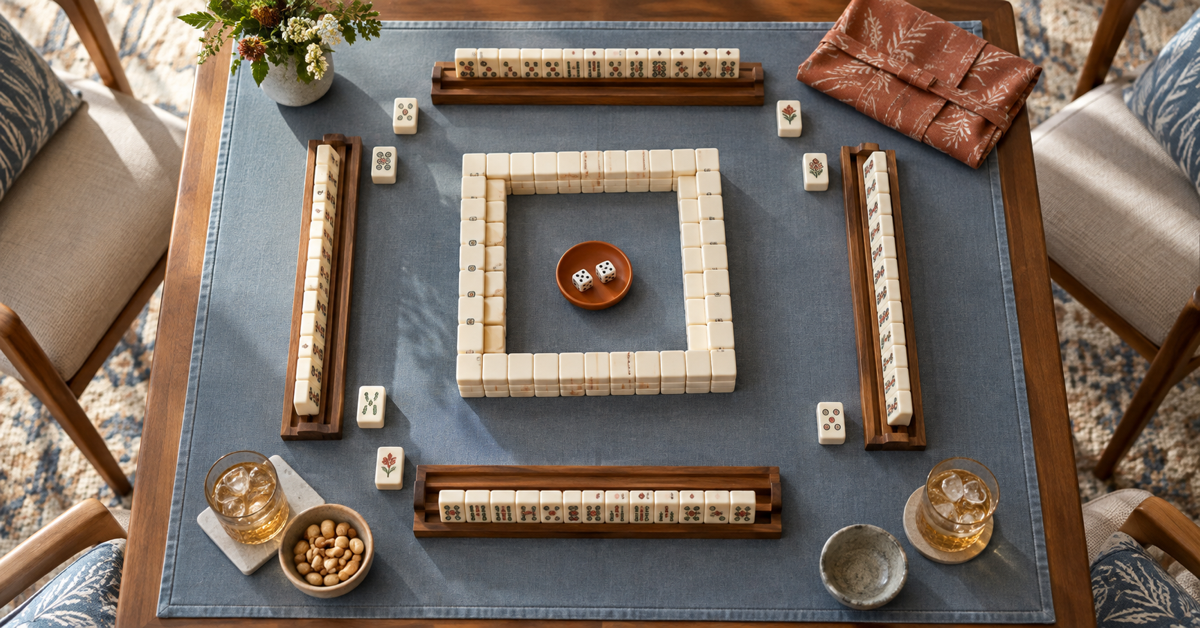
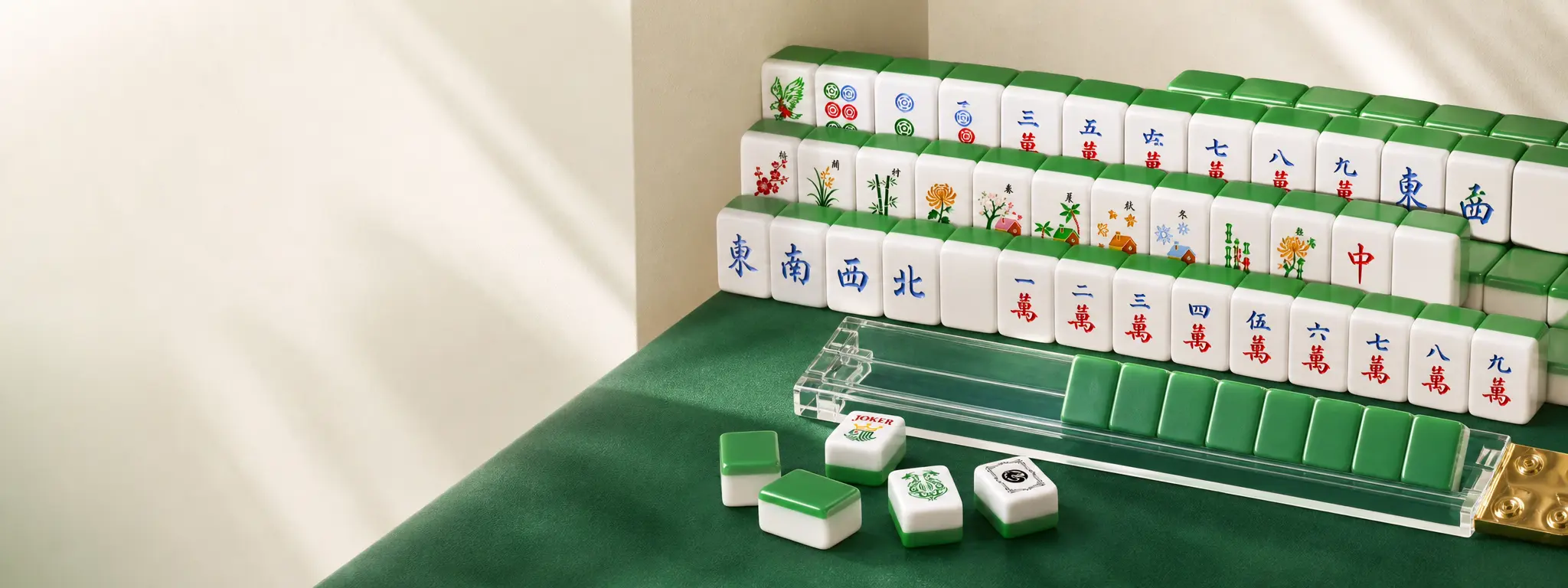
A color swatch does not show how a complete American Mahjong set will read under real light. Request a sample that includes several tile faces, the back, a rack, and the proposed packaging accent. View it on a kitchen table, in a club room, and in a phone photograph.
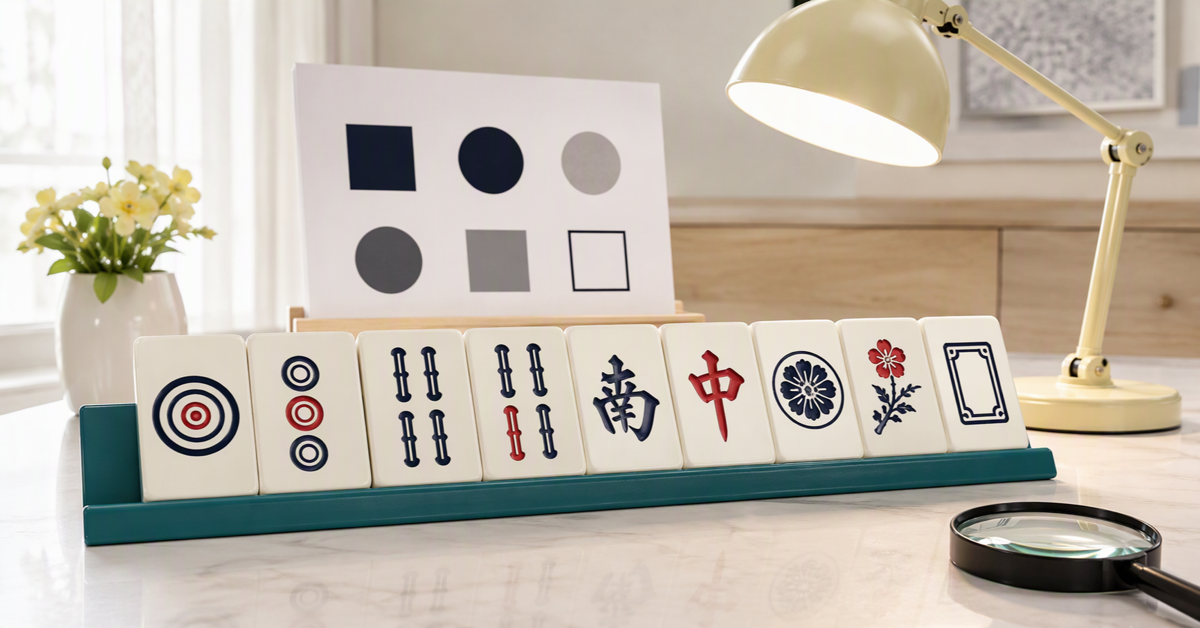
Check the sample from normal playing distance:
- Are Dots, Bams, Craks, winds, dragons, flowers, and Jokers distinct?
- Does the logo remain secondary to the tile symbols?
- Is the back color consistent across the sample pieces?
- Do the rack and pusher colors support contrast rather than reduce it?
- Does the set still look like the intended brand when the case is open?
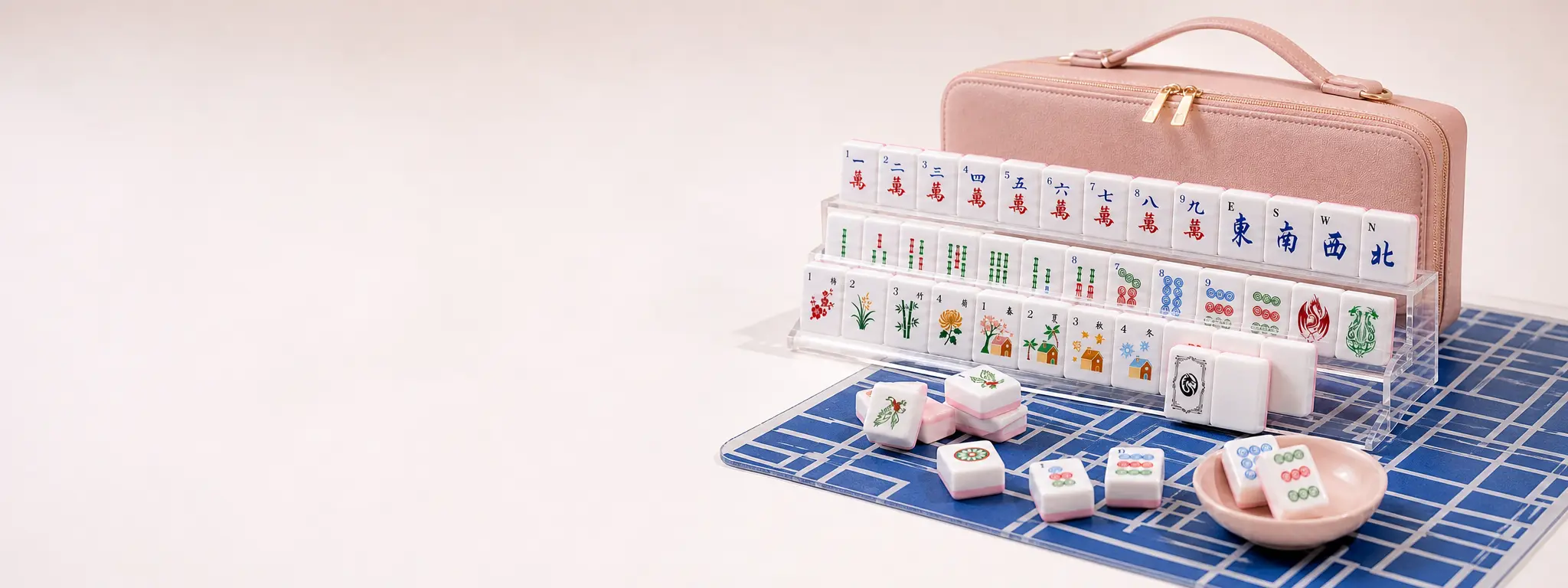
JOKKOL's pink, blue, green, yellow, and starlight pink directions offer useful starting points, but a custom project should be judged on the approved sample rather than a color name alone.
Specify the print and finish you can inspect
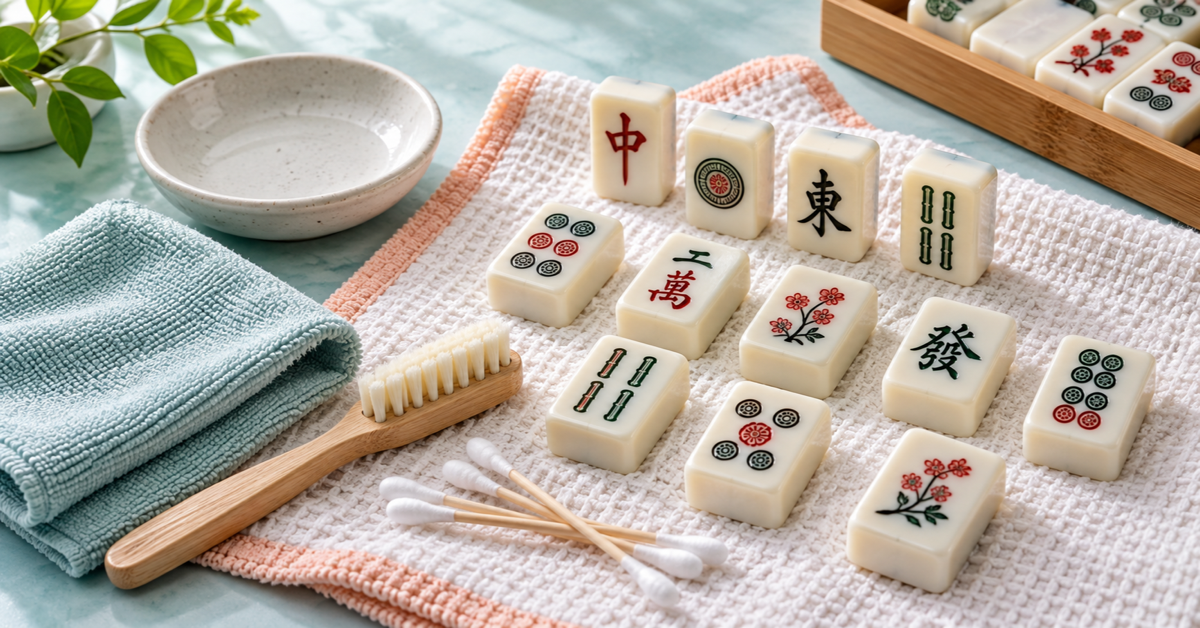
Ask for a description of how faces, backs, logos, and packaging graphics are produced. You do not need a proprietary formula to manage quality; you do need acceptance criteria. Examples include centered artwork, clean edges, consistent color, legible special tiles, and protection against ordinary handling.
Write the criteria so a reviewer can hold a sample and say yes or no. Avoid vague promises such as “luxury” or “unbreakable” unless they are tied to a test, a limit, and a documented result. Record the approved artwork version and keep one signed sample as the reference for a reorder.
Plan the accessory bundle as one system
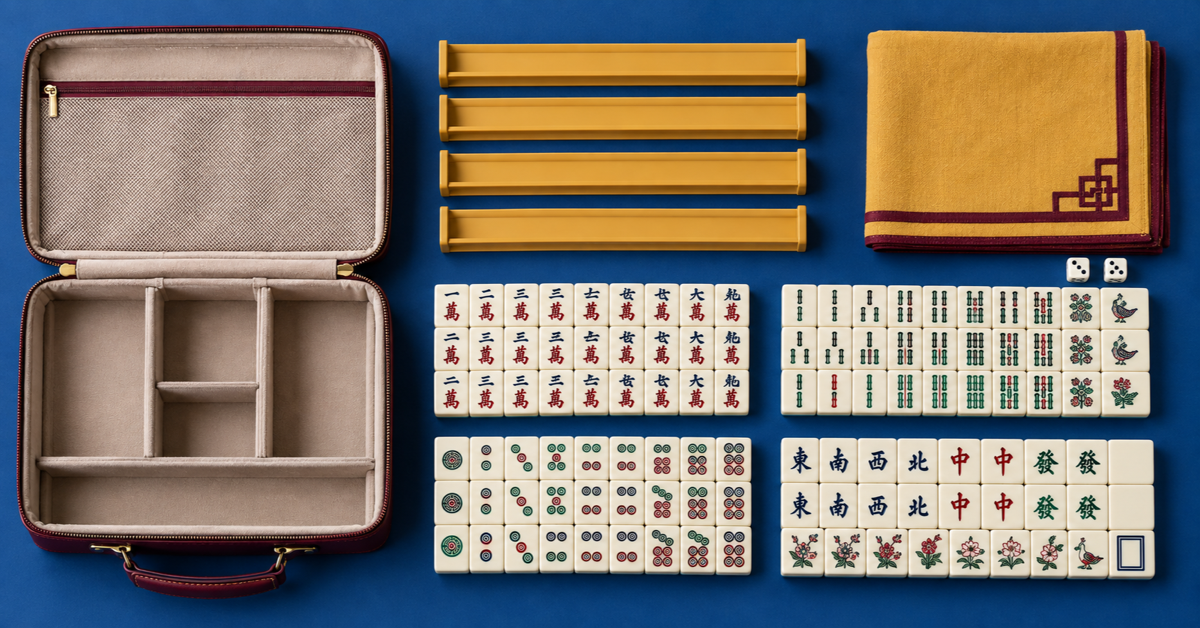
The tile set should not be designed in isolation. Confirm that racks fit the selected tile dimensions, pushers have a comfortable path, the mat leaves room for four players, and the case protects the finish. If a rule card or quick-start insert is included, leave a dry, flat compartment for it.
For retail, list every component on the outer package. For club supply, include a simple repacking diagram and a replacement process. A clear bundle reduces support questions after delivery and gives the customer confidence before opening the box.
Build packaging around the real unboxing
Packaging has two jobs: protect the pieces and explain the product. Test the packed set by lifting, turning, and opening it as a customer would. Check that loose dice cannot travel across the tile faces, that the handle is easy to grip, and that the first instruction a buyer sees is the one they need.
Use a separate artwork file for the case, insert, and shipping carton. Keep the product name, format, included components, care notes, and contact path consistent across each surface. This is where a small brand detail, such as a matched pink rack, can turn a generic bundle into a recognizable JOKKOL private-label presentation.
Use a pilot review before a larger run
Send pilot samples to people who play differently. Ask a new player about readability, an experienced player about handling and rules clarity, and a host about storage and repacking. Collect comments in a table with columns for issue, severity, proposed change, and approval owner.
Do not approve production while a critical playability issue remains open. Cosmetic preferences can be ranked; a misprinted symbol or incompatible rack needs a clear decision first. Keep the final specification, artwork, sample photos, and inspection checklist together for future reorders.
Ask JOKKOL focused questions
When you contact a supplier, include the game format, audience, target bundle, artwork status, sample needs, destination market, and any timing constraints. Ask which details can be customized, what the sample review includes, how packaging is approved, and how replacements or reorder matching are handled.
JOKKOL's About us page describes integrated design, production, packaging, and logistics capabilities. Use the Distribution page for a wholesale or channel conversation, and send a concise brief through Contact us.
FAQ
What should be included in a custom American Mahjong set brief?
Specify the game format, audience, tile and accessory bundle, colors, logo use, packaging, sample expectations, destination market, and inspection criteria.
Can I request a custom color Mahjong set?
Ask the supplier which colors and finish options can be sampled. Approve the color on a full-table sample so readability is judged in real conditions.
How do I protect a private-label Mahjong design?
Use approved artwork files, document logo placement, and keep a signed reference sample and inspection checklist for each reorder.
Should racks and pushers be customized with the tiles?
They should at least be checked for dimensional and visual compatibility. Matching colors or logos can be added when they support the table experience.
Who should discuss a distributor or OEM project with JOKKOL?
Retail brands, clubs, creators, and channel partners can send their brief through the JOKKOL distribution or contact pages for a scope discussion.