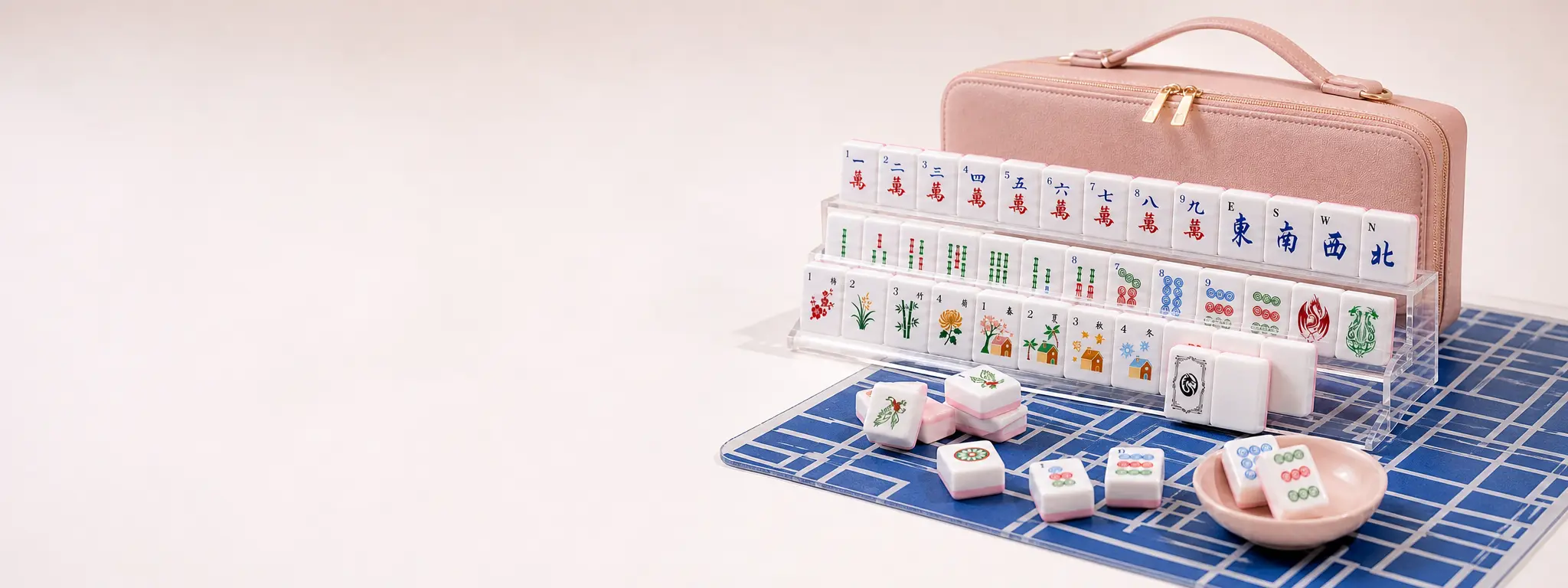

The useful answer to heavy mahjong tiles vs lightweight tiles is not that one is universally better. Weight changes how a tile feels in the hand, how a wall behaves when it is nudged, how quickly a rack can be rearranged, and how tiring a long session may feel. The right choice depends on the players, the table, the tile dimensions, and the amount of movement the set will make.
A scale can tell you the number of grams. It cannot tell you whether that number suits your group. Use the controlled test below to compare two sets under the same conditions, then judge the complete handling experience rather than a marketing word such as "premium" or "solid."
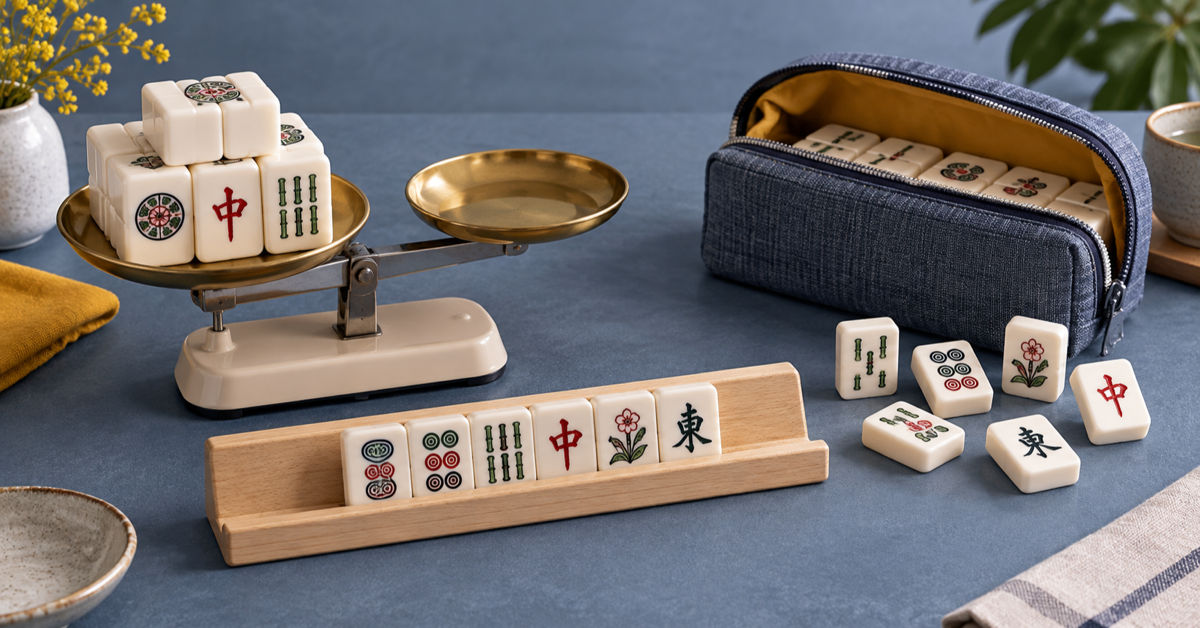
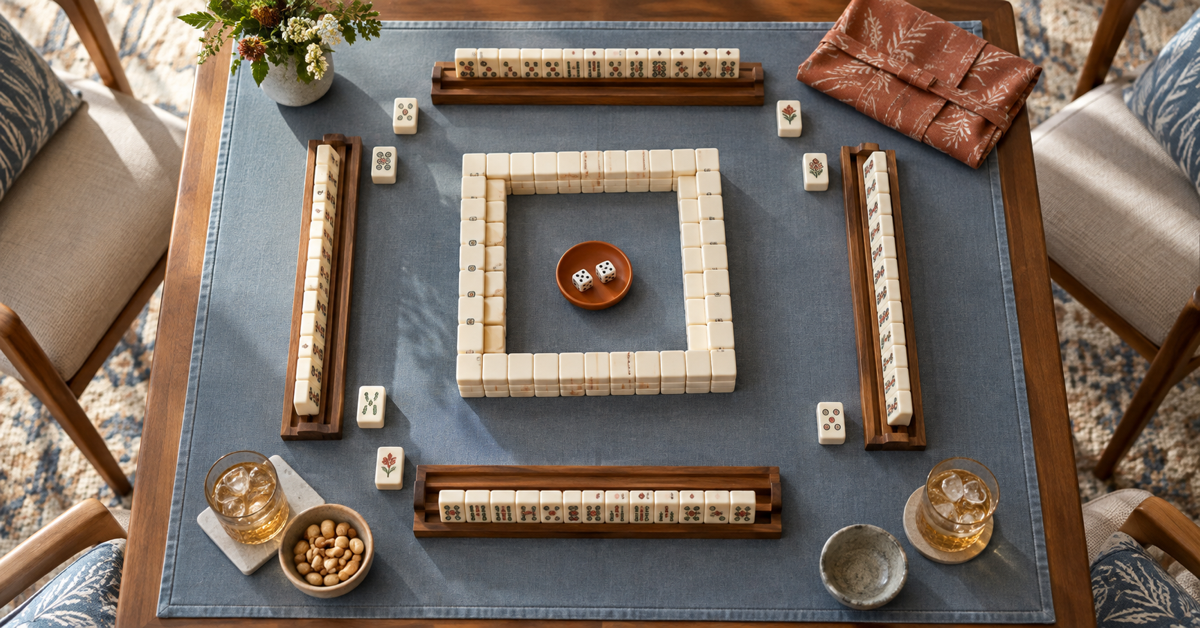
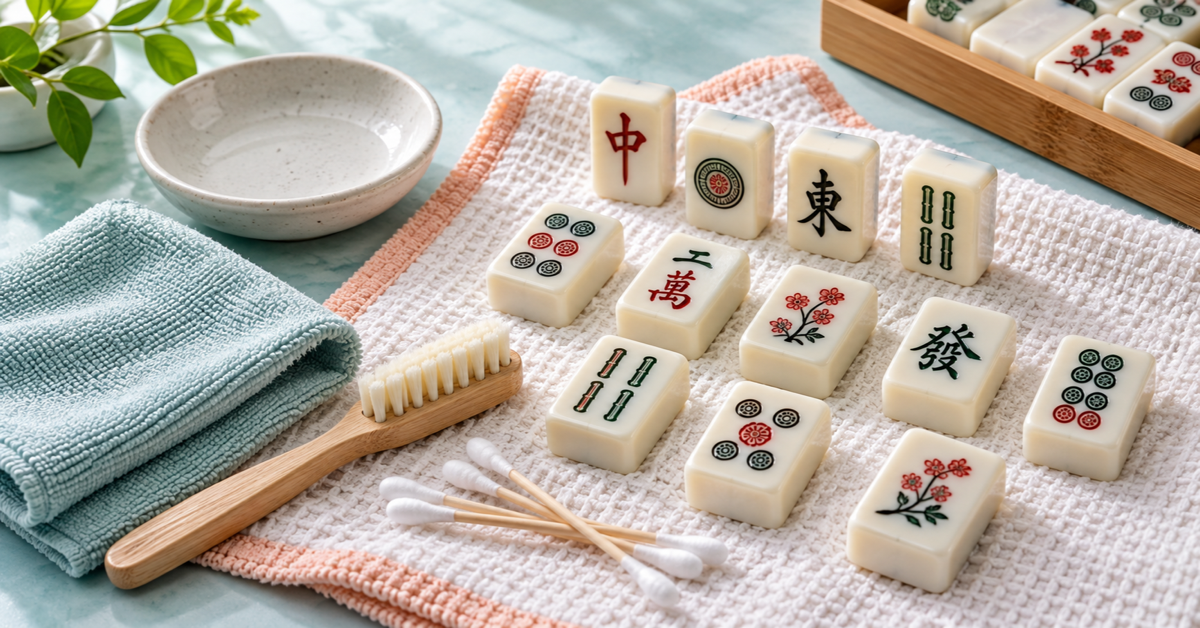
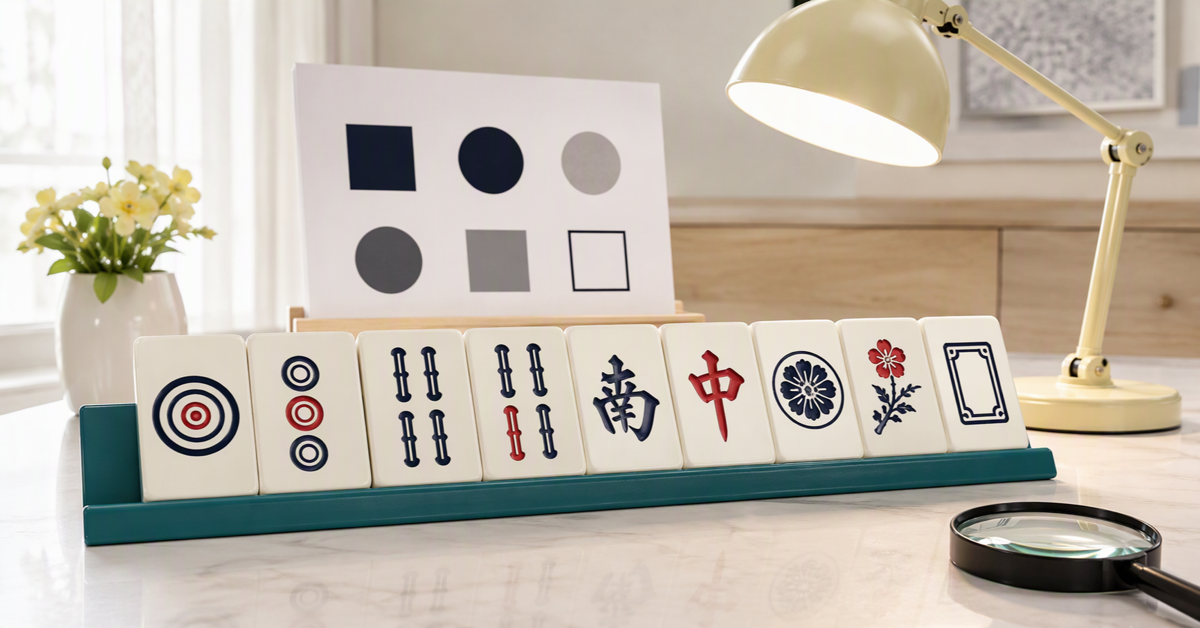
Display image: use your own tiles and a consistent test surface when comparing weight.
Start with the whole tile, not one number
Tile weight is influenced by dimensions, internal construction, face material, backing, and finish. A thick tile can weigh more than a slim tile without being made from a different material. Two tiles with the same height and width may also differ because one contains more material or uses a denser insert.
That is why "heavy" and "lightweight" are useful only when the compared tiles are otherwise similar. Put the candidates side by side and record:
- Height, width, and thickness
- The number of tiles in each set
- Whether the set includes Jokers, flowers, or spare pieces
- The back and edge style
- The rack used for the test
If the dimensions differ, write that down. You are no longer comparing weight alone; you are comparing two complete tile designs.
Weigh a representative sample
Use a kitchen scale that displays grams. Weigh five ordinary tiles from each set rather than choosing the single prettiest or heaviest piece. If a set has noticeably different construction between tile types, weigh one example from each family.
Record the individual readings and the average. A balance check is just as useful: place all five face down and look for obvious differences in thickness, edge finish, and straightness. A heavy average does not excuse a set with uneven pieces.
Do not use shipping weight as tile weight. The parcel may include a case, racks, pushers, mats, packaging, inserts, and protective material. Those components can easily outweigh the difference between two tile designs.
A five-minute handling test
Choose one table and keep the lighting the same for both sets. Ask the same player to perform the same actions in the same order. The point is not to create laboratory data; it is to notice which physical details become tiring or awkward during normal play.
| Test | What to watch | Why it matters |
|---|---|---|
| Pick up and place ten tiles | Grip comfort and finger effort | Small differences become noticeable over many turns. |
| Build a short wall | Stability and control | A wall should move predictably without extra bracing. |
| Shuffle a fixed batch | Noise, sliding, and hand strain | The table surface affects this result as much as weight. |
| Place a full row in a rack | Lean and channel fit | A heavy tile may expose a loose or narrow rack. |
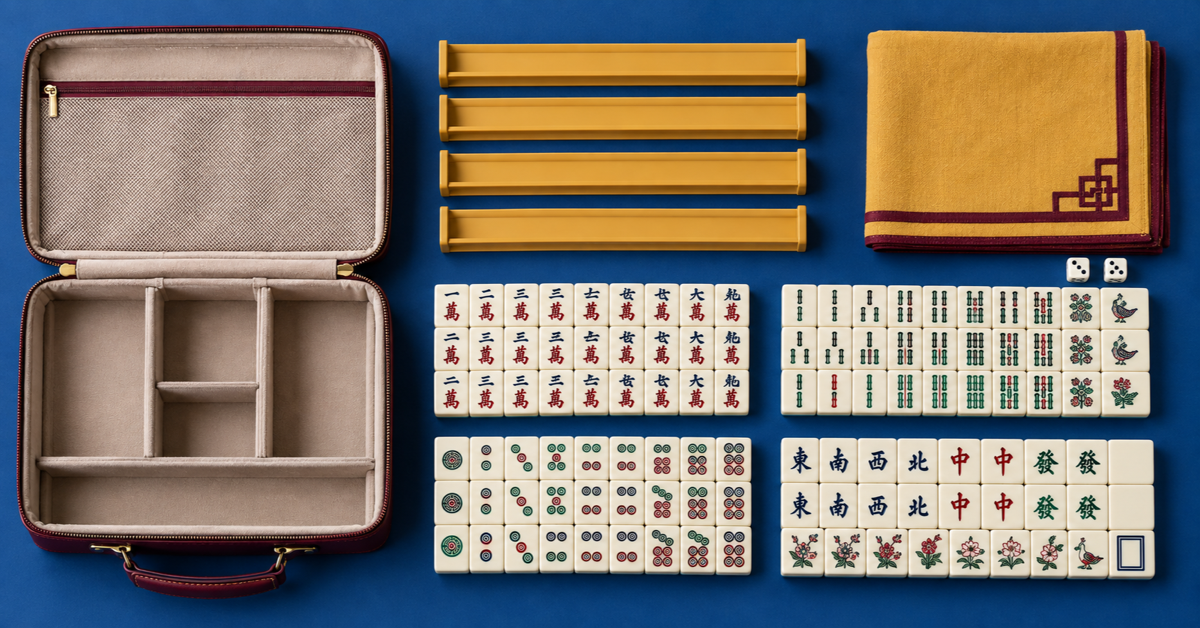
| Lift the complete packed set | Carry comfort | Storage and transport are part of ownership. |
Repeat the test after a short break. Fresh hands may prefer a responsive lightweight tile, while a longer session can reveal whether repeated lifting and sorting become uncomfortable.
What heavy tiles tend to do well
A heavier tile may feel substantial in the hand and settle more firmly when it is placed face down. Some players enjoy that sense of control, especially when building or moving a wall on a smooth surface. The added mass can also make a full rack feel planted if the rack is stable and the dimensions fit.
That preference is personal. "Substantial" is not a synonym for "durable," and a larger tile is not automatically better quality. Check the face print, edge consistency, back color, and construction separately. A poorly balanced heavy tile can be just as tiring as a poorly finished lightweight one.
Heavy tiles also increase the packed weight of a complete set. If the case travels to a club, up stairs, or through public transport, weigh the full case rather than only the tiles. A difference that feels minor at home can become the deciding factor on game night.
Where lightweight tiles have an advantage
A lighter tile usually asks less effort from the hand and may be easier to move repeatedly. Players who reorganize their rack often, teach beginners, or set up several tables may appreciate that lower effort. A lighter complete set is also easier to lift and store.
The tradeoff can appear in sound and stability. Some players find lighter tiles more skittish on a slick table or less satisfying to handle. Others prefer the quicker movement. Neither reaction is wrong, but both should be tested on the table where the set will actually be used.
Lightweight construction should not be confused with hollow construction or thin material unless the seller confirms those details. If the product description does not explain the build, ask. Do not infer it from weight alone.
Match weight to the people and the room
Think about the full session. A player with limited hand strength may value a lower-effort tile. A group that plays on a hard, smooth table may want more stability. A family that packs the set away after every game may prioritize a lighter case. A club that leaves four sets on tables may care more about rack fit and replacement consistency.
Lighting and readability still come first. A beautifully weighted tile that cannot be read comfortably across the table is not the better choice. Before comparing grams, confirm that the symbols are clear at the normal playing distance and that the back color does not make face-down tiles harder to distinguish from the table.
Check the rack interface before buying
Heavy mahjong tiles vs lightweight tiles can behave differently in the same rack. Heavier pieces may expose a rack that tips forward or has a loose joint. Lighter pieces may rattle in a channel that is too wide. Test the exact combination when possible.
Place a complete playing row in the rack, then perform three actions:
- Draw one tile from the middle.
- Move the rack slightly without lifting it.
- Set down two new tiles from above.
A rack that works with ten decorative tiles may not work with a full hand. If you are buying tiles and racks separately, ask JOKKOL for the confirmed dimensions of the current model. The rack and pusher collection can then be checked against those values.
How weight affects shuffling and storage
The table surface changes the result of a shuffle test. Felt slows tiles; bare wood lets them slide; a mat may soften both sound and movement. Keep one surface constant while comparing sets, then repeat the test on the surface you use most often.
A heavier set can feel more deliberate when shuffled, but it also places more load on the table and case. Check that the case stitching, handle, trays, and dividers are designed for the total packed weight. A case that is fine when empty may strain once it is filled.
For storage, avoid stacking heavy tiles on top of delicate racks or printed rule cards. A soft divider and separate compartment for dice or metal objects help protect faces. The home organization guide provides a practical reset routine.
Avoid these weight-buying assumptions
"Heavy means high quality." Weight is one characteristic, not a complete quality score. Print clarity, dimensions, edges, and consistency matter.
"Lightweight means cheap." A lighter design may be intentional. Ask about construction before making that judgment.
"More grams create better grip." Grip depends on finish, edge shape, hand size, and playing style.
"The parcel weight tells the tile weight." Accessories and packing materials make that comparison unreliable.
"A quick hold test settles it." Test drawing, stacking, shuffling, racking, and packing the set.
A simple decision rule
Choose the tile that remains comfortable and controllable after twenty minutes of the actions your group actually performs. If two sets feel similar, favor the one with clearer faces, a verified rack fit, a case you can lift, and a replacement path you understand.
The best heavy mahjong tiles vs lightweight comparison is not an abstract contest. It is one complete set against another under the conditions of your next game.
Frequently asked questions
Are heavy Mahjong tiles better than lightweight tiles?
Not automatically. Heavy tiles may feel more substantial and stable, while lighter tiles may be easier to handle for longer periods. Compare construction, dimensions, print clarity, rack fit, and packed weight before deciding.
Why do two Mahjong tiles of the same size weigh different amounts?
The difference can come from internal construction, material, face layers, backing, and finishing. A seller may need to confirm the build because weight alone does not identify it.
How should I test Mahjong tile weight at home?
Weigh several representative tiles, then test pickup, wall building, shuffling, rack placement, and carrying the packed set. Use the same table and lighting for both candidates.
Are lightweight tiles easier for seniors?
Some players may find them easier to lift and move, but hand size, grip, tile dimensions, rack height, and playing duration also matter. Try a full rack and a realistic practice session rather than judging one tile.
Does heavier mean more durable?
No. Durability depends on construction, materials, finish, handling, and care. Weight by itself does not establish impact resistance or scratch performance.
The strongest choice is the one that stays comfortable, readable, and stable through a complete game. Browse JOKKOL Mahjong sets to compare current styles, or send the team your existing tile measurements for a more specific fit discussion.