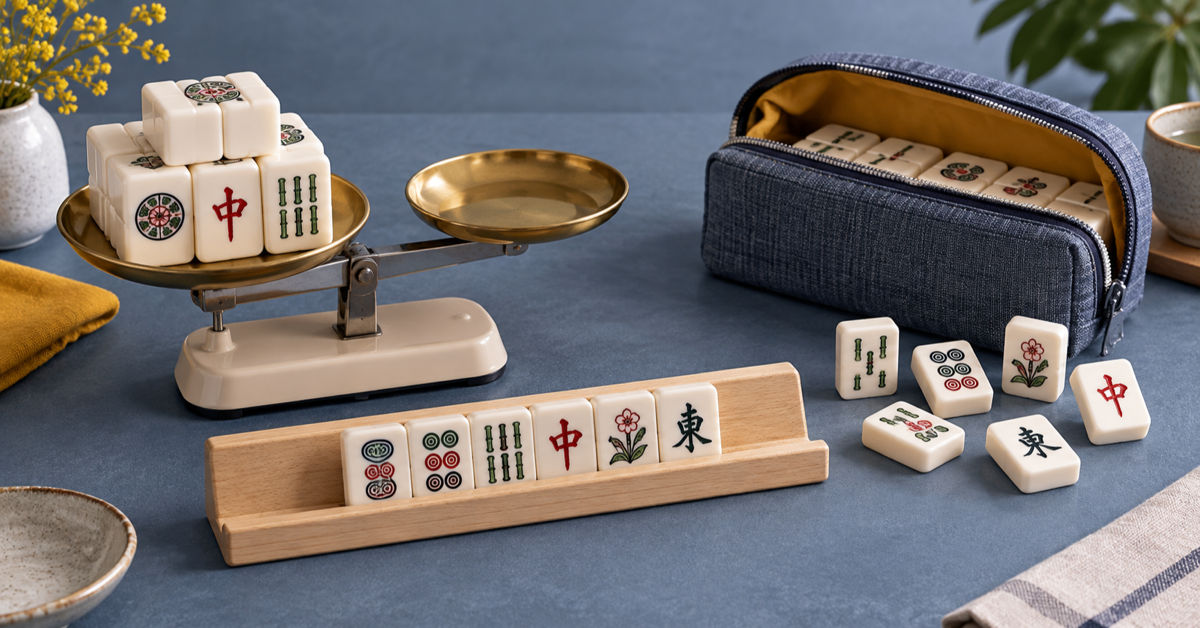

How to Organize an American Mahjong Set at Home
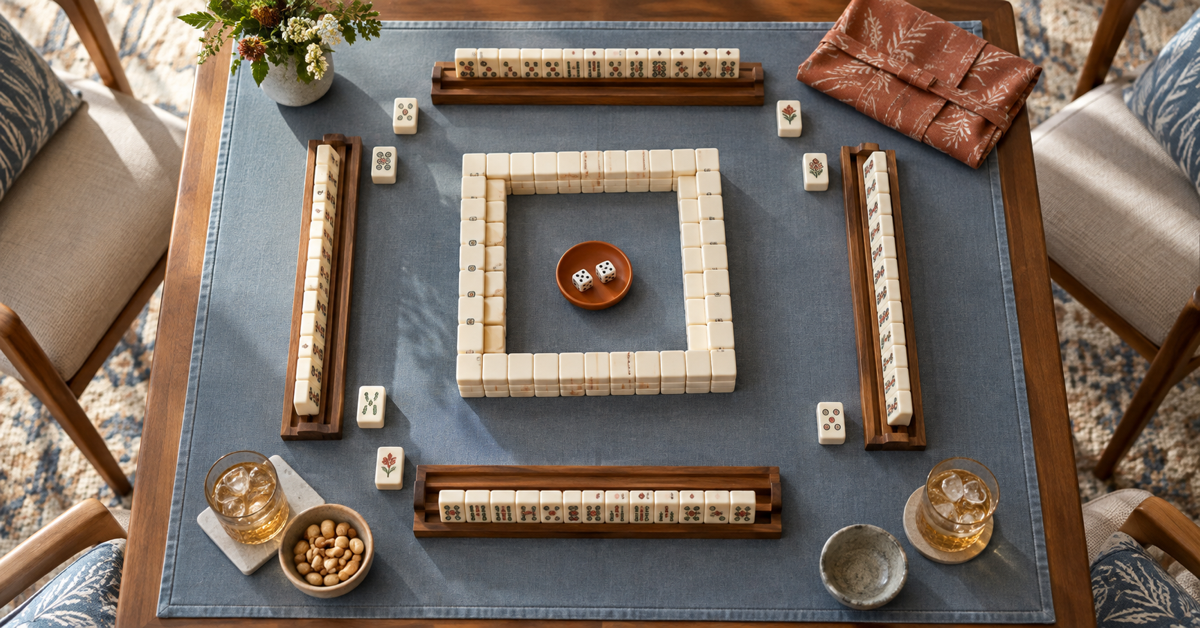
Knowing how to organize an American Mahjong set saves more time than another last-minute search for a missing die. A reliable home system gives every tile and accessory a place, makes a four-player setup faster, and shows you what needs replacing before friends arrive. This guide uses simple storage zones that work for a weekly table, a small apartment, or a set that travels between homes. JOKKOL's coordinated tiles, racks, pushers, mats, and cases can be arranged around the same routine.
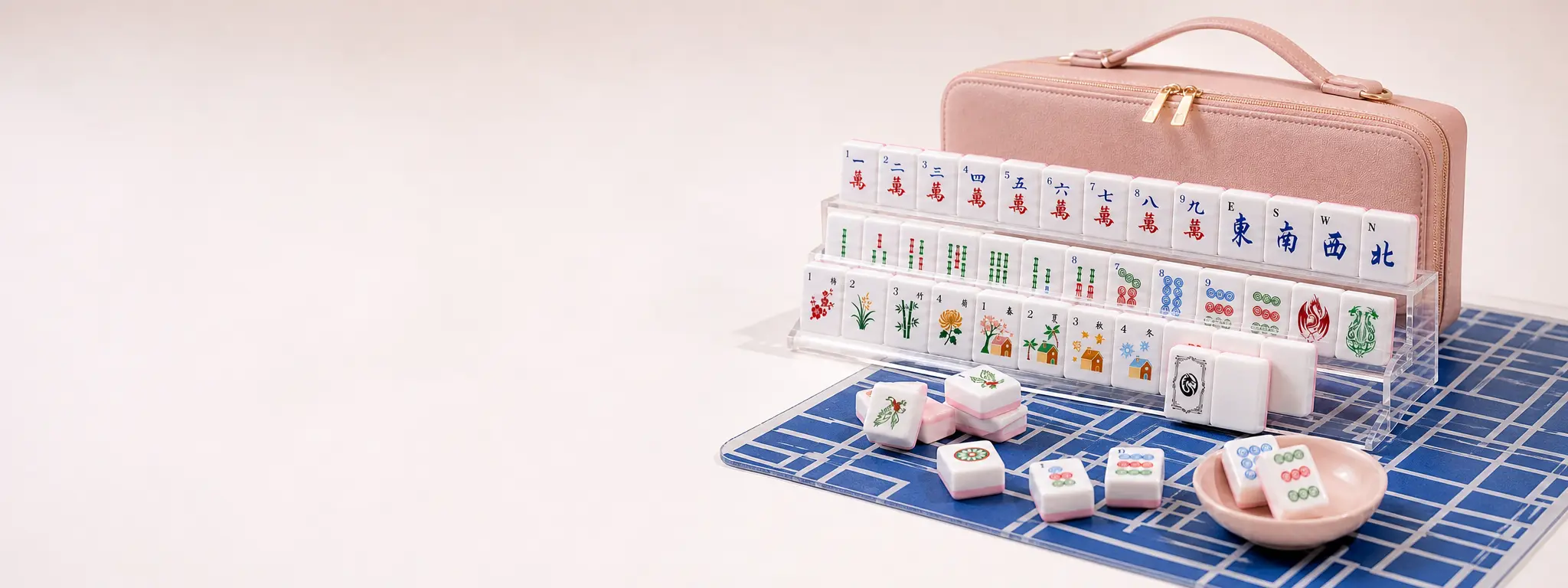
Begin with an inventory, not a bigger box
Open the set on a clear table and write down what you actually own. Include the playing tiles, Jokers, racks, pushers, dice, mat, rule reference, case, and any replacement pieces. Do not rely on a product title such as “complete”; inclusion lists vary between sellers and editions.
Mark each item as play, spare, or needs attention. A scratched tile, a loose rack, or a damp mat belongs in the last category even if it technically still works. This first inventory tells you whether the problem is organization or a missing component.
Create four storage zones
The easiest systems use zones that match the order of a game:
| Zone | Contents | Storage idea |
|---|---|---|
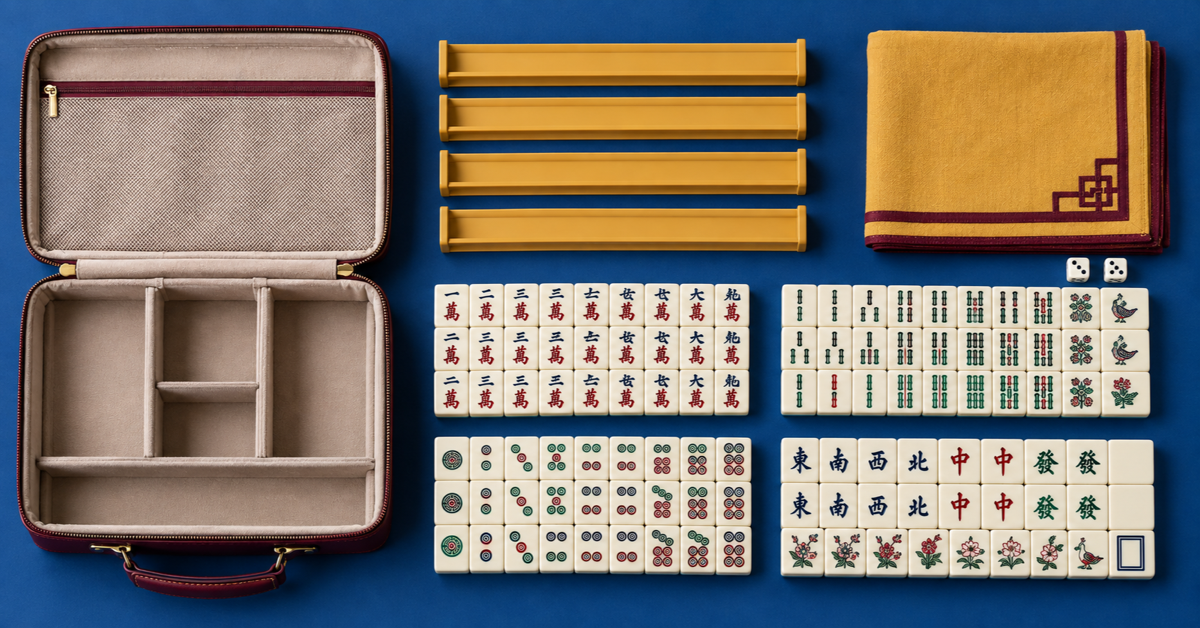
| Tile zone | Main tiles, Jokers, flowers, and blanks | Divided case compartments or labeled pouches |
| Table zone | Racks, pushers, dice, and mat | One accessory section that opens first |
| Reference zone | Rule card, rulebook, score notes | Flat sleeve protected from moisture |
| Repair zone | Replacements, cleaning cloth, spare labels | Small separate pouch, not loose with tiles |
The repair zone matters because a replacement tile mixed into the main set can create confusion. Keep it available, but distinguish it from the pieces used in every round.
Map the case to the setup order
Pack the items in the order you reach for them. Put the mat and table accessories near the top, followed by racks and pushers, then the tile compartments. Keep the rules card in a flat sleeve where corners will not bend. If the case has no built-in dividers, use soft pouches rather than hard objects that can rub against acrylic faces.
Take a photo of the open case after packing it correctly. The photo becomes a quick reference for a family member, club volunteer, or guest host. It also makes it obvious when a rack or die has not returned after a round.
Sort tiles for checking, not for show
Do not spend every game re-sorting the full set into a perfect display. Instead, use a practical check sequence:
- Put all tiles face down and mix them gently.
- Pull out the racks, pushers, and dice so they cannot hide under tiles.
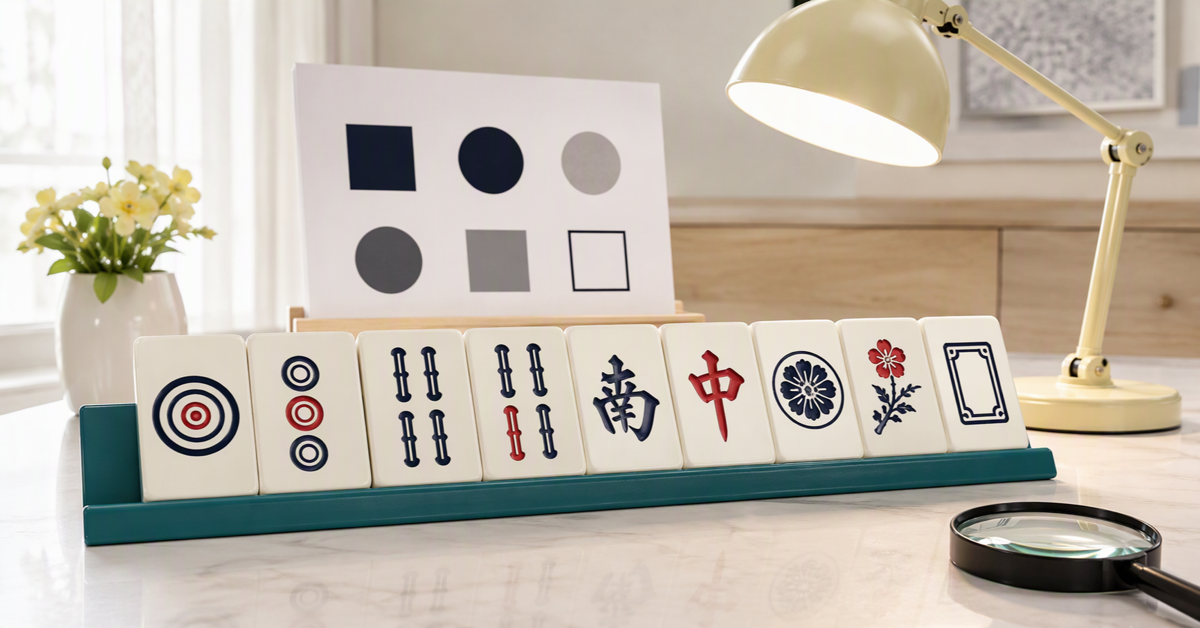
- Count or scan the special pieces your group relies on, especially Jokers and blanks.
- Look for a tile with a different back color or print treatment.
- Return the tiles to the case by compartment once the table is clear.
If a replacement does not match the rest of the set, place it in the repair zone and label the mismatch. A note is better than hoping you will remember after a busy game night.
Use a reset routine after every game
The best organization happens at the end of play, when everyone still remembers where pieces belong. Give one player the reset role and use the same five steps:
- Clear exposed groups and discards into the main tile area.
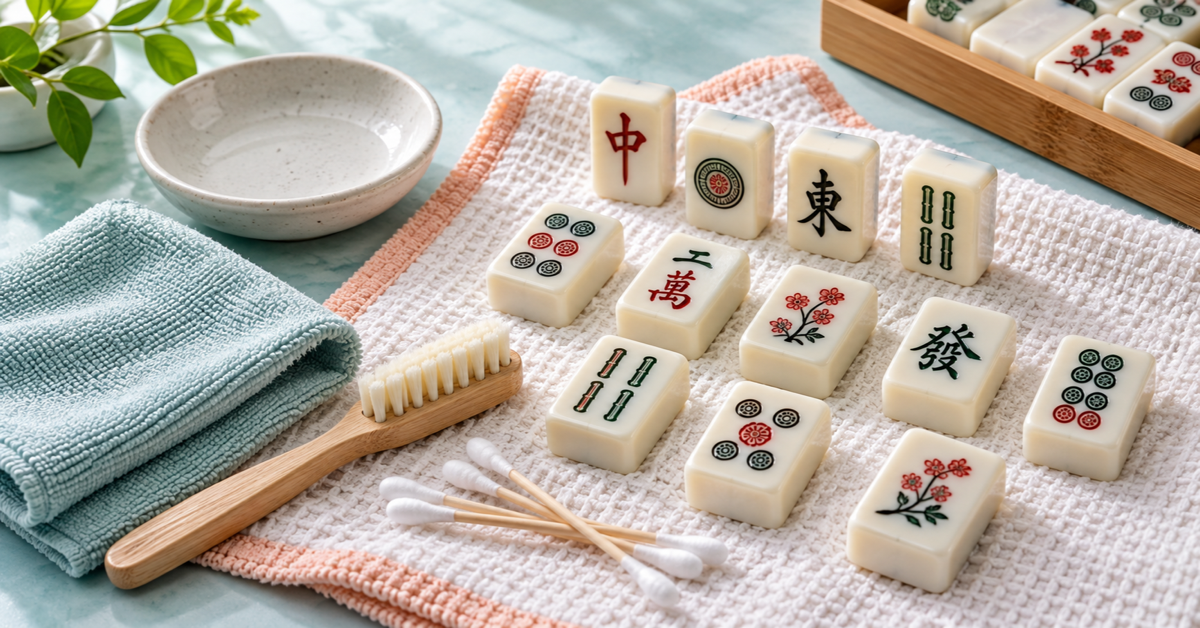
- Wipe visible residue with a soft cloth if needed.
- Return racks and pushers to their accessory section.
- Dry the mat before rolling or folding it according to its care instructions.
- Close the case only after the dice and rule reference are present.
This takes less time than rebuilding the set from memory the next day. It also protects tile faces from loose dice or metal objects moving around during transport.
Make a small-space system
Apartment storage often works better vertically. Keep the case on a shelf with the handle facing out, and store the mat in a tube or alongside the case if the product is designed to roll. Avoid a high shelf where lifting a heavy case could drop tiles onto the floor. Leave a little clearance so the case can be removed without scraping its corners.
For a shared household, add a simple label such as “Mahjong - return all pieces.” The label is not decoration; it tells someone who did not play that the small pouch of dice belongs with the set.
Prepare for travel in one pass
Before taking the set to a friend's home, compare the packed case with the destination table. Confirm that the mat, racks, and pusher path will fit. Pack the rules card where it can be reached without unpacking the tiles, and keep a short inventory photo on your phone.
At the destination, place the case away from drinks and direct heat. At the end of the session, use the photo to check the four accessory zones before closing the lid. This habit is especially useful when several families share a similar colorway.
When to replace instead of rearrange
Organization cannot fix a cracked rack, a badly mismatched replacement, or a case that lets tiles rub together. Photograph the problem, record the set name and tile dimensions, and ask the supplier whether a compatible replacement is available. JOKKOL can help match products when you provide clear photos and the details of the existing set.
Explore the JOKKOL Mahjong products for coordinated storage pieces, or send the inventory to JOKKOL contact support before ordering a replacement.
FAQ
How do I organize an American Mahjong set at home?
Create separate zones for tiles, table accessories, references, and replacements. Pack the case in setup order and use a photo as a reset guide.
How should I store Mahjong tiles to avoid scratches?
Keep tiles in soft, separated compartments and store dice or metal objects away from printed faces. Dry tiles before closing the case.
Should Jokers be stored separately?
Keep Jokers easy to find within the main tile zone, but use a divider or label so they are not confused with replacement pieces.
What is the best way to organize a travel Mahjong set?
Use a case with clear compartments, pack the mat according to its care instructions, and check every zone against a photo before and after travel.
How often should I inspect my set?
Do a quick special-tile and accessory check before each game, then a deeper condition review whenever you notice a mismatch or damaged piece.