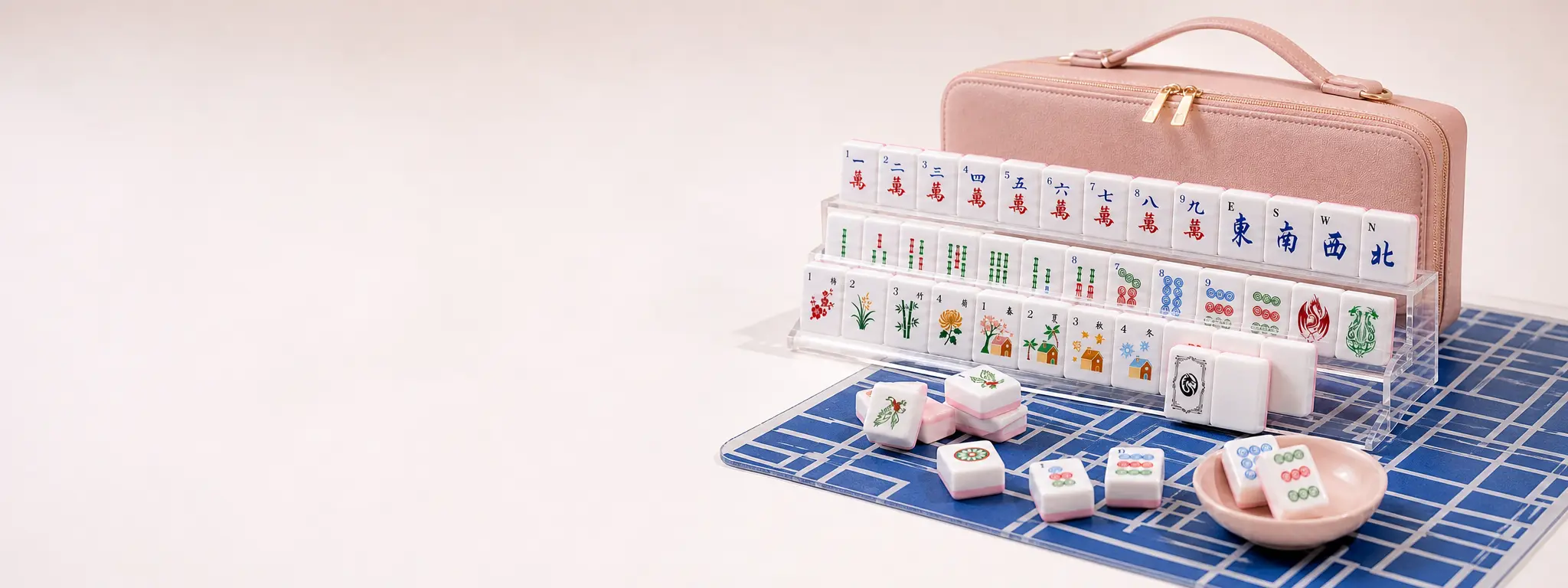

Large print mahjong tiles for seniors should be judged at the table, not from a close-up product image. A large tile face can help, but readability also depends on the size and spacing of the printed symbol, contrast, lighting, reflections, rack height, and the distance from the player's eyes to the rack.
Use this field test to compare sets under realistic conditions. It does not diagnose vision or replace advice from an eye-care professional. Its purpose is simpler: identify which tile design lets a player recognize a face comfortably and consistently during a normal game.
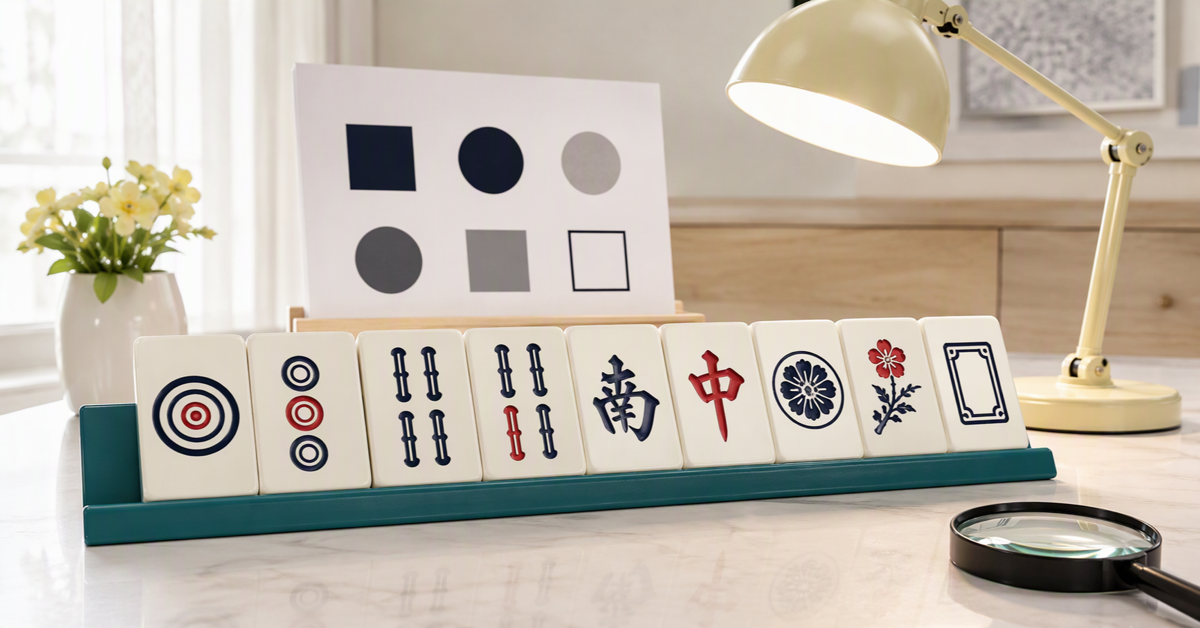
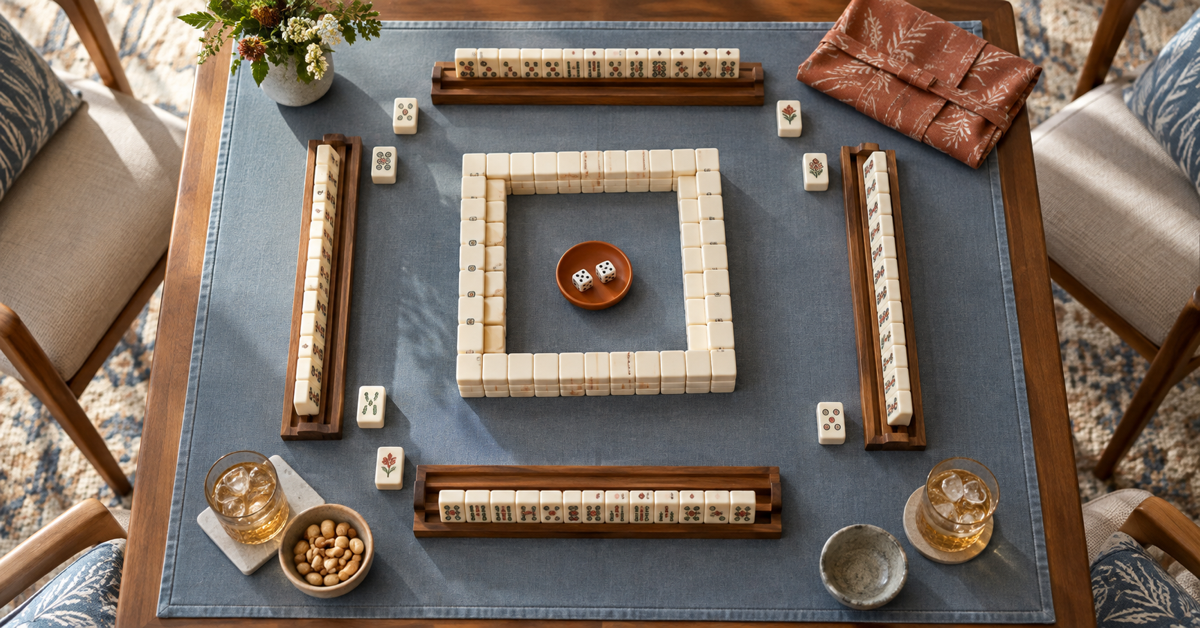
Display image: test the complete tile, rack, seat, and lighting combination rather than one enlarged photograph.
Measure the face, not only the tile
Two tiles can have the same outer dimensions while using the available face area differently. A thick border, decorative frame, or oversized corner detail can reduce the space given to the suit symbol. For older players, that difference may matter more than a few millimeters of tile height.
Ask for:
- Tile height, width, and thickness
- A straight-on photograph of several representative faces
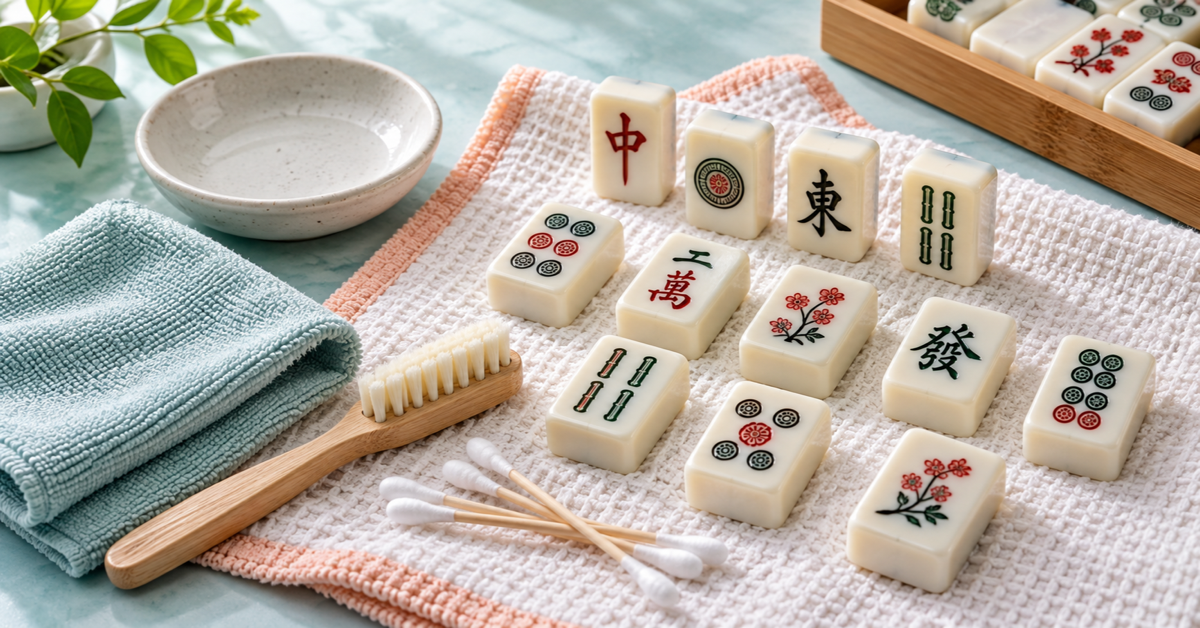
- A close view of the most detailed tiles
- A photograph of a complete row in the intended rack
- Confirmation of the artwork and print method
Use the measurements to compare products, but do not treat the largest tile as an automatic winner. Check the visual result at the seat where the player will sit.
Set up a fair field test
Choose the table the group uses most often. Put one rack at each seat and place the same tile set in the same order for every test. If you are comparing two sets, keep the room lighting and chair position unchanged.
The test should include four distances:
| View | What to check |
|---|---|
| Directly above the rack | Is the symbol clear without tilting the head? |
| Normal seated distance | Can the player identify the face without leaning forward? |
| Across the table | Can an exposed tile be recognized during normal play? |
| At a glance | Is a dangerous or useful tile noticed without a long stare? |
Ask the player to name the tile rather than asking whether it "looks clear." Naming tests recognition. A polite yes can hide uncertainty.
Build a lighting matrix
Lighting can change the result more than tile size. Test the same set in at least four conditions:
- Daylight near a window
- Warm indoor lighting
- Bright overhead light
- Light coming from behind the player
Look for washed-out colors, glare on glossy faces, and deep shadows inside engraved or recessed details. A high-contrast symbol can remain readable under several lights; a low-contrast design may look attractive in a product photograph but disappear at the table.
If the group plays in different rooms, take a phone photograph from the normal seated position under each light. Do not use filters. The photographs are a record of the test, not a substitute for the player's own judgment.
Watch for glare and angle
A glossy face may reflect a ceiling fixture while the player is looking down. Tilt the tile slightly and watch whether the symbol disappears into the reflection. Matte or textured finishes can reduce glare, but they may also change how fine lines appear.
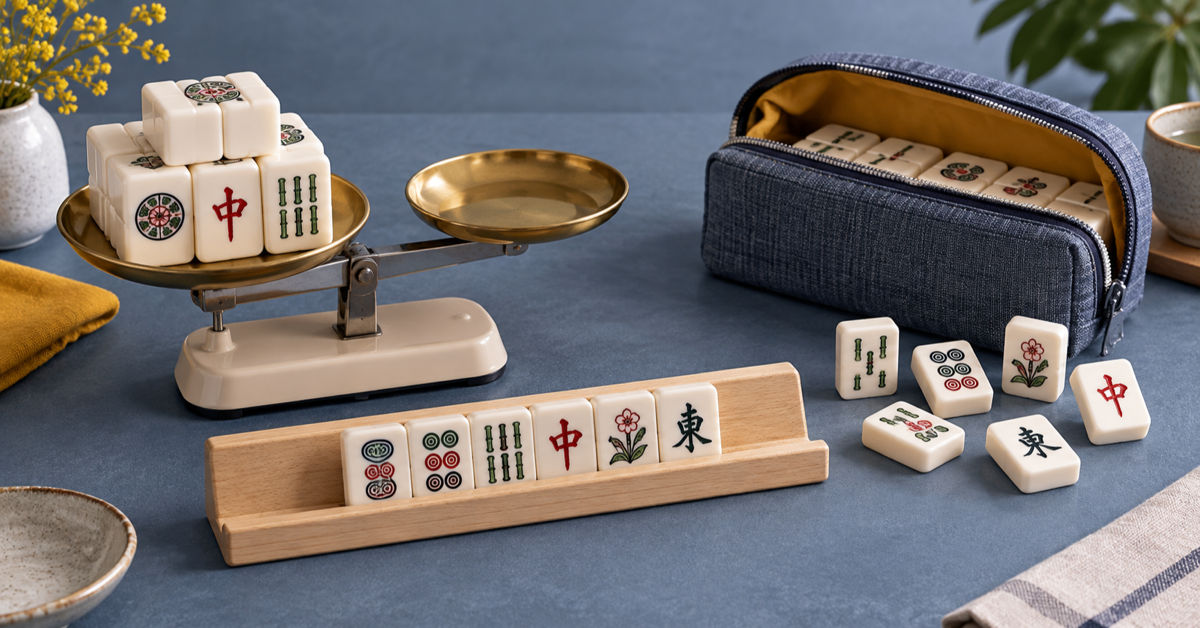
The rack angle matters. A rack that holds the tile too upright may catch more overhead light; one that leans it too far back may place the face in shadow. Test the rack with a full hand rather than one isolated tile.
Separate color preference from contrast
Color can make the set enjoyable, but not every attractive color combination supports quick recognition. Ask the player to identify the tile by shape and print before naming its color. If the color is the only clue, the face may not be doing enough work.
Check:
- Contrast between the symbol and the tile face
- Contrast between the tile and the rack
- Whether red and green details remain distinct under warm light
- Whether the back color resembles the table or case
- Whether Jokers and ordinary tiles remain easy to separate
The goal is not a clinical palette. It is a table where the player can identify faces without changing seats, squinting, or relying on another person.
Test the complete rack and seating setup
Place a full playing row in the rack. Start with one player seated and then repeat from each chair. A set that works in the host's position may not work for someone shorter, someone who wears progressive lenses, or someone sitting farther from the light.
Try these adjustments:
- Move the rack closer or farther from the player.
- Change the chair height by one comfortable step.
- Remove a light source that reflects from the faces.
- Turn the rack so the tile row catches less glare.
- Compare a complete tile with a smaller replacement piece.
Record what helped. The best purchase may be the set that works with a simple seating adjustment, not the one with the largest dimensions.
The eight-point readability check
Before buying large print mahjong tiles for seniors, run this quick checklist:
- Can the player name ordinary number tiles at a glance?
- Are winds and dragons distinct without using color alone?
- Are the Joker and white dragon easy to separate?
- Does the print remain clear under the room's usual light?
- Does the face handle glare without losing detail?
- Does the rack hold the full hand at a comfortable angle?
- Can the player reach and rearrange the rack without strain?
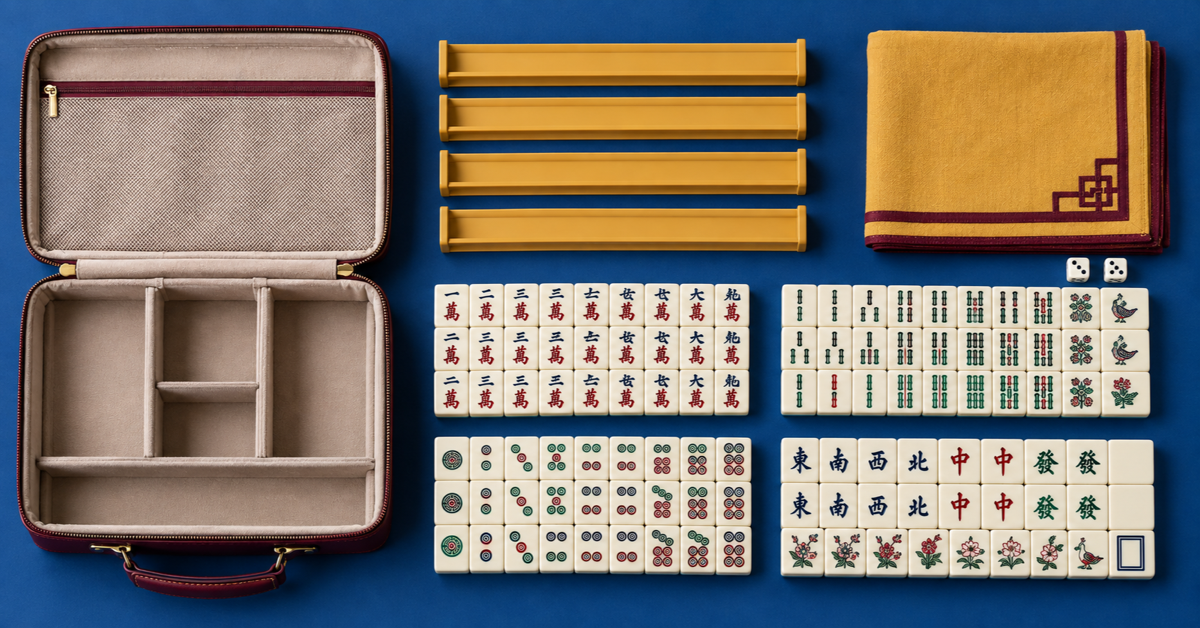
- Does the case remain manageable for the person who will store it?
If several answers are uncertain, change one variable at a time. A new rack, a different seat, or a lamp may solve a problem that a new tile set would not.
What large print does not guarantee
Large outer dimensions do not guarantee a clear symbol. A busy illustration, thin linework, low contrast, or a reflective surface can reduce readability. The same applies to decoration along the edges: it may add character while crowding the face.
Nor does a larger tile solve every table problem. A heavier set may be tiring to lift. A wider row may not fit the existing rack or case. A tile with a quieter finish may be easier to read under a lamp but harder to wipe clean. Test the complete ownership experience.
Make the table easier to use
Readability improves when the environment supports it. Keep the playing surface clear, reduce clutter behind the rack, and avoid placing the set in a dark corner. If the group uses a rule card, provide a copy or stand at a comfortable angle instead of asking one player to hold it.
Leave space around each rack so tiles can be moved without knocking the row. A mat can define the play area, but its color should support the tiles rather than compete with them. The gaming mat collection can be checked alongside the tile and rack dimensions.
For a new group, start with a short practice round. Allow time to name the faces before play begins. A slower first session often prevents a player from pretending a tile is clear when it is not.
Choose with the player, not for the player
If the set is a gift, avoid making the decision from photographs alone. Ask the recipient what currently causes difficulty: seeing the suit, reading the number, handling the rack, hearing the tiles, or carrying the case. The answer points to the right product change.
If the recipient already owns a set, test it first. The current tiles may be adequate once the lighting and rack position improve. If not, compare a few models using the same seat and the same light.
When you compare large print Mahjong tiles for seniors, keep the player in the process. The strongest choice is the one that person can use comfortably in the actual room, not the one with the most impressive measurement on paper.
Frequently asked questions
What makes large print Mahjong tiles easier to read?
Face size, symbol scale, line thickness, contrast, finish, lighting, rack angle, and viewing distance all contribute. The tile's outer height is only one part of the result.
Are large print tiles only for seniors?
No. Any player may prefer a clearer face or a more comfortable rack position. "Large print" is a practical description, not a restriction on who can use the set.
Should I choose the largest tile available?
Not automatically. A very large tile may be heavier, require more rack and table space, and be harder to store. Test the complete set within the real room and seating arrangement.
What lighting is best for a Mahjong table?
Even light that reaches the tile faces without creating strong glare is usually easier to work with. Test daylight, warm indoor light, and overhead light because the group may play in more than one setting.
Can a mat or rack improve tile readability?
Yes. Rack height, tile angle, surface reflection, and background contrast can change how clearly a face is seen. Test accessories together before replacing the tiles.
The right senior-friendly Mahjong setup is the one that supports comfortable, independent play in the room where the game happens. Browse JOKKOL Mahjong sets, then contact JOKKOL with any confirmed dimensions or fit questions for the current model.