
Lost mahjong tile replacement is not just a search for the right symbol. The new piece should also match the dimensions, back color, edge profile, and finish of the original set. Start by confirming which tile is missing, then contact the original seller with a model reference and photographs. Do not mix in a visibly different piece for normal concealed play simply because its face has the correct number.
One empty space in a tray does not necessarily mean you need a new set. It does mean you should stop guessing. This troubleshooting guide walks through the checks that separate a misplaced tile, a genuinely missing piece, and a replacement that is close in a listing but wrong on the table.
Before searching online, make a tile-level count
Move the set to a clear, well-lit surface. Check the case lining, removable trays, rack channels, and the space under the table where it was last used. Keep the pieces you have counted away from the unchecked pile. Otherwise, the same handful can get counted twice.
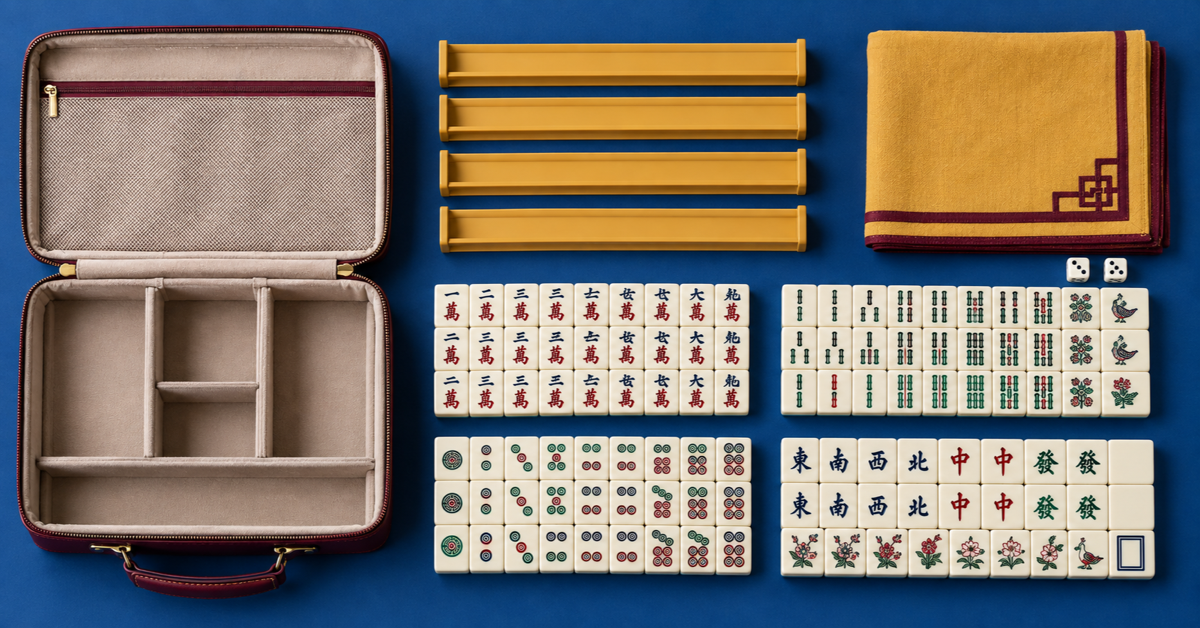
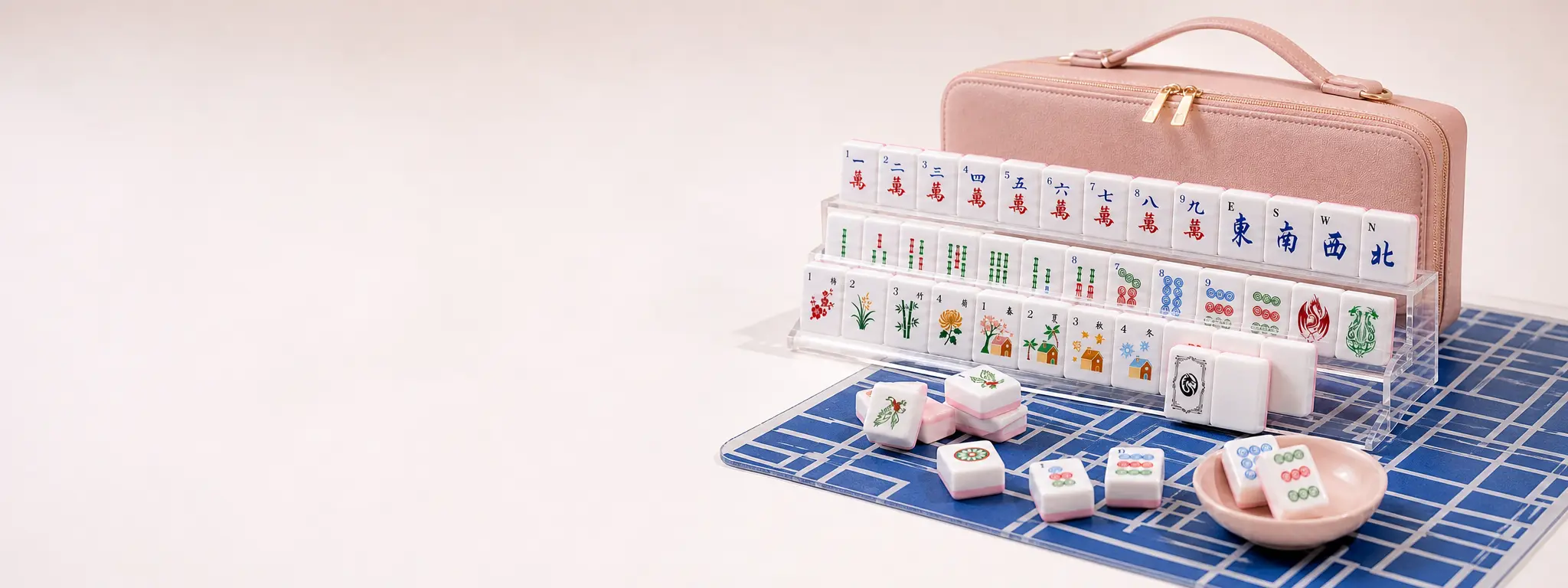
For a typical NMJL-style American playing inventory, check the groups below. The Mahjong 4 Friends tile reference explains the names and distinguishes playing tiles from extras. Follow your group's actual rules when assembling the pool.
| Group | Count to verify for the usual 152-tile American pool | Where to look for a hidden mismatch |
|---|---|---|
| Three numbered suits | Four copies of each number, 1 through 9, in each suit | An unusual one-Bam or a face sorted into the wrong suit |
| Winds | Four each of East, South, West, and North | Letters or artwork that look alike when turned sideways |
| Dragons | Four each of the three types | A white dragon mistaken for a spare blank |
| Flowers | Eight used in this pool | Extra flowers included in the box but kept out of play |
| Jokers | Eight used in this pool | Additional spare Jokers stored elsewhere |
Count the identities as well as the total. Having 152 pieces is not proof that all the required pieces are there. If you find five copies of one number and three of another, photograph that layout before putting anything away.
If the set arrived with an incorrect inventory, describe that as an order issue to the seller. If the piece disappeared after months of play, explain that instead. The same photographs help both situations, but the available remedies may differ. Do not assume a lost item is automatically covered by a warranty.
Give the missing piece an exact identity
Write "one 7 Dot" rather than "one blue number tile." Color descriptions are especially unreliable with modern decorative designs. If the face is unfamiliar, use the matching copies in the set to establish its name. Our American tile recognition guide can help you sort the families before you contact a seller.
Add the quantity needed. A photograph of the gap in a tray is useful context, but it is not a substitute for the written tile name. A full face-up inventory photograph gives the supplier a chance to notice another discrepancy you may have missed.
For an inherited or secondhand set, record any brand mark, case label, receipt, or distinctive artwork. Do not identify the manufacturer solely from the color of the backs. Many unrelated sets use similar pink, green, or blue shades.
Build a useful lost mahjong tile replacement request
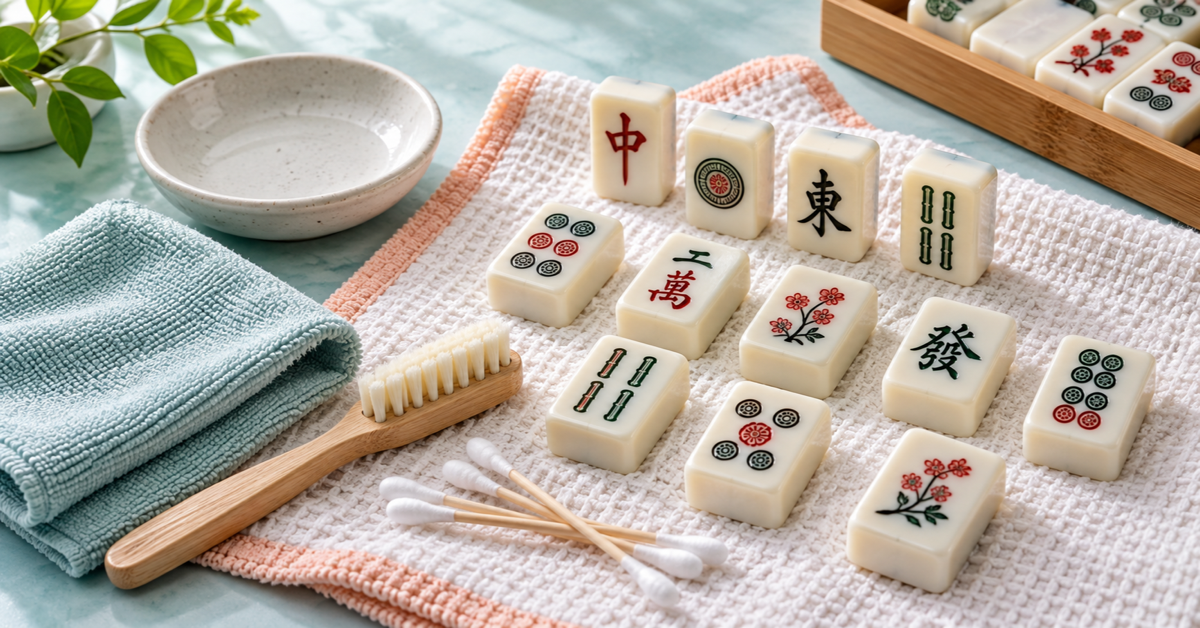
Take photos in ordinary, even light. Place an original tile face up for one photo and face down for another. Add a side view and a ruler. Avoid filters, dramatic shadows, or a flash reflection covering the edge you want the seller to compare.
You do not have to send personal documents. Crop the order record to the product name or reference needed for the enquiry, and use the seller's normal support channel for any order verification they request. The useful evidence is the identity of the set, not unrelated details from your receipt.
Include these details in the message:
- Model name or product link, and approximate purchase date if known.
- Missing tile name and quantity.
- Height, width, and face-to-back thickness, with units.
- Face, back, and side photographs of matching original tiles.
- Whether the existing tiles are worn or discolored.
- Destination country for availability and delivery information.
Ask whether the proposed replacement is from the same model or production series. Also ask what happens if the supplied piece does not match. A clear answer before ordering is preferable to a parcel that solves the symbol problem but introduces a back-color problem.
Four checks when a replacement arrives
Check 1: Read the face beside an original
Put the replacement beside a matching original tile. Confirm the number or identity, artwork, orientation, and readability. A slightly different illustration may be understandable face up but still deserve a discussion with the supplier if an exact match was promised.
Do not decide from a phone photo alone. The test is the piece in front of you, under the lighting used for your games.
Check 2: Compare the backs without the faces
Turn several original pieces and the replacement face down. Ask another person whether one stands out, without telling them its position. Compare color, pattern, gloss, and distinctive marks. Repeat from another seat because a reflection may reveal a difference that is not obvious straight on.
This is a practical screening check, not a certification. If the new tile is conspicuous, keep it out of normal play and ask the supplier about another option.
Check 3: Look at the side and the stack
Place the pieces next to each other on a flat surface. Compare height and thickness, then make a small stack. Different corner shapes or uneven edges can be noticeable even when the front and back colors seem close.
Do not sand the replacement to fit. Removing material may change the finish, create an identifiable edge, and make a return more difficult. Photograph the mismatch first.
Check 4: Try the rack and storage compartment
A tile that is thicker than its neighbors may lean differently or crowd a tight tray. Put it into the rack gently and compare the support. Then check the case. Nothing should need to be forced into place.
Keep the packaging and correspondence until these checks are finished. If the seller asks for evidence, you will have a clear comparison rather than only the statement that it "feels wrong."
When a blank or a spare is the better route
Some sets include spare pieces intended for future replacement. Locate those before ordering anything. A genuine spare from the original set may offer a closer physical match, though its face still needs the correct identification and any marking method should be approved for the material.
First confirm that a plain-looking tile really is a spare. A white dragon can look blank in some designs. Replacing a missing number by relabeling a playing white dragon only moves the shortage to a different part of the set.
Avoid improvised permanent-marker repairs before discussing the surface with the supplier. A label can peel or alter thickness; ink may not adhere properly. For an informal lesson, the group may choose a clearly explained teaching workaround, but that is different from restoring a complete matching set for regular play.
Keep, replace, or pause?
| Situation | Sensible next step |
|---|---|
| The original supplier confirms a matching spare | Order only after checking identity, dimensions, and the mismatch policy. |
| The face matches but the back clearly differs | Keep it out of normal play and request another solution. |
| Several tiles are damaged and no matching stock exists | Compare the cost and practicality of a replacement set. |
| The set is sentimental or collectible | Preserve the originals; avoid irreversible alterations while researching. |
| You need a set for a game tomorrow | Borrow a complete set instead of rushing an uncertain repair. |
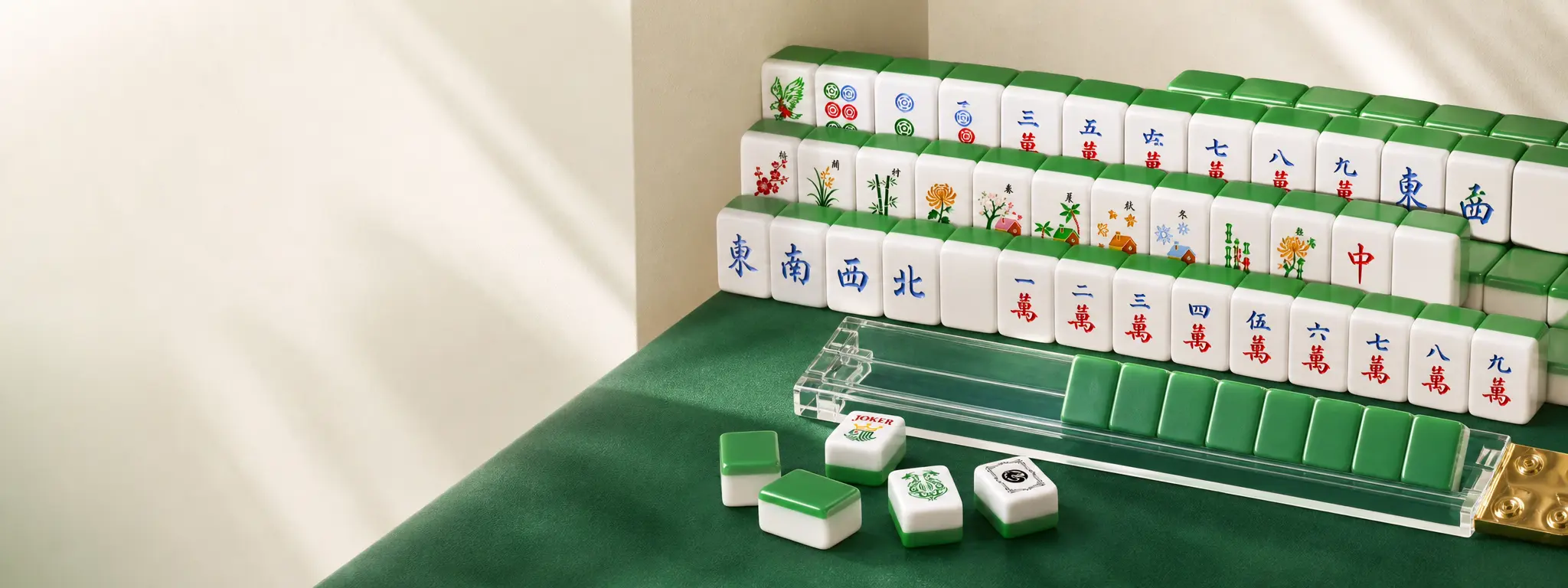
Display image: similar-looking colors are not evidence that a replacement matches your particular set.
For a JOKKOL purchase, contact the team with the model and comparison photos. The pink-back and green-back product pages can help identify a starting reference. This guide does not promise that individual replacement tiles are currently stocked; availability and matching need confirmation.
Replacement questions
Can I buy any tile with the same number and suit?
Not for a dependable match. The identity is only one requirement. Compare dimensions, backs, edges, and finish as well. A different back can make a concealed piece recognizable before it is drawn or revealed.
Is a spare Joker a replacement for a missing number tile?
Not simply by adding it to the playing pool. A Joker has a defined role in American play. Restoring the inventory means replacing the missing identity, not changing the count of another tile type. Refer to the NMJL game resources for the format your group follows.
Will a new tile always match an old set?
No. Age, wear, and model changes can affect the match. Tell the supplier about the condition and ask for a comparison. Even a piece with the same product name should be checked when it arrives.
Should I send the whole set to a replacement seller?
Begin with photographs and measurements. If a supplier later needs a physical sample, clarify what will be sent, how it is tracked, and how it will be returned. Do not mail irreplaceable pieces without a clear agreement.
How can I make the next replacement easier?
Keep the model reference, original inventory, dimensions, and clear photographs together. Store genuine spares separately with a label. After each game, count by tray or group before the case closes; a quick check at the venue can catch a missing tile while it is still nearby.
Lost mahjong tile replacement is successful when the set works as a matching set again. Take the extra few minutes to document the original pieces. The quality of that comparison matters more than finding the fastest listing with the right face.