
Mahjong Game Night Starter Kit: A Host's Plan for Four Players
A Mahjong game night starter kit should make the first hour feel organized, not over-produced. Guests need a set they can read, a table with enough elbow room, a current rules reference, and a host who knows where the small pieces are. This guide builds the kit around the flow of an evening: welcome, setup, teaching, play, and reset. JOKKOL's American Mahjong tiles and coordinated accessories give hosts a practical starting point for a table that looks considered and works comfortably.
Plan for the people, not a generic box
Write the guest list before choosing the bundle. Four experienced players need quick access and replacement pieces. A mixed group needs readable faces, four stable racks, and a rules card that can stay visible. A first-time host may value a case and mat more than decorative extras.
Use this short planning note:
| Guest mix | Useful emphasis |
|---|---|
| Four regular players | Compatible tiles, racks, pushers, dice, and a smooth reset routine |
| Two regulars plus two beginners | Readability, a shared rule reference, and extra teaching space |
| Family game night | A complete set, easy storage, and a table surface that handles snacks |
| Club or rotating hosts | A labeled case, inventory photo, and replacement plan |
The table should feel inviting without asking guests to learn a complicated equipment system before the game begins.
Build the kit in three layers
Think of a Mahjong game night starter kit as three layers rather than a long shopping list.
Layer one: play essentials
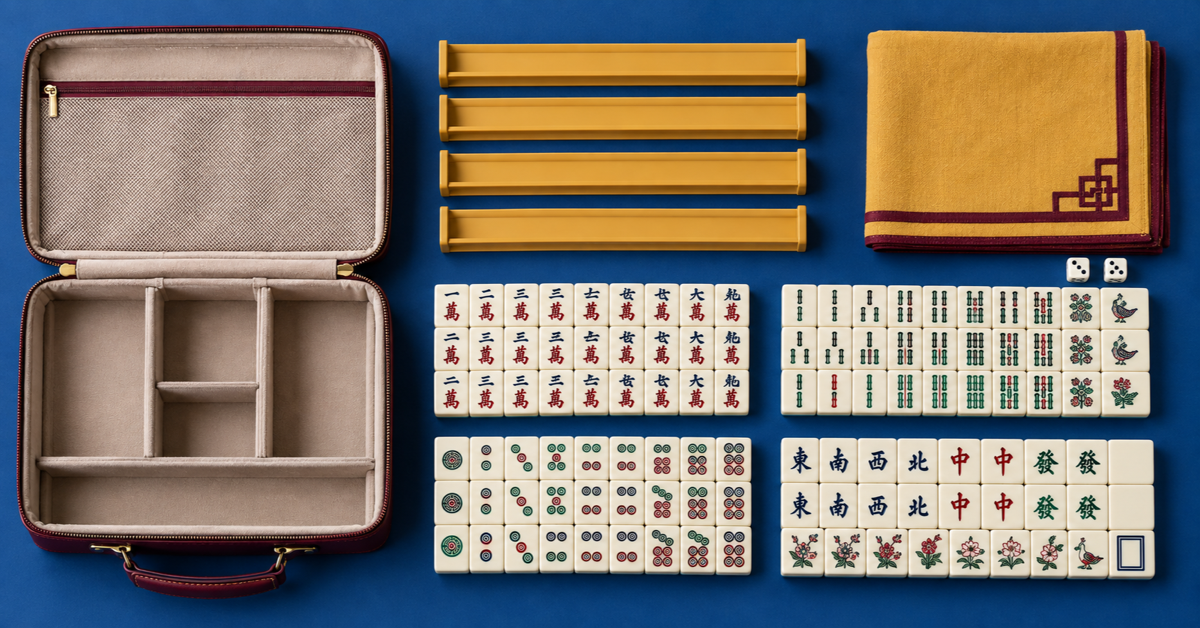
Choose the correct tile format for your group, including the appropriate special tiles and Jokers. Add four racks, dice, and the current rule reference. Confirm the inclusion list; “starter kit” can mean tiles only on one site and a full bundle on another.
Layer two: table comfort
A mat can define the play area and give walls a visual boundary. Pushers can help players move the wall in a controlled way. Make sure the mat leaves room for racks and that pushers do not catch on its edge.
Layer three: hosting and storage
Add a case or organizer that can be repacked quickly, plus a soft cloth and a small repair pouch. This layer is what lets the host welcome guests without searching drawers for dice or a missing Joker.
Set the room before guests arrive
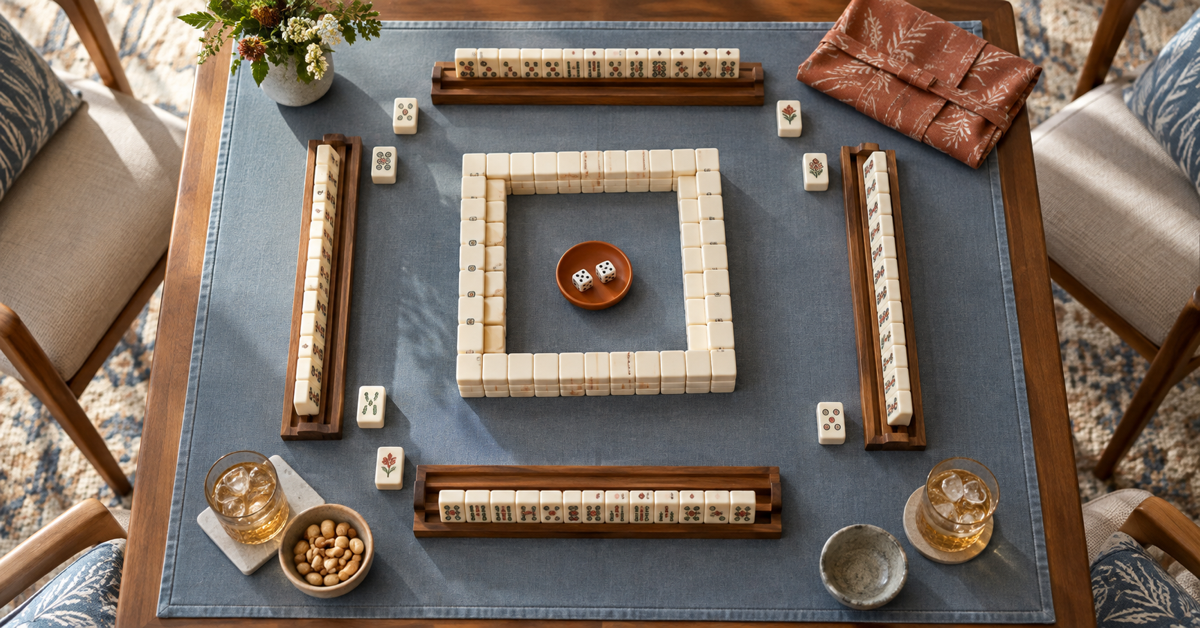
Choose a stable table with enough space around all four seats. Place the mat square, then set one rack at each side. Keep the rule card or book flat and visible, and give the dice a defined center spot. Drinks belong on a nearby side surface rather than beside the tile walls.
Do a dry run with the empty table. Sit in each seat, reach for the wall, and check whether a chair leg or table edge blocks movement. If the room is small, move snacks and spare chairs before the set is opened; a clear path is part of a good game-night experience.
Give beginners one useful orientation
Do not begin with a full lecture. Show the three numbered suits, winds, dragons, flowers, and Jokers using real tiles. Explain where the current card sits and demonstrate one slow pass during the Charleston. Then let players handle the rack and ask questions.
If someone is unsure, point to the reference instead of supplying a fast answer from memory. That habit helps the whole group use one shared source and prevents a beginner from feeling singled out.
Use a host checklist between hands
The host does not need to police every action. A quiet checklist is enough:
- Is the next player clear to draw or respond?
- Are called groups visible and placed consistently?
- Are the rule card and discard area still easy to read?
- Has a drink or phone moved into the wall path?
- Does any tile or accessory need to be set aside for inspection?
These checks keep the evening moving while leaving the players free to talk and concentrate.
Protect the social rhythm
Mahjong is a conversation as much as a tile game. Agree on a start time, a short teaching pause, and when food will be served. Let guests know whether the group follows a particular rules edition or house convention. A simple explanation before the first deal is kinder than correcting a call in front of everyone.
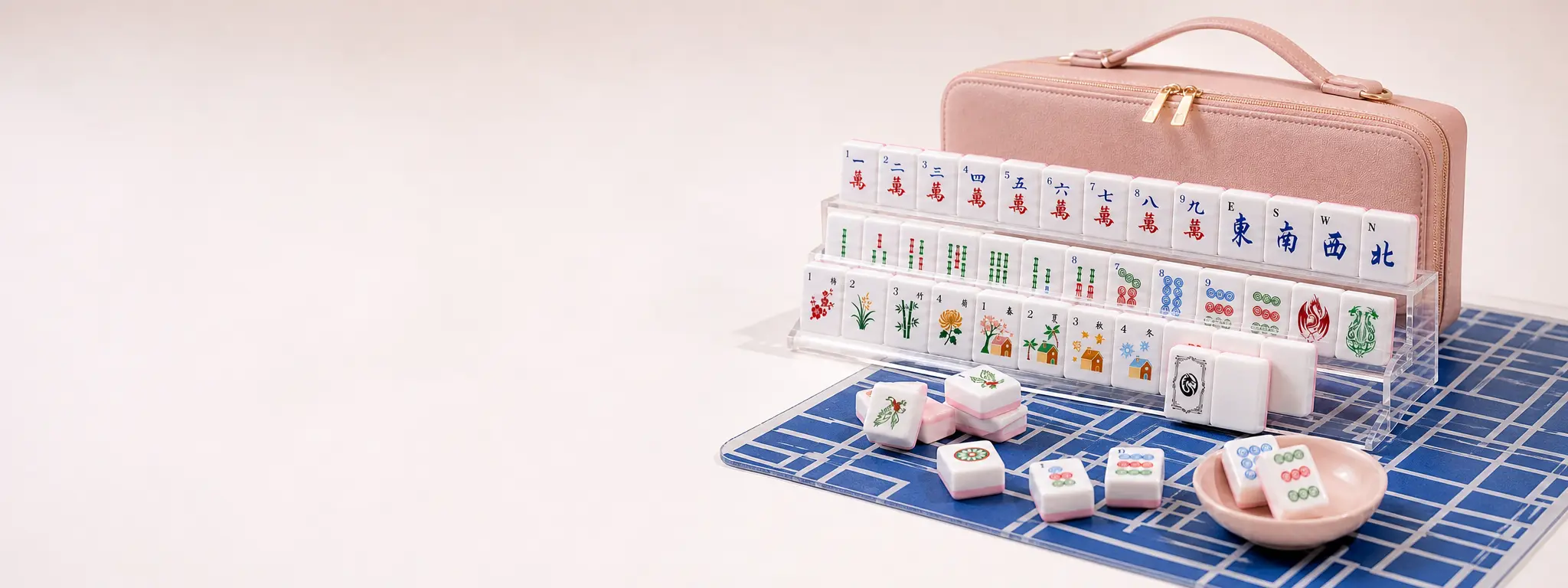
Color can make the table feel personal. JOKKOL's pink, blue, green, yellow, and starlight pink back options give a host a way to match the room or the occasion. Keep contrast in mind so the style never makes symbols difficult to read.
Reset the starter kit before it leaves the room
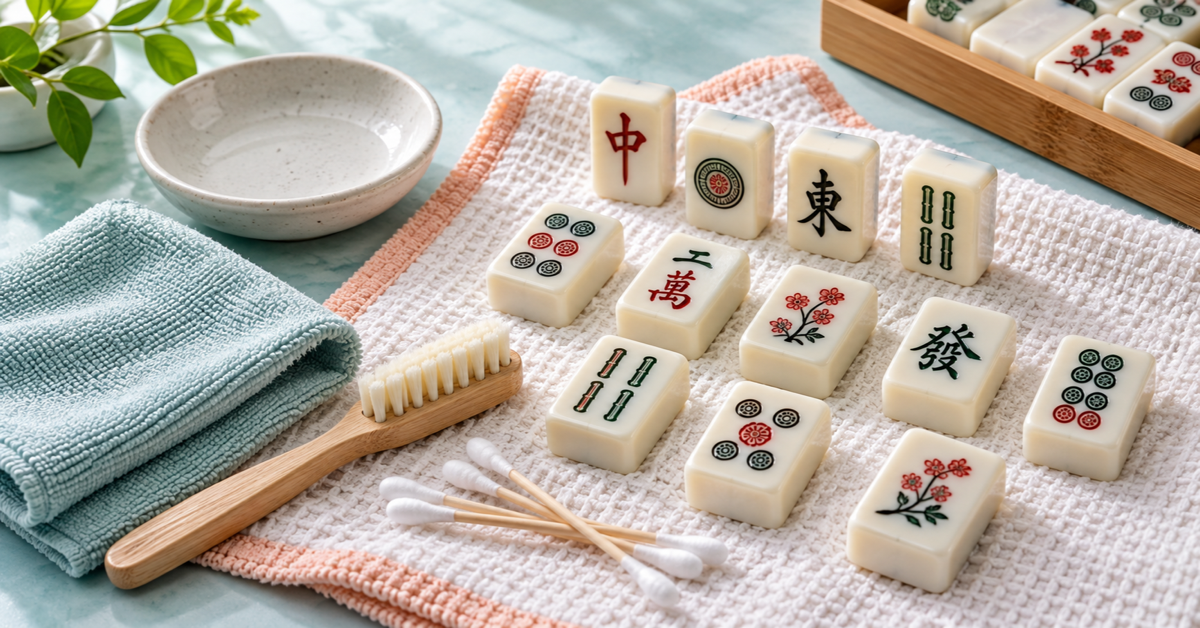
At the end, return to the same order used for setup. Clear the table, check the special pieces, wipe residue, dry the mat, and place racks, pushers, dice, and the rules reference in their compartments. A phone photo of the open case can help a guest host repack it correctly.
If a piece is missing, write it down immediately. Contact JOKKOL with a photo and the existing set details before buying a random replacement. For a coordinated set, browse the JOKKOL Mahjong collection.
When a club needs more than one kit
Clubs and event hosts can standardize the table by assigning each kit a color or number. Keep an inventory card in every case, use the same mat orientation, and record any replacement request after the event. For a branded or larger supply project, the JOKKOL Distribution page is the right place to start a channel conversation.
FAQ
What belongs in a Mahjong game night starter kit?
Start with compatible tiles and Jokers, four racks, dice, a current rules reference, and a case. Add a mat, pushers, and a cleaning cloth for easier hosting and storage.
Do I need a special table for game night?
No. Use a stable table that leaves room for four players, four racks, walls, and a clear discard area. A mat can help define the layout.
What should a host explain before the first game?
Explain the game format, the current card, the basic tile families, how the Charleston works for your group, and where to ask a rules question.
How can I keep snacks away from the tiles?
Use a side table or a defined snack break. Keep drinks away from the wall path and wipe residue before packing the set.
Is a colorful set suitable for beginners?
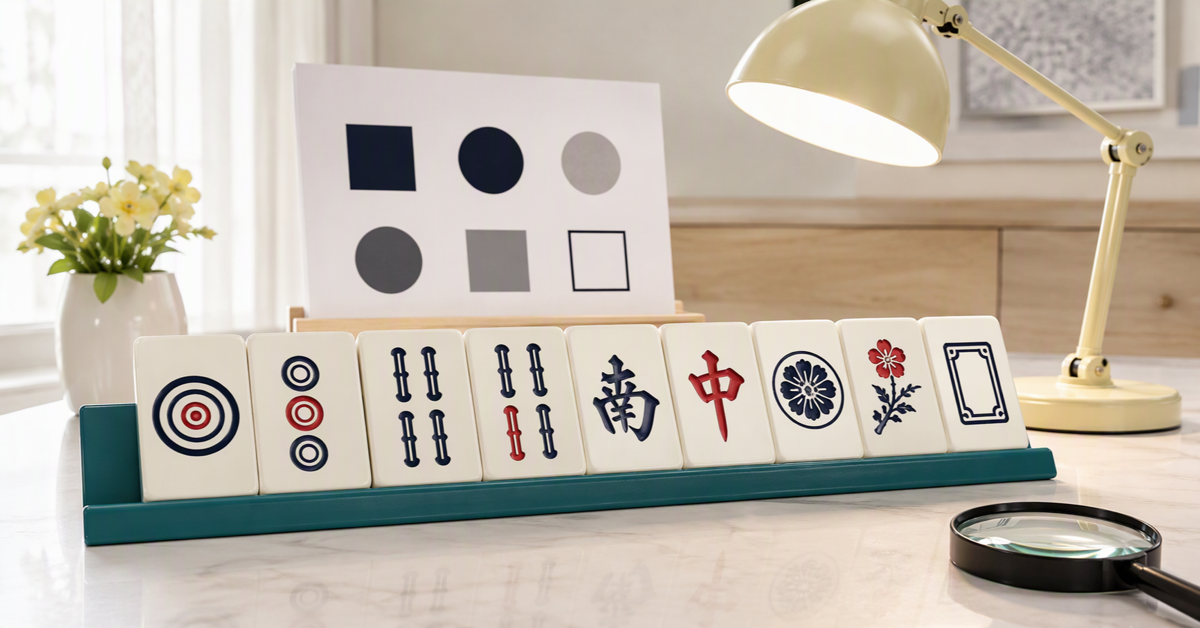
Yes, when the symbols remain high contrast and the special tiles are easy to identify. Let readability guide the final color choice.