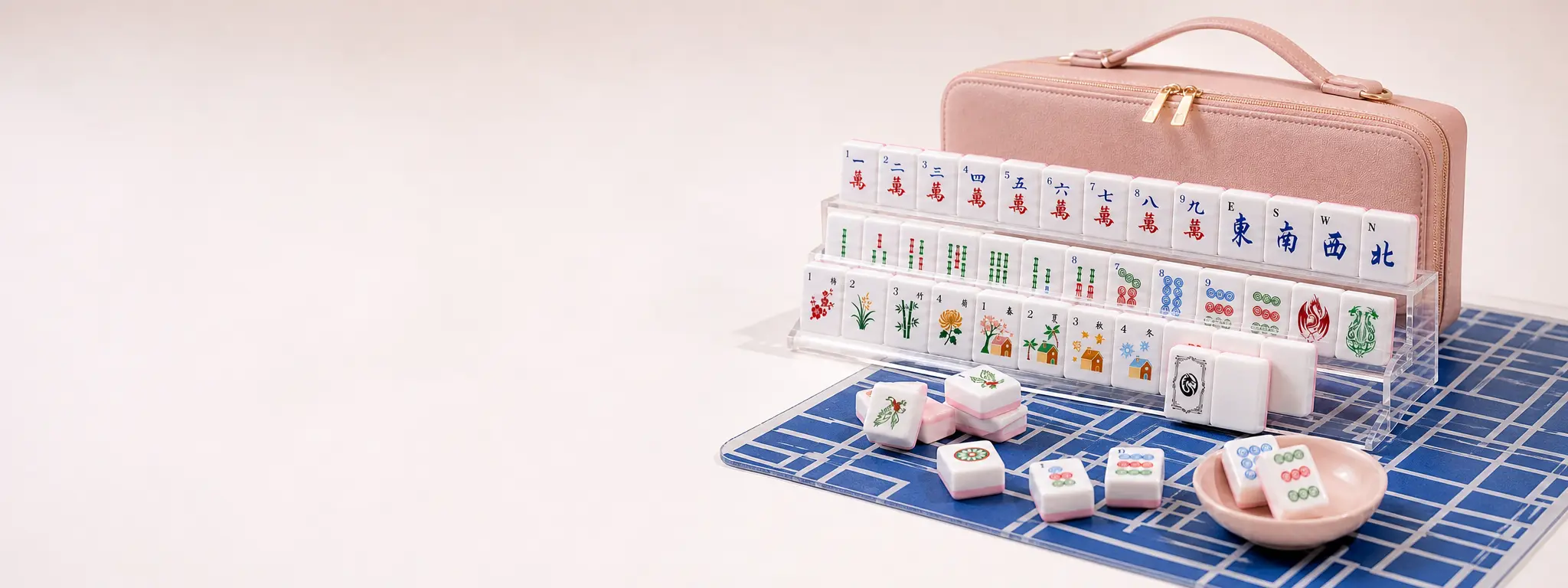

To set up an American Mahjong table well, give every object a home before anyone starts building the wall. Put the mat or clean playing surface in the middle, place one rack at each seat, keep the rule card visible, and put the dice where all four players can reach them. Then build the wall, agree on the opening procedure, and deal without moving the furniture around mid-game.
The exact roll, wall break, and deal belong to the current rules your group follows. The physical setup can still be repeatable. A consistent table makes it easier to see the tiles, hear decisions, find missing pieces, and reset the set after the last hand.
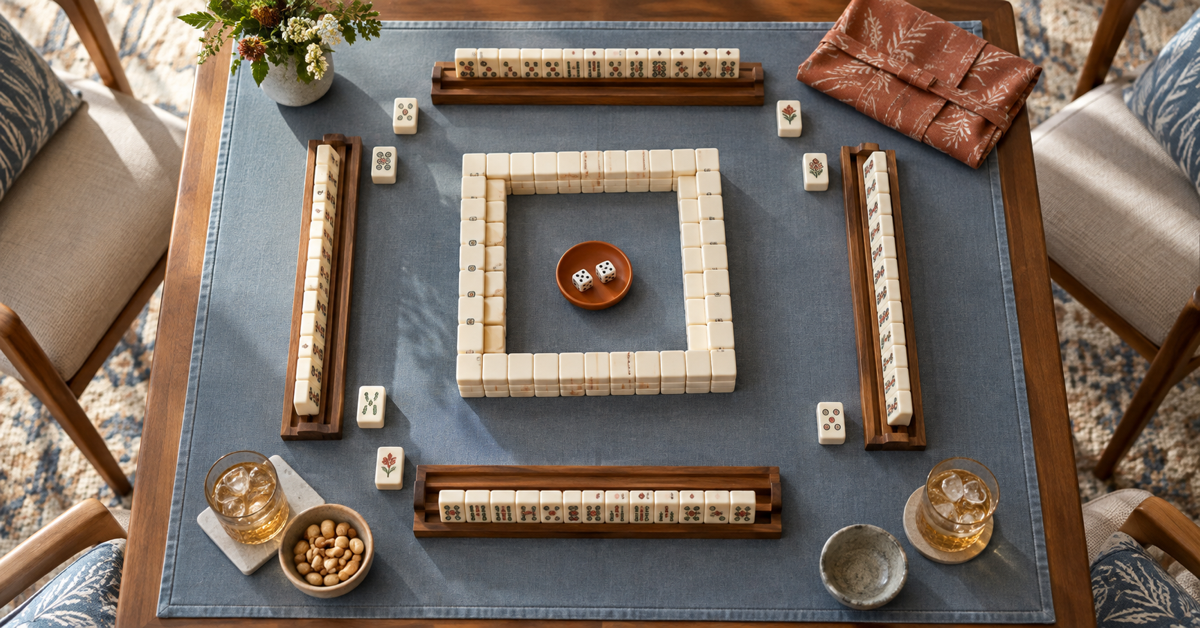
Start with the table, not the tiles
Choose a table that leaves each player enough elbow room to hold a rack and reach the center. A crowded dining table can work, but a narrow coffee table usually turns the wall into an obstacle. Check the chair positions before opening the case. The best layout is the one that lets everyone see the wall, their own rack, and the rule card without leaning across another player.
The surface should be clean, stable, and easy to retrieve tiles from. A Mahjong table mat can define the playing area, reduce sliding, and make the table easier to reset. It should lie flat before the tiles arrive. A folded corner is a small nuisance at the start and a larger one when a wall is nudged.
A four-seat equipment check
| Item | Put it where | Check before play |
|---|---|---|
| Mat or clean table surface | Centered under the wall | No crumbs, damp spots, or raised edges |
| Four racks | One at each seat | Channels fit the tile thickness and the rack is stable |
| Pushers, if used | Beside or behind the racks | All four match the wall and do not block hands |
| Tiles and Jokers | In the center for mixing | Count and set identity match the current rules |
| Dice | In a small tray or clear center spot | Quantity and markings are easy to read |
| Rule card or reference | Where all players can see it | Current edition and house notes are available |
| Drinks and phones | Away from the playing edge | Nothing can spill into the wall or racks |
The goal is not a decorative table. It is a surface where four people can perform the same actions without reaching through one another.
How to set up an American Mahjong table step by step
1. Clear and square the playing area
Move bags, notebooks, and loose accessories away from the four edges. Wipe the surface if needed and lay the mat so its corners are parallel with the table. If the mat has guide lines, decide whether your group uses them for a consistent wall position or simply uses them as a visual boundary.
Put the four chairs in first. Sit down briefly and check the sight lines. A rack that looks centered from above may feel too close to one player and too far from another. Adjust the chairs now, while the table is empty.
2. Place the racks and pushers
Set one rack at each seat with enough room behind it for a concealed hand and enough room in front for exposed tiles. Keep the long sides parallel to the table edge. If the rack has a pusher, test the full channel with two or three tiles before the wall is built.
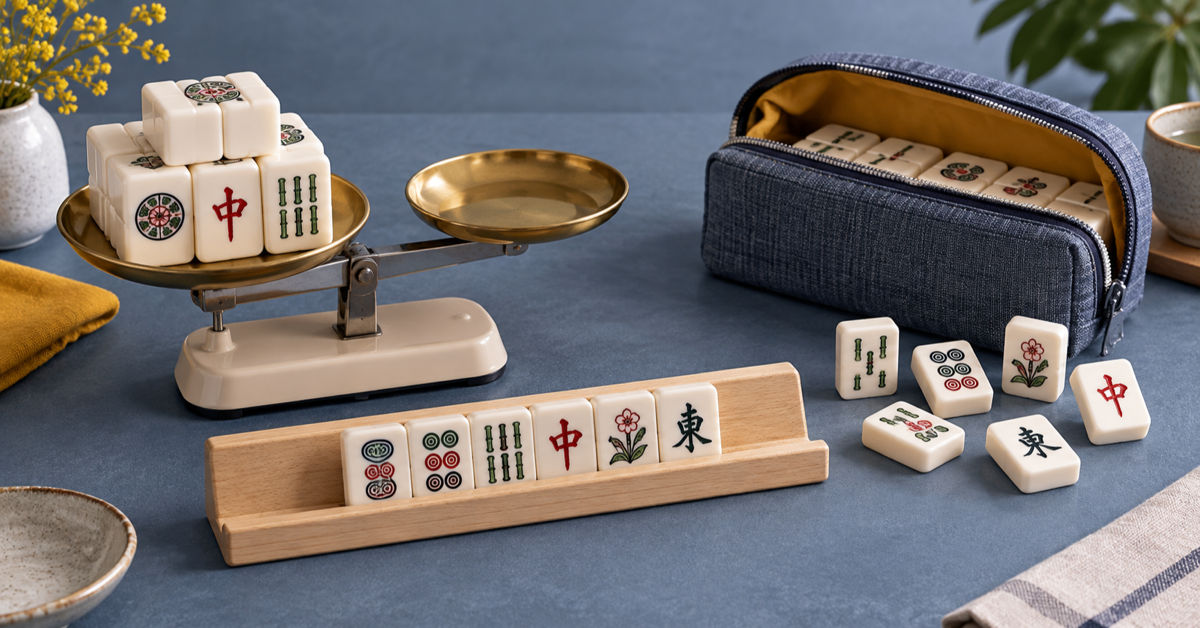
The American Mahjong racks and pushers should support the tile dimensions you are using. A rack that is too narrow makes every draw awkward; one that is too deep can hide the lower part of a face. Place spare pushers outside the active playing area rather than stacking them on the wall.
3. Mix the tiles without losing the accessories
Keep the dice, rule card, and small accessories out of the tile mix. Turn the tiles face down and mix them with both hands, working toward the center instead of pushing pieces onto the floor. If your group uses a defined mixing or wall-building routine, follow it consistently.
Before the wall is closed, check the edges for a stray die, a pusher, or a blank piece that belongs in a separate compartment. The few seconds spent checking the mix prevent a long pause after the deal.
4. Build the wall as a shared square
Build four equal sides according to the current rules your group uses. Keep the rows aligned and leave the corners connected. One player can begin each side while another watches the height and spacing. The objective is a stable square that can be counted from the agreed starting corner.
Do not use the wall as a place to hide a case lid, phone, or rule card. The pieces should be visible enough that everyone can confirm the starting side and the count. If one side is obviously shorter, stop and correct it before anyone rolls.
5. Put the dice and rule reference in view
Place the dice in the center or in a shallow tray that keeps them from bouncing off the mat. The Mahjong dice should be large enough for the table and marked clearly enough that the total is easy to announce.
Keep the rule card beside the center rather than under a rack. When someone asks about a Joker, an exchange, or a passing detail, the reference should be reachable without disturbing the wall. The card does not need to be memorized before the first game; it needs to be available.
6. Agree on the opening sequence before rolling
Groups can differ in how they select East, use the dice, identify the wall, and make the break. State the sequence out loud before the roll:
- Who rolls and how the first player is chosen.
- How many dice are used for this ruleset.
- Which side or seat the result identifies.
- Where counting begins and which direction it follows.
- Who announces the break before tiles are moved.
This short announcement prevents the most common setup argument: two players may be following different memories of the same procedure. If the group has a house rule, write it on a small card and keep it with the set.
7. Deal and arrange the first hands
Once the break is confirmed, deal according to the current rules. Keep the wall square until the starting player begins taking tiles. Each player should have a clear place for the concealed hand, the discard area, and any exposed tiles.
When the first hands are arranged, check that the racks are not touching the table edge and that the rule card is still visible. This is the moment to move a chair or rotate a rack. After the game begins, a small adjustment can look like a signal to the other players.
Make the table readable from every seat
An American Mahjong table setup is successful when a player can recognize the wall, their rack, the center, and the current rule reference without asking someone else to point. Use the same visual order every time:
- Wall in the center
- Four racks facing inward
- Dice in one known place
- Rule card outside the wall, readable from two sides
- Discards in a consistent area that does not overlap the wall
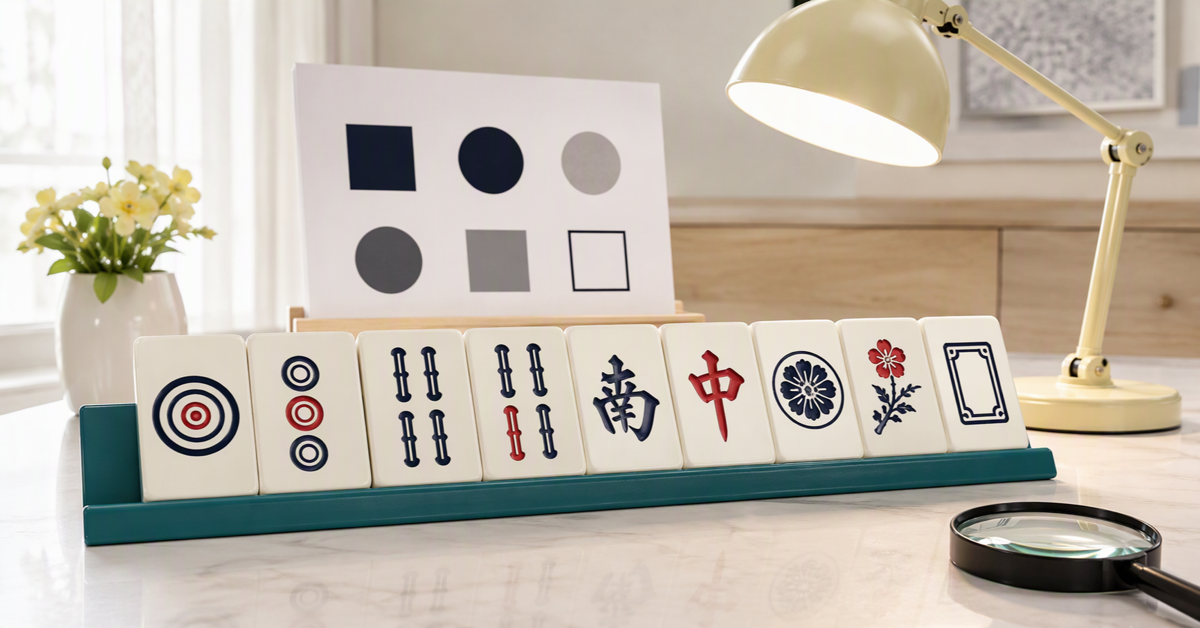
Avoid placing a bright phone, dark case, or loose packaging beside one player's rack. Visual clutter makes it harder to distinguish a tile back from an accessory and can make the table feel smaller than it is.
Adjust the setup for a small table
If the table is narrow, shorten the distance between the racks and keep the rule card at one corner instead of in the center. Use a smaller tray for the dice. Do not shrink the wall unevenly to make room; reduce the nonessential objects first.
If the table is large, do not spread the four racks so far apart that players must lean to pass or see the center. Mark the four seats with the mat or with the rack positions, then keep the wall centered inside that square. A little symmetry makes a large surface easier to read.
Players with limited reach may prefer the rack slightly closer and the wall slightly farther away. Make the adjustment for comfort before the deal and use the same position for everyone when possible. A comfortable setup is part of the equipment decision, not an afterthought.
Troubleshoot the first five minutes
The wall keeps drifting
Check the mat and table level first. If the surface is slick, move the wall onto the least slippery part of the mat and rebuild it evenly. Do not brace one side with a phone or a case corner.
The racks do not hold the tiles cleanly
Measure the tile thickness and compare it with the rack channel. A mismatch may come from the rack, the tile design, or a pusher that is not seated correctly. The Mahjong tile size guide explains which dimensions to record before replacing a rack.
Players cannot see the rule card
Move the card to the outside of the wall and angle it toward the seats. If the group plays with a large printed reference, keep it on a small stand or use a second copy rather than asking one player to hold it.
The dice roll off the table
Use a shallow tray or a defined area on the mat. The tray should not cover the wall or force a player to reach over another hand. Count the dice only after all of them stop.
A piece is missing after the deal
Pause and check the floor, the mat edge, the case compartment, and the wall corners. Keep a spare-piece note with the set. If one tile is genuinely lost, the lost Mahjong tile replacement guide lists the photos and measurements a seller will need.
Reset the table after the game
A reliable reset is part of learning how to set up an American Mahjong table. Before anyone leaves, count the dice, return the rule card, collect the racks and pushers, and separate any spare or blank pieces from the playing tiles. Check the floor around each chair.
Use this closing sequence:
- Gather exposed tiles and discards into the main set.
- Count or scan the full tile inventory for a missing piece.
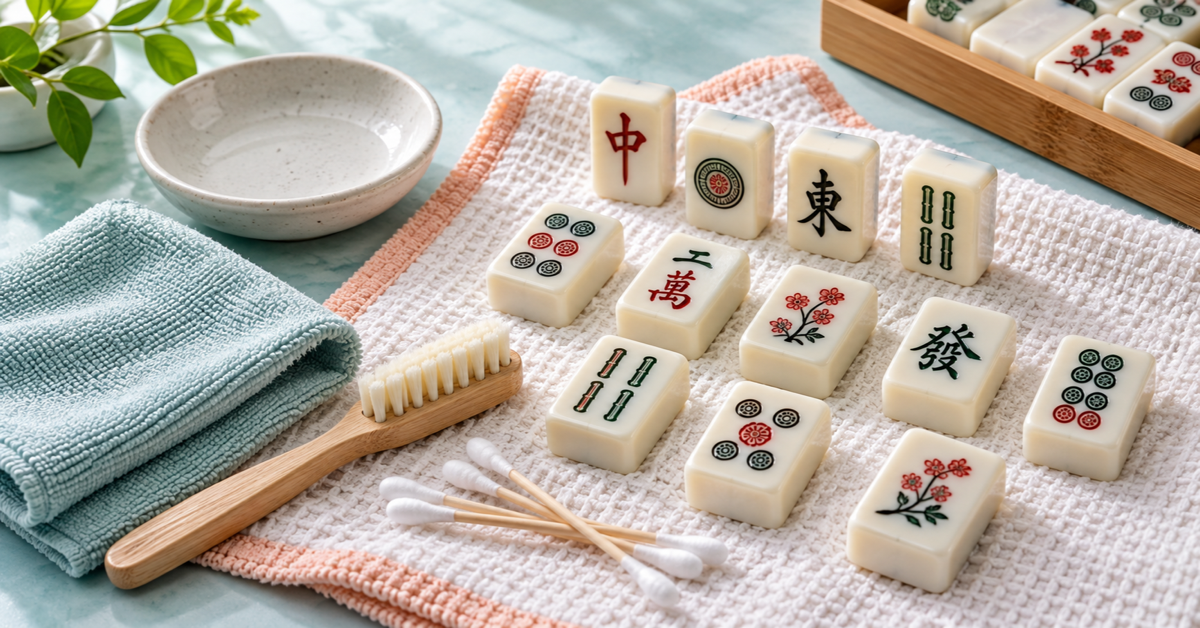
- Wipe crumbs and sticky marks from the mat and racks.
- Dry every accessory before it goes into the case.
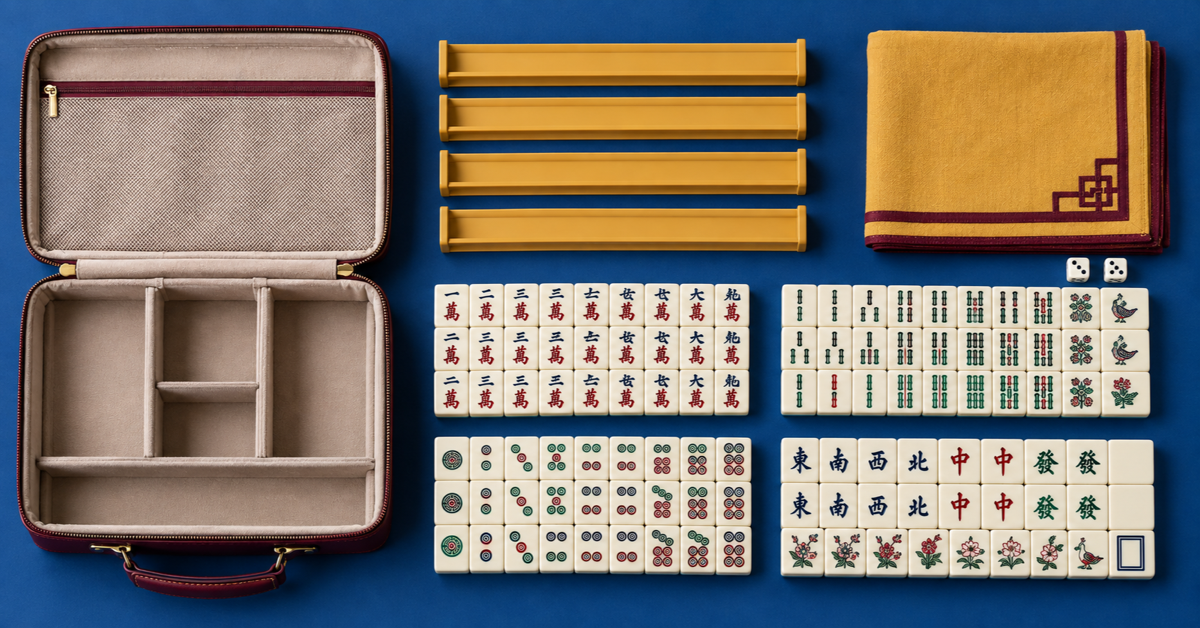
- Return dice and small pieces to their labeled compartment.
- Store the set so heavy objects do not rest on printed tile faces.
Our American Mahjong storage routine covers the case reset in more detail. The best storage routine is the one that makes the next table setup boringly predictable.
FAQ
How to set up an American Mahjong table for four players?
Center a clean mat or stable surface, place one rack at each seat, build a connected four-sided wall, keep the dice and current rule card visible, and agree on the opening sequence before rolling. Deal only after every player can reach their rack comfortably.
How many dice for American Mahjong?
Use the number specified by the current rules your group follows. American Mahjong groups commonly use three dice, but the exact roll and wall procedure should come from the group's rule reference rather than a generic setup memory.
Do you need a mat for American Mahjong?
No. A clean, stable table can work. A mat can improve grip, define the playing area, reduce noise, and make crumbs easier to spot, so it is useful when the group travels or plays on a smooth surface.
Where should the rule card go?
Put it just outside the wall in a place that at least two players can read. Move it to the side when it blocks a rack or forces someone to reach across the center.
What should stay off the Mahjong table?
Keep drinks, phones, bags, shipping packaging, and loose metal objects away from the wall and racks. They reduce usable space and can scratch or move tiles when the table is bumped.
How often should the table setup be reset?
Reset after every session. A quick count of tiles, dice, racks, pushers, and the rule card prevents the next game from beginning with a missing accessory or an uneven wall.
When the setup is consistent, the group can spend its attention on the hand instead of the furniture. That is the practical reason to set an American Mahjong table the same way every time.