
American Mahjong Mat Guide: Build a Quieter, Clearer Four-Player Table
An American Mahjong mat changes the table in ways you notice after a few rounds. Tiles stop drifting toward the edge, the walls have a place to line up, and the clatter feels less sharp on some tables. It is a playing surface, not just a backdrop for photographs. The checks below will help you decide whether a mat suits your table and how it will work with JOKKOL tiles and accessories.
Decide what the mat needs to solve
Think about the table you actually use, including the awkward little details. A mat earns its space when:
- The table surface is slippery or easily marked.
- Loose tiles make a sharp sound during a long session.
- Players need a clear visual area for four walls and discards.
- The set moves between a kitchen, club room, and friend's home.
- You want the table to look consistent in photographs or lessons.
If your table is already quiet and steady, you may choose a mat mainly for its look. When tiles skate across a polished surface, grip and a defined boundary become practical reasons to compare one.
Measure the table before buying
Measure the part of the tabletop where the game will sit, rather than relying on the outside edge. Players still need somewhere to rest an elbow, and the rack bases should not teeter over the rim. A wall-to-wall mat can feel cramped; a tiny mat leaves the walls with no useful boundary.
For a four-player American Mahjong setup, record:
- Table length and width
- The space needed for four racks
- The approximate wall footprint used by your group
- The shelf or bag space available for storage
Look for the actual dimensions in the listing. When they are missing, ask before ordering. A lifestyle photograph is a nice reference, but it cannot tell you whether four racks will fit.
Look at surface feel and edge finishing
If a sample is available, run a hand across it. You want a surface that holds its place without feeling tacky, with enough give for a controlled wall build. Inspect the edge too: a rough seam can catch a sleeve, and a curled edge becomes irritating by the third game.
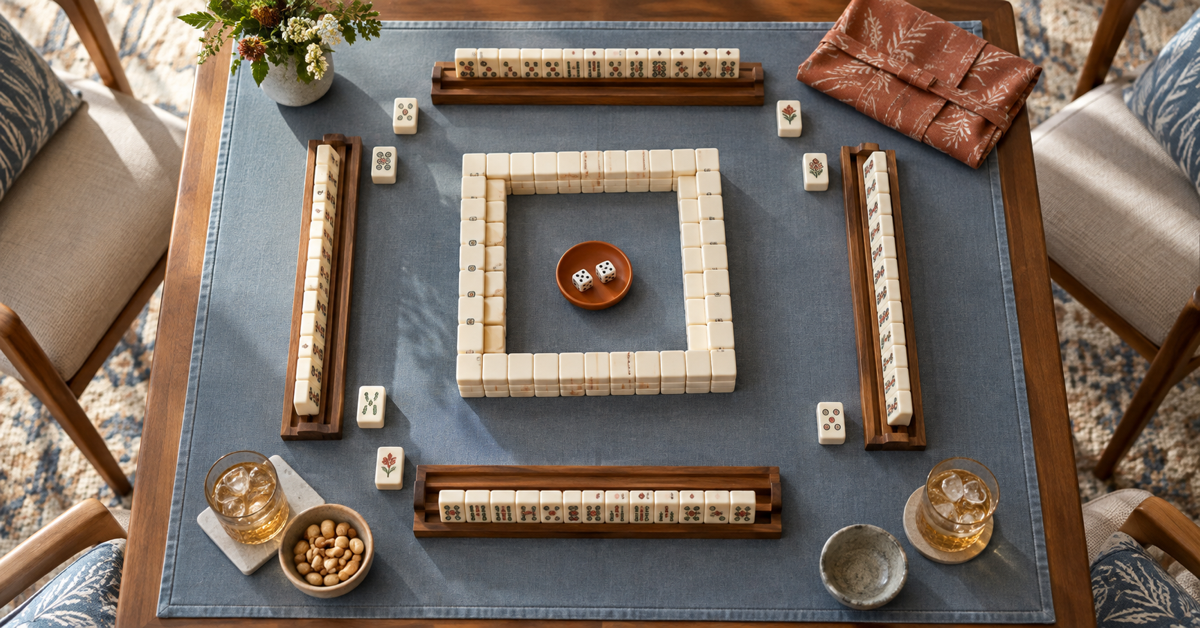
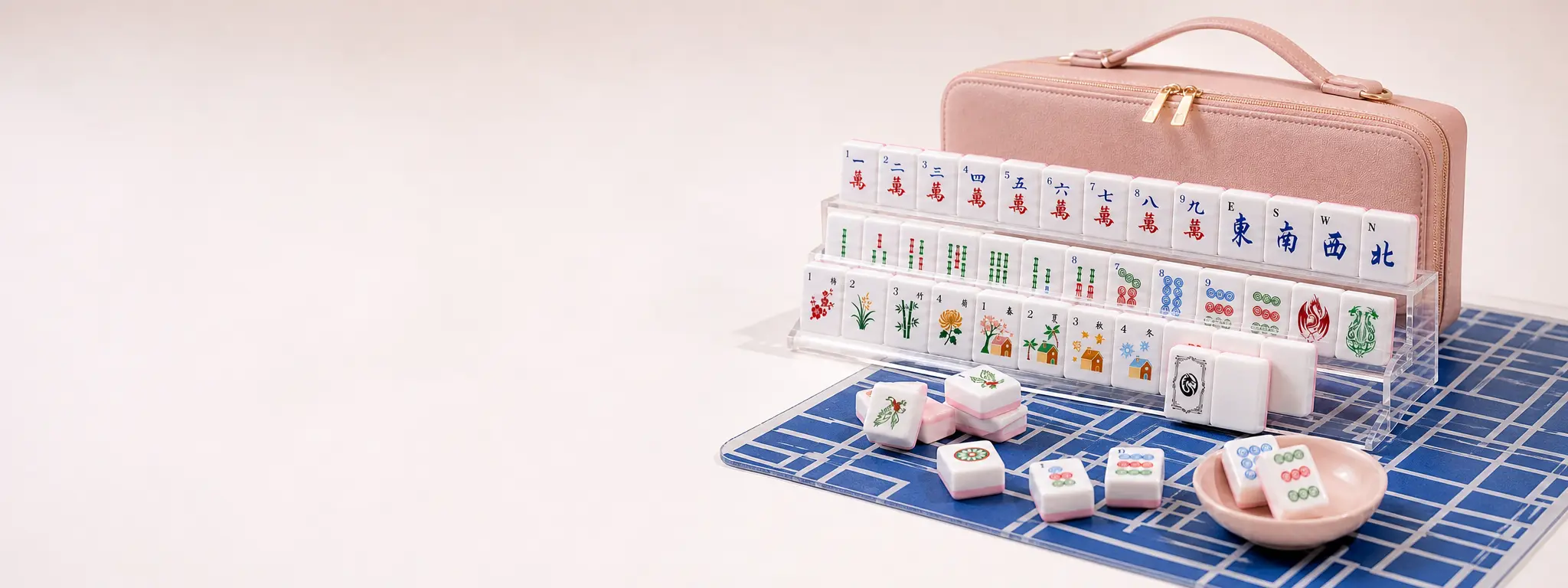
The JOKKOL blue gaming mat uses geometric table lines that help create a deliberate four-player layout. Pairing a patterned mat with colorful tiles works best when the grid remains a guide rather than a distraction from the tile faces.
Use the lines as a setup aid
An American Mahjong mat with guide lines can make the beginning of a game more repeatable:
- Place the mat square with the table edge.
- Align each wall with the nearest guide.
- Leave a defined center area for dice and the rules card.
- Keep the discard area away from the wall path.
- Return racks and pushers to the same sides after the round.
The lines do not replace the rules. They simply give new players a visual starting point and help a teacher explain where each part of the table belongs.
Consider noise without promising silence
Soft surfaces can change the sound of tiles, but the result depends on the tile body, table construction, and how players handle the set. Treat “noise reducing” as a comparison point, not a guarantee. If a quiet room matters, read the mat's material and care notes, then test it with the actual tiles when possible.
The same caution applies to non-slip claims. A mat can improve grip, yet dust, moisture, and a polished table may change how it behaves. The useful question is whether the mat stays in place during normal play and can be cleaned without losing its finish.
Match the mat to the rest of the table
Think of the setup as one visual system:
| Table piece | What to match |
|---|---|
| Mahjong tiles | Readability and color contrast against the mat |
| Racks | Stable placement without blocking the playing area |
| Pushers | Room to move the wall without catching the mat edge |
| Dice | A visible center area that is easy to reach |
| Rulebook | A dry, flat place where pages stay open |
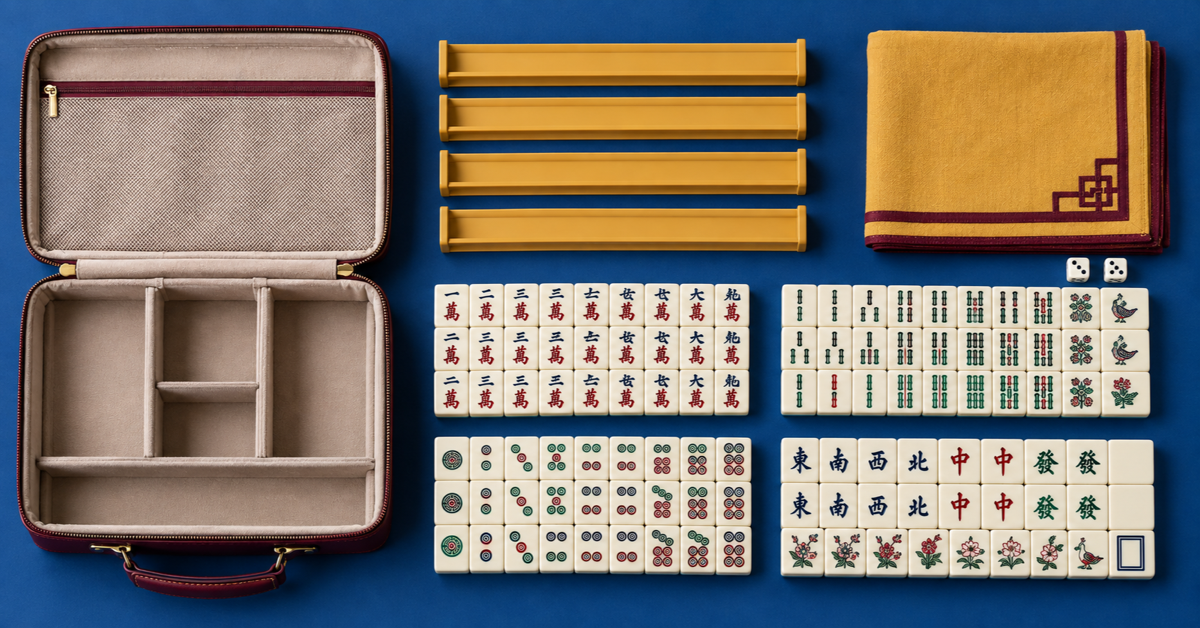
| Storage case | A packed size that fits the mat and accessories |
JOKKOL's green and pink table scenes show why a mat is more than a background. It helps the pieces read as one table, while the tile faces remain the focus.
Cleaning and storage habits
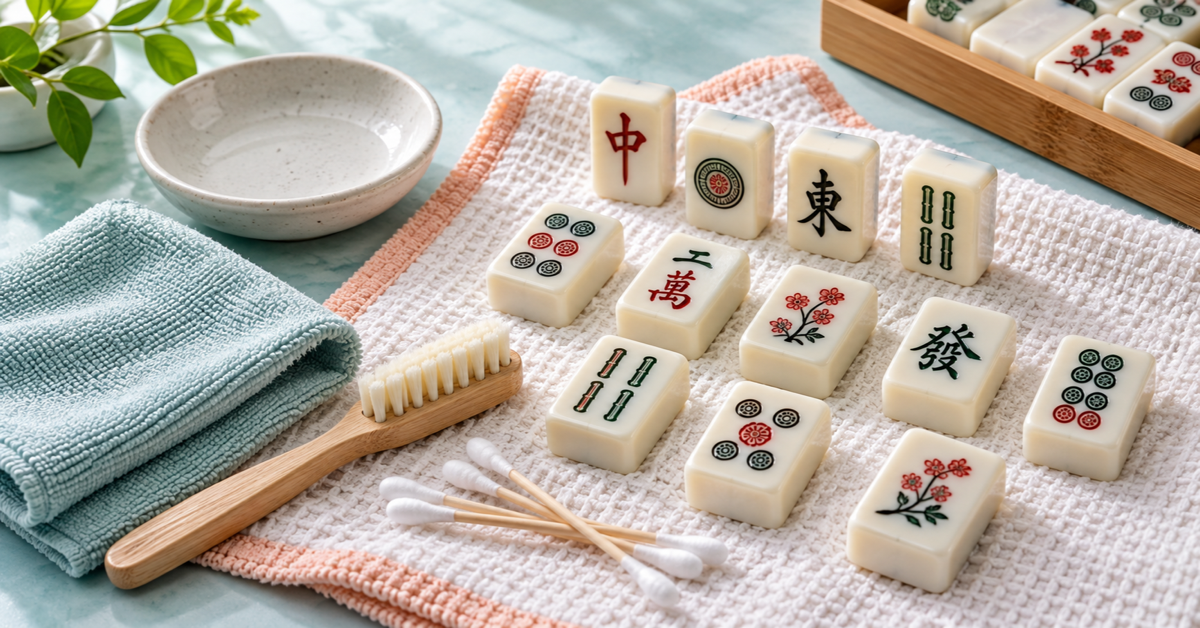
Shake or brush loose crumbs away before wiping. Use the cleaning method recommended for the mat's material, and let it dry fully before rolling or packing it. Avoid folding a mat sharply if the product is designed to roll. Store it away from heat and moisture, especially when it travels with a tile case.
If the mat develops a raised edge, flatten it according to the supplier's instructions before placing walls on it. A small curl can change the path of a moving pusher and become annoying during a busy round.
When a table cover is enough
Some players need a protective cover more than a gaming mat. A cloth table cover can protect a finish, but it may not have guide lines, grip, or a defined wall layout. Choose a mat when you want those playing functions; choose a cover when surface protection is the main goal.
Explore the JOKKOL gaming mat and Mahjong products to compare current table accessories. For dimensions, care questions, or a coordinated set, contact JOKKOL.
FAQ
What size mat do I need for American Mahjong?
Choose a size that fits the usable table surface while leaving room for four racks and comfortable arm space. Measure your table and confirm the product dimensions.
Does a Mahjong mat reduce noise?
A soft playing surface may change the sound of tiles, but the result depends on the tile and table. Treat noise reduction as a feature to test, not an absolute promise.
Is a mat necessary for American Mahjong?
No. A stable clear table works. A mat is useful when you want more grip, guide lines, a defined play area, or easier cleanup.
How do I clean a Mahjong mat?
Remove crumbs first, then follow the supplier's material-specific cleaning instructions. Dry the mat fully before storage.
Can I use a Mahjong mat with racks and pushers?
Yes, provided the mat leaves enough room for the rack bases and the pusher path. Test the full setup together before a regular game.