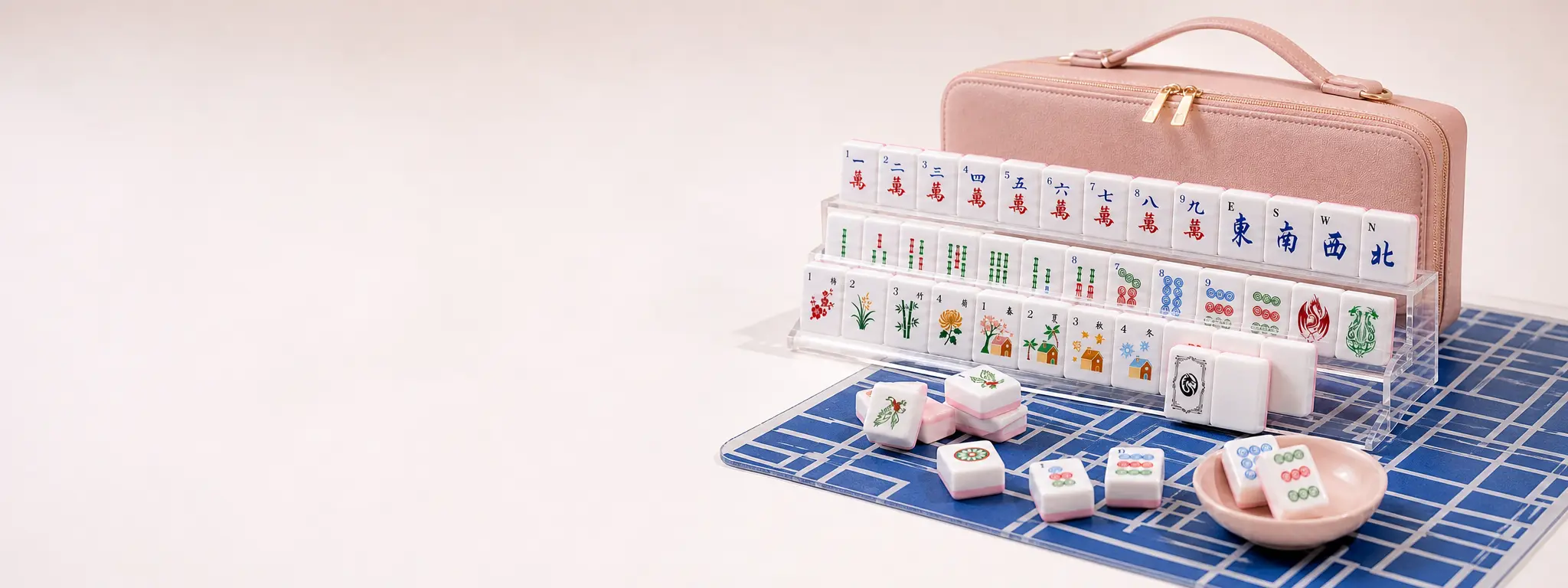

To clean Mahjong tiles, my ritual has one unbreakable rule: no sink. I dust the set with a dry microfiber cloth, then use a second cloth that is barely wet. A single drop of mild dish soap goes into a small bowl only when the tile is actually sticky. I wipe that spot, go over it once with clean water, and dry all four edges. Then the tile can go home.
Short is the strategy. Treat a printed tile like a plate, and it starts looking old fast. Residue stays in corners. Water finds the rim. One hard wipe can dull the face before I notice.
I am not precious about every fingerprint. Most disappear with a dry wipe. I save the damp cloth for the tile someone used after eating chips, the Joker that has been handled all evening, or the rack that collected dust in the case. Cleaning less often, but doing it correctly, works better for me than a big monthly production.
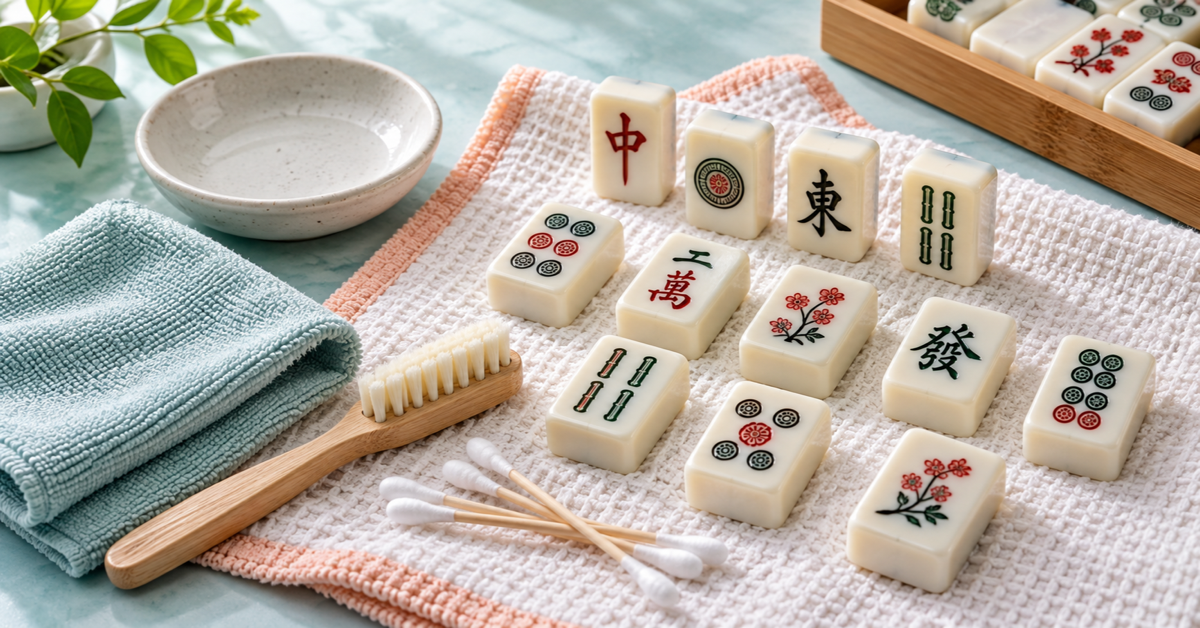
The kit I keep beside the set
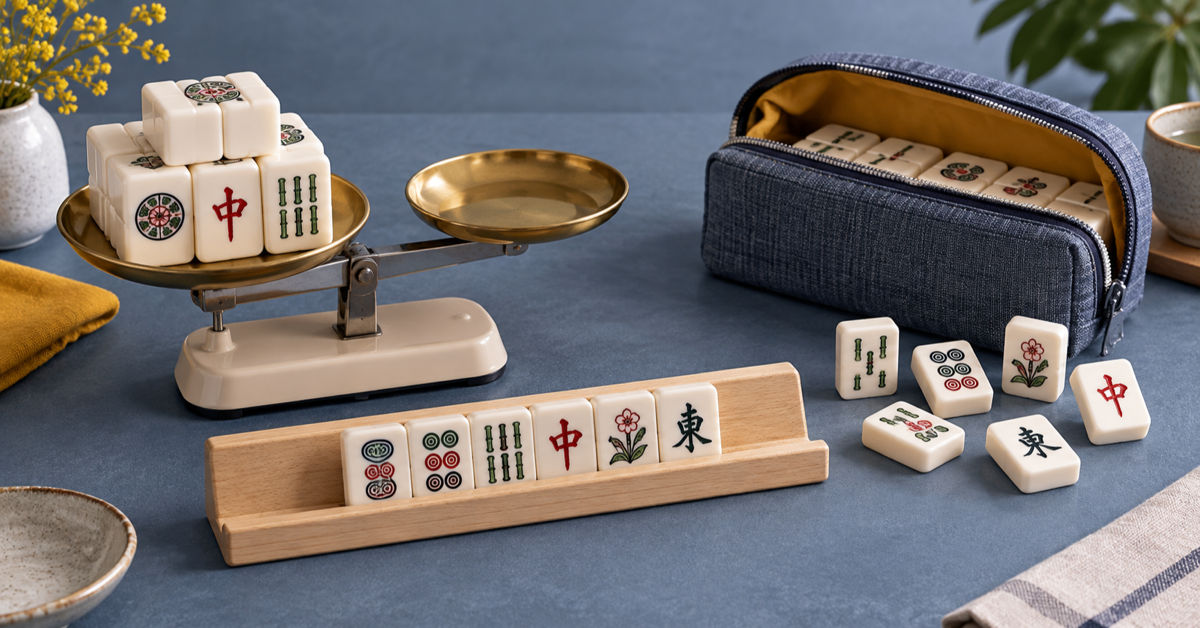
No special shelf required. My kit fits in one hand: two microfiber cloths, a small bowl, a dry soft brush, and a towel. One cloth gets wet. The other stays clean for the rinse.
The soap stays in the kitchen until I need it. If it lives beside the game, someone will eventually use too much.
PLEXIGLAS's own acrylic-care instructions take a similarly modest approach. Lukewarm water. A mild detergent if needed. A soft, lint-free cloth. Rough cleaning, the guidance notes, can scratch the surface. A printed Mahjong face adds ink and finish to that equation.
A four-line cleaning decision
| Problem | What I do | What I avoid |
|---|---|---|
| Dust or fingerprints | Dry wipe first; water only if needed | Slicking the whole set with soap |
| A sticky drink spill | Clean both sides now and dry completely | Leaving it overnight or soaking the tile |
| Food in a groove | Dry soft brush, then a damp cloth | A pin, knife, or stiff scrubber |
| A cloudy rack or a lifting print | Follow the seller's care instructions | Hot water, alcohol, or a dishwasher |
When in doubt, use less. A mark that will not move is asking for a different tool. It is not asking me to push harder.
How to clean Mahjong tiles, step by step
1. Make a landing pad
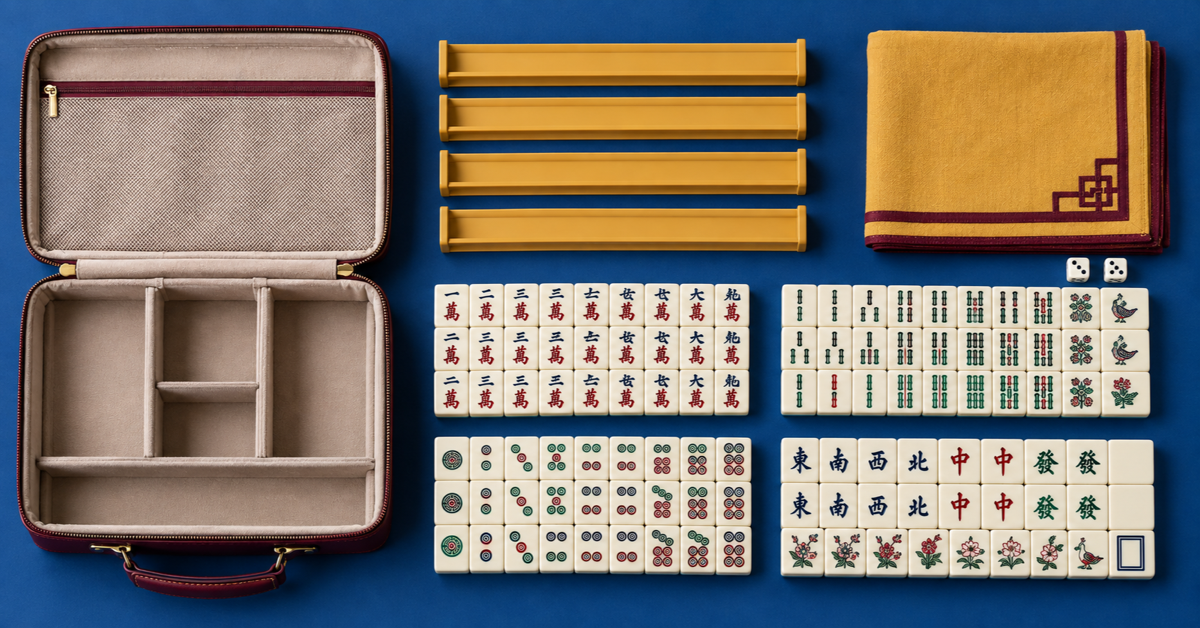
Put a dry towel on a table you can reach without leaning over the open case. Take everything out: tiles, Jokers, racks, pushers, dice, mat, and rule card. Give the paper its own dry corner. A damp rule card does not recover.
Before I decide how to clean Mahjong tiles, I check for cracks, lifted print, deep scratches, or an odd color. Set those tiles aside. Cleaning will not fix them, and a tile that looks different from the back can reveal information during play.
2. Get the dust off first
Wipe the face, edges, and back with the dry cloth. Use a light hand. For a rack channel, brush over the towel instead of over the open case.
Do not rush past this. Dust plus water makes a mild abrasive paste. The dry pass also tells me which tiles really need cleaning. Nine times out of ten, it is only a few.
3. Mix the smallest amount that might work
One cup of warm water. One drop of mild soap. That is the mix. If foam appears, I used too much.
The unfriendly list stays closed unless the seller says otherwise: vinegar, alcohol, bleach, ammonia, acetone, essential oils, disinfectant sprays. "Plastic" covers too many surfaces to be useful advice. I am protecting the ink and finish most of all.
4. Test one hidden spot
Try a hidden corner first. Wait a minute. I know it sounds fussy. That minute has saved me from taking a bad cloth across the rest of the set.
If the color changes, the test is over. Ask the seller before doing anything else. Send a photo and the model number.
5. Clean one tile at a time
Keep the tile over the towel. Face first. Edges next. Back last. A cloth that leaves a trail is too wet.
Jokers and other pieces that get handled constantly need fewer passes, not more. Wipe once, check the result, and move on. Scrubbing the same spot rarely solves a stain. It usually changes the finish.
6. Rinse before you dry
Second cloth. Clean water. No soap. A bright light makes leftover film easy to spot.
7. Dry the tile completely
Face-up. One layer. A dry towel under them. Fifteen to 20 minutes should do it in a normal room. Turn each tile once and give the edges the same air time as the face.
Buff the faces lightly once they feel dry. No hair dryer. No radiator. No direct sun. Heat is not worth the risk, and the damage may not appear until much later.
Racks, mats, dice, and the case
Racks are dust traps. Start with the dry brush. Wipe the outside with a cloth that is barely damp, then let it air out. Soaking is a mistake. A dishwasher is a bigger one. The care note for the set knows more than a generic acrylic rule.
For a Mahjong mat, remove crumbs before using any water. A low vacuum or soft brush works. Then spot-clean marks with a wrung-out cloth. Do not scrub the printed guide lines. Dry the mat flat unless its label says otherwise, and keep it away from tiles and the rule card while it is damp.
Dice get a quick wipe and air dry. Look for residue in the pips. For the case lining, use the faintest damp cloth you can manage. Pouring or spraying cleaner inside is asking for trouble. Leave every compartment open until dry.
Our American Mahjong storage routine covers packing, and the acrylic Mahjong tile guide explains material differences if you are still comparing sets.
What causes most tile scratches
Very few scratches happen because someone chose the wrong soap. Most come from movement. A tile slides over a crumb. A key sits under the rack. A die rolls against a face inside the case.
Lift each tile instead of sliding it. Keep coins, keys, metal markers, and loose tools off the playing surface. Give dice their own pouch or compartment. Use soft dividers, and do not stack racks or pushers on printed faces. Check the table after snacks or crafts, because one hard crumb is all it takes.
I also do not trust the word "acrylic" as proof that a tile is scratch resistant. Acrylic is a material family, not a performance test. If a listing makes that claim, ask what was tested. Until then, glossy printed faces get the careful treatment.
If a tile is already scratched
Turn it face down and ask whether the mark can identify it during concealed play. A small scuff on the back may not matter if everyone knows about it. A scratch on the face, a chipped edge, or a mark that makes one tile easy to spot is a different problem.
No sanding or polishing a printed face unless the maker says how. Plain-acrylic tricks can take off print, change gloss, or alter thickness. Take photos, write down the model and tile size, and ask for a matching piece. Our lost Mahjong tile replacement guide lists the details a seller will need.
A care card for a shared set
Shared sets do not need a long policy. Pick one person to check the table before play. Keep a dry cloth in the case. Put drinks on another table. Clean sticky marks before packing. Count the pieces after the game. Review the routine when someone brings in a new cleaner or accessory.
If one person usually packs the set, take a photo of the open case after the first correct packing. That photo settles more questions than a paragraph of instructions. It also gives the next player a clear target.
Want the whole table to match? Browse the JOKKOL Mahjong collection. If one tile or accessory needs replacing, send JOKKOL the photos and product details first. That is much safer than testing an unlisted cleaner.
FAQ
How to clean Mahjong tiles with the least risk?
The safest way to learn how to clean Mahjong tiles is to start dry. Warm water comes second. One drop of soap only for grease.
Can I soak Mahjong tiles in water?
Nope. Water can disappear into an edge, a crack, or the rim around the print. Then it stays there. Wipe instead.
Can Mahjong tiles go in the dishwasher?
Nope. A dishwasher is too rough for prints and racks. Hand cleaning is gentler.
Can I use alcohol wipes?
Only with the maker's approval for that exact model. Acrylic advice alone cannot predict how the print will react. If you cannot get an answer, test a hidden spot.
Why do tiles look streaky after cleaning?
Usually it is soap, water, or a dirty cloth. Go over the tile with a clean damp cloth, dry it, and buff lightly. Polish only hides the problem.
How long should the tiles dry?
Give them 15 to 20 minutes face up in one layer. Turn them once, then check the backs and edges. In humid rooms, wait longer. Heat is not a shortcut.