
Before you buy an American mahjong tile set, check four things. Confirm 152 playable tiles with eight jokers and eight flowers. Confirm the tile material and how the faces are printed. Confirm the racks fit those tiles. Then confirm the case holds the full count, spares included. The number printed on the box is not the number you play with.
This guide runs those checks in order. It compares tile materials and set configurations in two tables, then gives a pre-purchase checklist you can work through against any listing. It is written for first-time players upgrading from a borrowed set, and for gift retailers and club organisers buying a few sets at a time.
What Should You Check First in an American Mahjong Tile Set?
Start with the piece list, then the material, then the accessories. Colour, case styling and price are preferences you can settle once those three are confirmed.
Ask the seller for a line-by-line breakdown rather than a total. A usable American inventory shows 108 suit tiles, 16 winds, 12 dragons, eight flowers and eight jokers. If the listing only says "160 pieces", the breakdown is still the thing to request.
A total count hides the spare mix. Two sets can both claim 166 pieces and carry different numbers of jokers and blanks. The joker count matters most, because American hands use jokers as wild tiles inside runs of three or more.
Material comes second because it decides how the set ages. Third comes rack fit, which is the check buyers most often skip and the one hardest to fix after delivery.
What Is in a Complete American Mahjong Set?
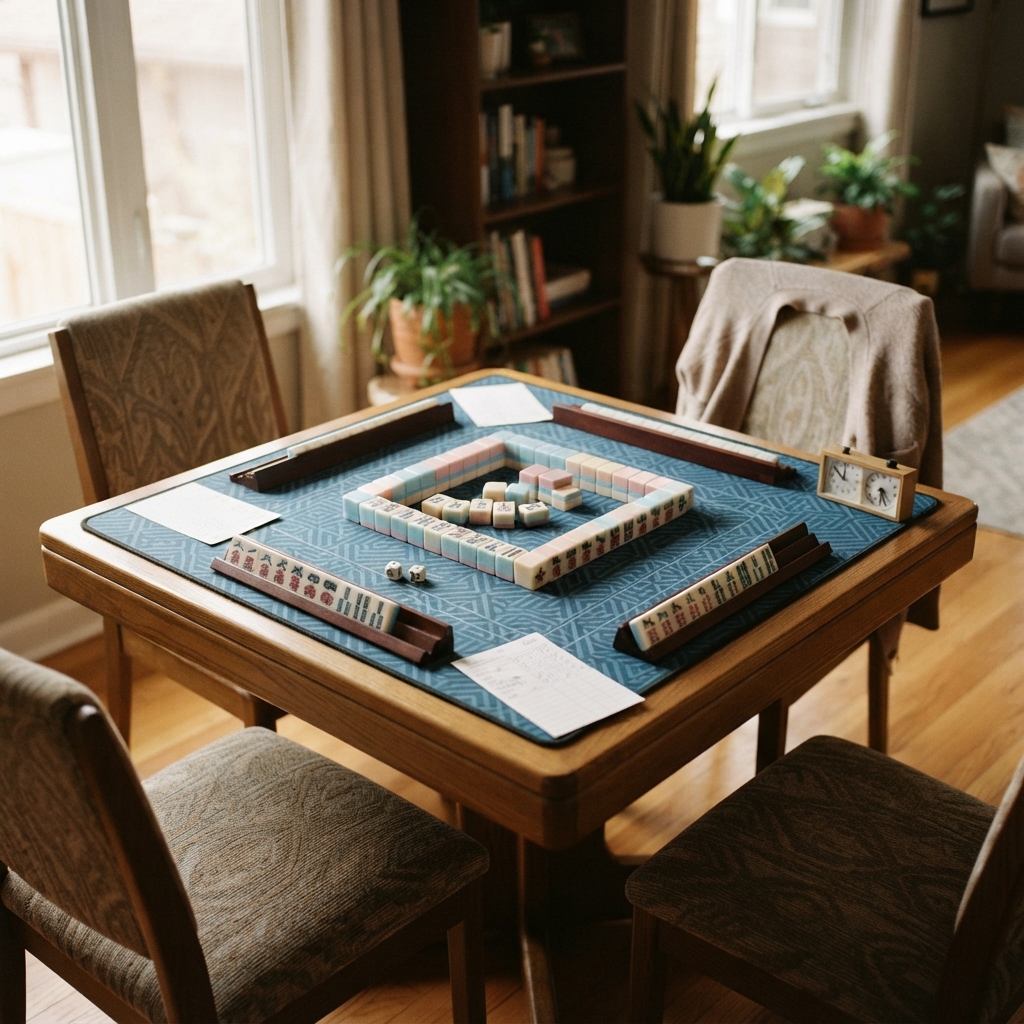
A complete American set carries 152 playable tiles, a small spare pack, four racks with pushers, dice and usually a mat. The tiles are the only part fixed by the rules; everything else varies by seller.
Tiles and jokers
American Mah Jongg plays to 152 tiles. Our guide to how many tiles are in a mahjong set lists them as 36 dots, 36 bams, 36 craks, 16 winds, 12 dragons, eight flowers and eight jokers. Those lines add up to the playing inventory, and every one of them is used at the table.
Retail boxes usually add two spare jokers and six blanks, which is where the 160 figure comes from. Some listings ship ten jokers with six blanks instead. Read the spare line, not the headline number.
The National Mah Jongg League was founded in New York City in 1937, when a group of Mah Jongg enthusiasts met to standardise the game, and it has arbitrated American play ever since. The League publishes the American version of the rules, supplies the Official Standard Hands and Rules Card each year, and changes the hands and rules annually. That annual card is why the 152-tile baseline stays consistent across American sets.
Racks and pushers
Four racks, one per player, plus four matching pushers. A rack holds a standing row of tiles, and the pusher moves the wall and squares off the discard area. Sets sold as tiles only leave both out, so check the accessory line before you compare prices.
Dice, mat and case
Two dice are the norm for American play, and some sellers include three. A mat defines the playing square and softens the sound of the shuffle. The case should hold tiles, racks, dice and spares without pressing tiles against each other.
None of this is fixed by the rules. A set can be complete for play and still arrive without a mat, so decide which accessories you want in the first order.
Tile Materials and Print Methods: Acrylic vs Melamine
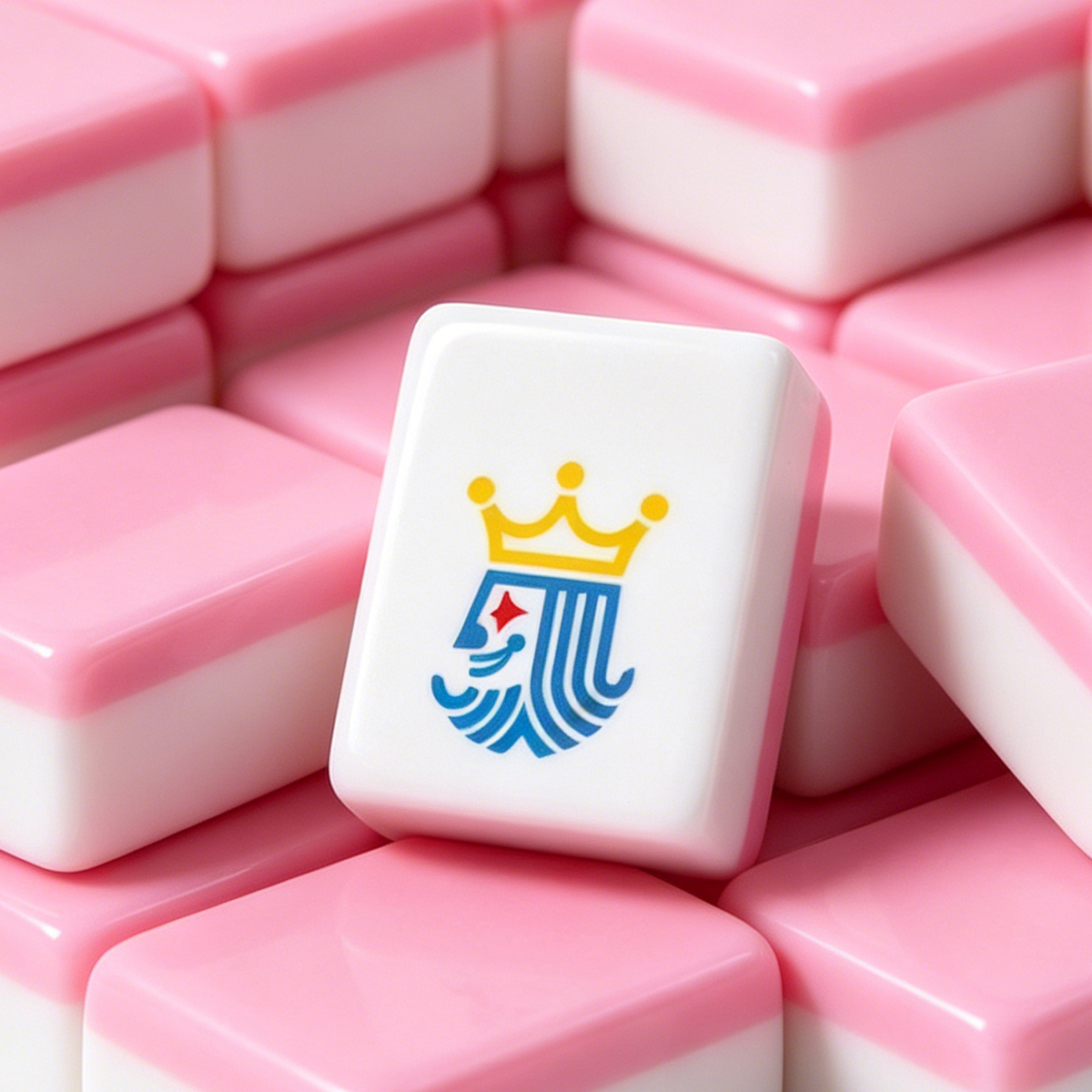
Acrylic and melamine are the two materials most retail sets use. They differ most in surface hardness, print method and cost position. Both can be perfectly playable, so the choice comes down to hand feel, sound and how the faces are made.
| Material | Weight and hand feel | Face and surface | Print durability | Sound at the table | Cost profile |
|---|---|---|---|---|---|
| Layered acrylic (multi-layer sheet) | Dense and glassy; holds a firm line in the rack | Glossy white face over coloured layers; edges read as stripes | Good for printed or engraved faces; watch corner wear after years of shuffling | Bright, carrying click | Higher material cost than moulded plastic |
| Solid acrylic | Even weight across the set; feels solid rather than hollow | Clear or tinted body; face quality depends on the print method | Strong with engraved-and-filled faces; printed faces rely on a protective coat | Crisp click, slightly lower in pitch | Premium end of the plastic options |
| Melamine (moulded thermoset) | Lighter in hand and warmer to the touch | Matte to satin finish, often with moulded or foiled graphics | Moulded symbols do not wear off; foil and printed faces can lift at the edges | Softer, duller knock | Lower cost; common in budget and travel sets |
| Wood, bamboo or resin composite | Lightest option; grain or mould texture varies piece to piece | Natural texture with engraved or painted faces | Engraving lasts; paint wears at high-touch corners | Quiet, woody knock | Low for bamboo; collector-level for vintage |
Table 1 compares general material behaviour, not a specific product. Confirm the material on the listing you are buying, because many pages describe appearance without naming the plastic.
How the faces are printed
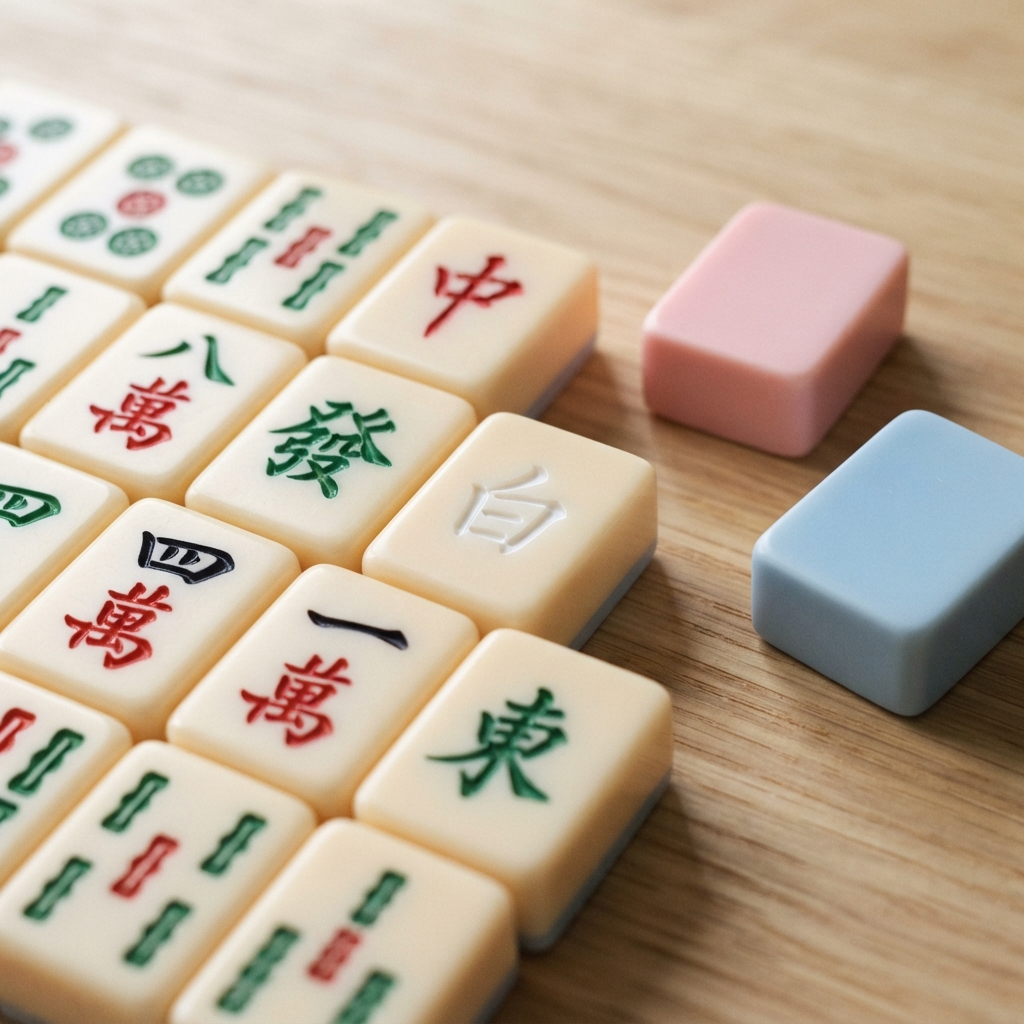
Four methods dominate: pad printing, hot foil, laser engraving with a colour fill, and inlay. Pad printing lays ink on a prepared surface. Foil transfers a coloured or metallic film. Engraving cuts the symbol into the tile and fills it. Inlay sets a contrasting sheet into the face.
Engraved and inlaid faces survive handling better than surface ink, because the symbol sits below the wear line. Printed faces depend on ink adhesion and on any protective coat. Ask which method was used, then judge a sample under the light your group actually plays in.
That coat matters because acrylic itself is not immune to wear. Poly(methyl methacrylate) is a hard, glass-like thermoplastic that is scratched easily in ordinary handling, and BYU–Idaho's Plastics Materials, chapter 8.7 notes that coated grades are available which significantly reduce the scratch problem.
Registration is the practical test. Every symbol should sit in the same position on every tile, with even stroke weight and no halo. One misregistered tile in a set of 160 becomes a sorting problem at the table.
Our own acrylic mahjong tile guide covers finish, cleaning and care in more detail once a set is in use.
How Should the Tiles Feel and Sound in Hand?
A tile worth buying feels dense, sits flat in the rack and clicks cleanly instead of knocking hollow. You can judge all three in about a minute with the set in front of you.
Stack ten tiles and look along the edge. Thickness should be identical and the stack should not lean. Run a thumb along a corner: it should be rounded and smooth, with no moulding flash or sharp seam.
Shuffle a handful. A set that separates by weight or size slows every sort and every wall. Uniform tiles stack, slide and push in the same way, which matters more than any single tile's weight.
Then listen. Acrylic gives a bright click that carries across a room. Melamine gives a softer, duller knock. Neither is wrong, but a club room with hard floors usually prefers the quieter option.
Gloss is a readability question too. A high-gloss face under a bright overhead light throws a reflection that can hide a thin stroke. Matte and satin faces read better in a hall with strong downlights.
For scale, one acrylic set in our range lists tiles at about 1.26 x 0.91 x 0.67 inches. Rack clearance follows from that width, so measure before buying racks separately.
Racks, Pushers, Dice and Mats: What Should Be in the Box?
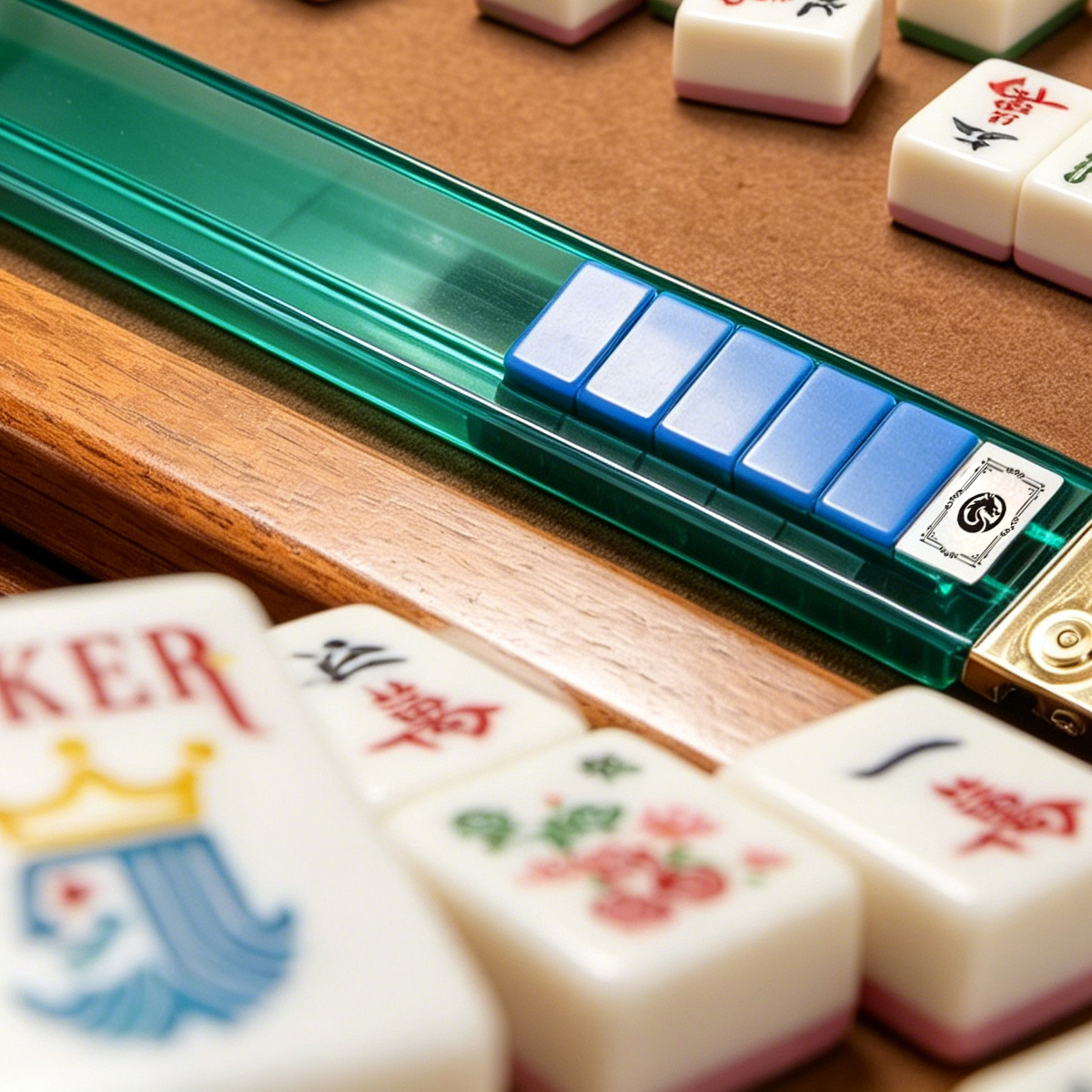
Racks and pushers decide how fast the table runs, while dice and a mat decide how tidy it stays. Budget sets usually cut this part of the package first.
Check rack length against tile width. A rack should hold 13 to 14 tiles in a straight line with a little room to spare. Too tight and tiles jam when a player draws; too loose and the row collapses when one is lifted.
Our Translucent Green Mahjong Rack & Tile Pusher Set is a long tray with raised side rails, blue inserts and a metal-look end fitting. The listing does not publish dimensions, so confirm capacity for your tile size before ordering.
Our Blue Mahjong Gaming Mat has printed white geometric lines and a four-player layout that marks the wall and the centre. The listing does not confirm the surface material, so ask the seller if you need a specific fabric or backing.
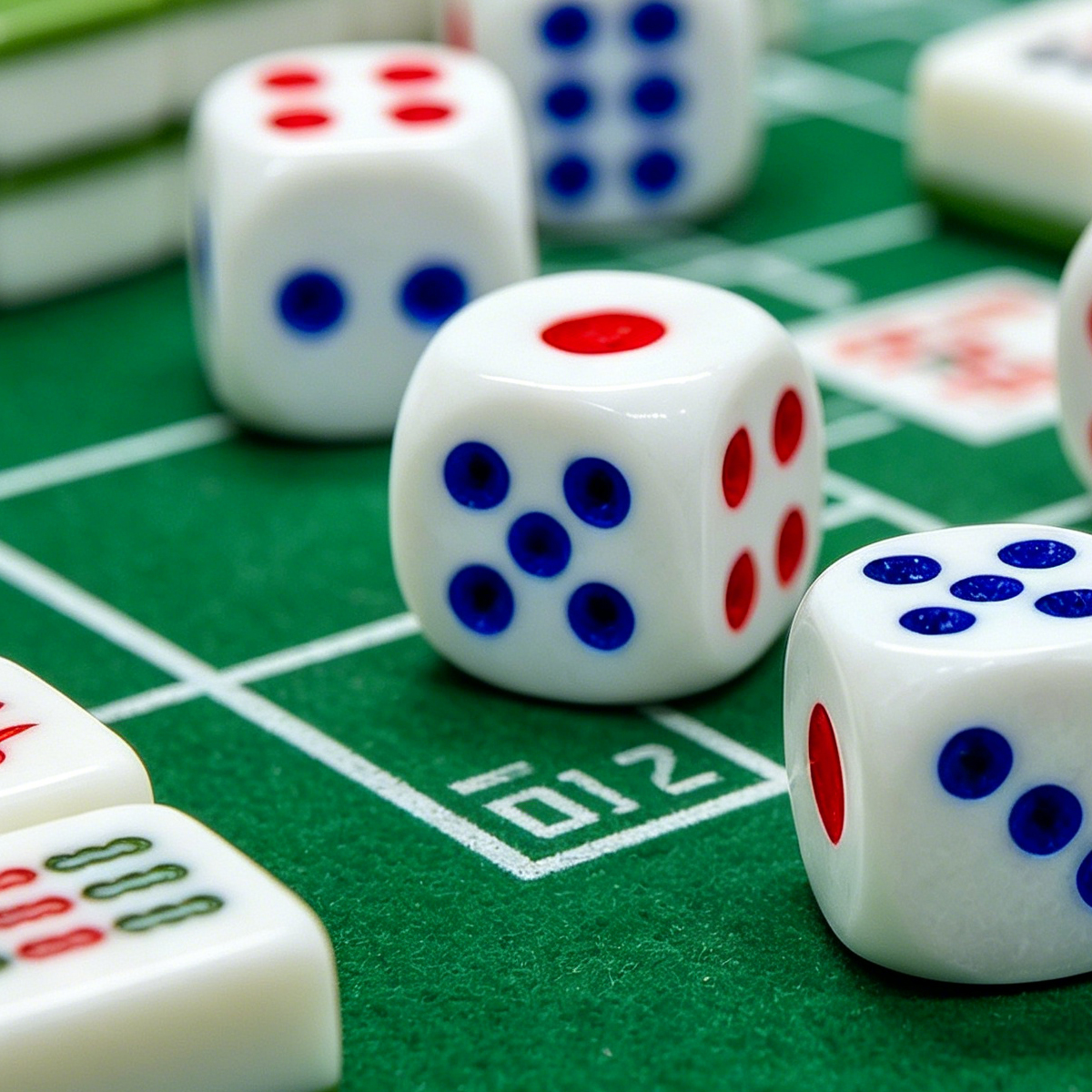
Dice should read at arm's length. Our white mahjong dice use red and blue pips on a white body. The listing does not state quantity, so confirm how many ship with the set.
Storage and Case Options
A case is part of the set, not an accessory, because 160 hard tiles need separation and a flat base. The case also decides whether a set survives being carried to a club each week.
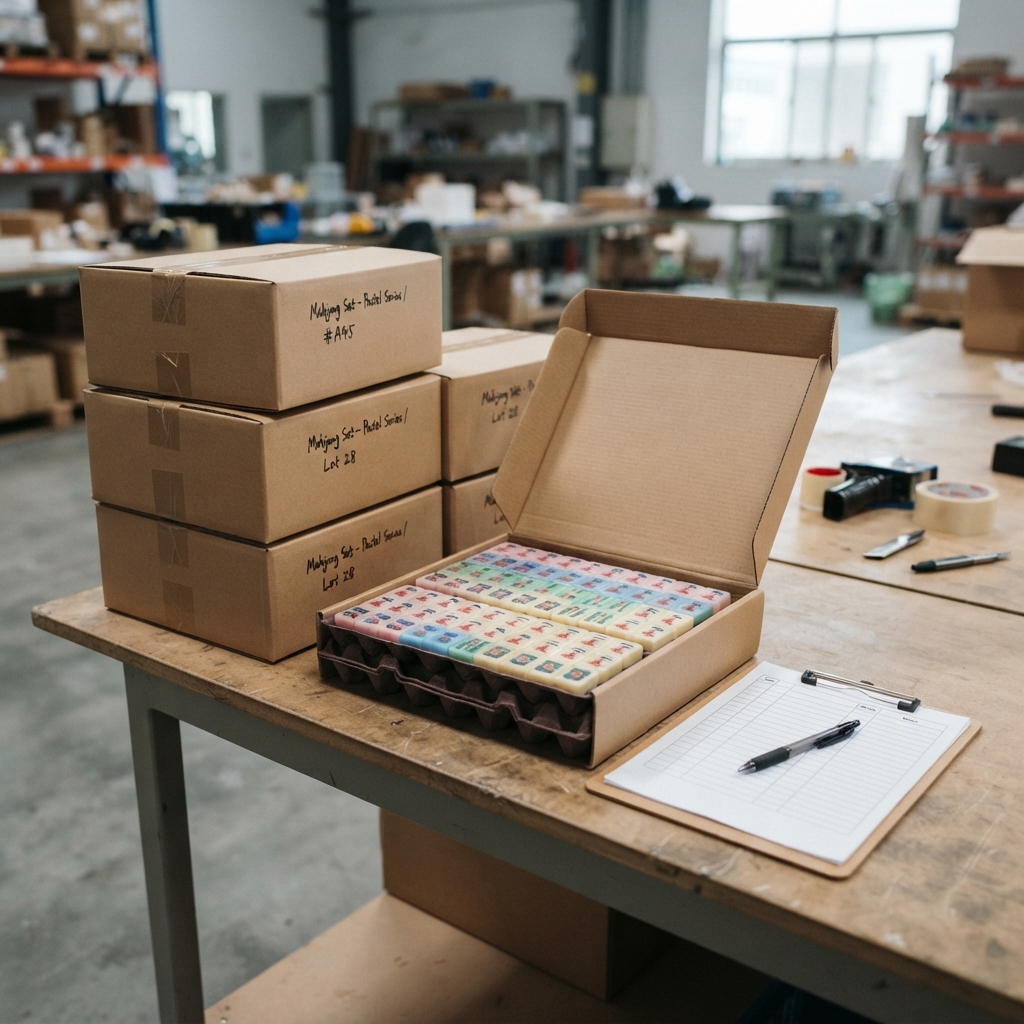
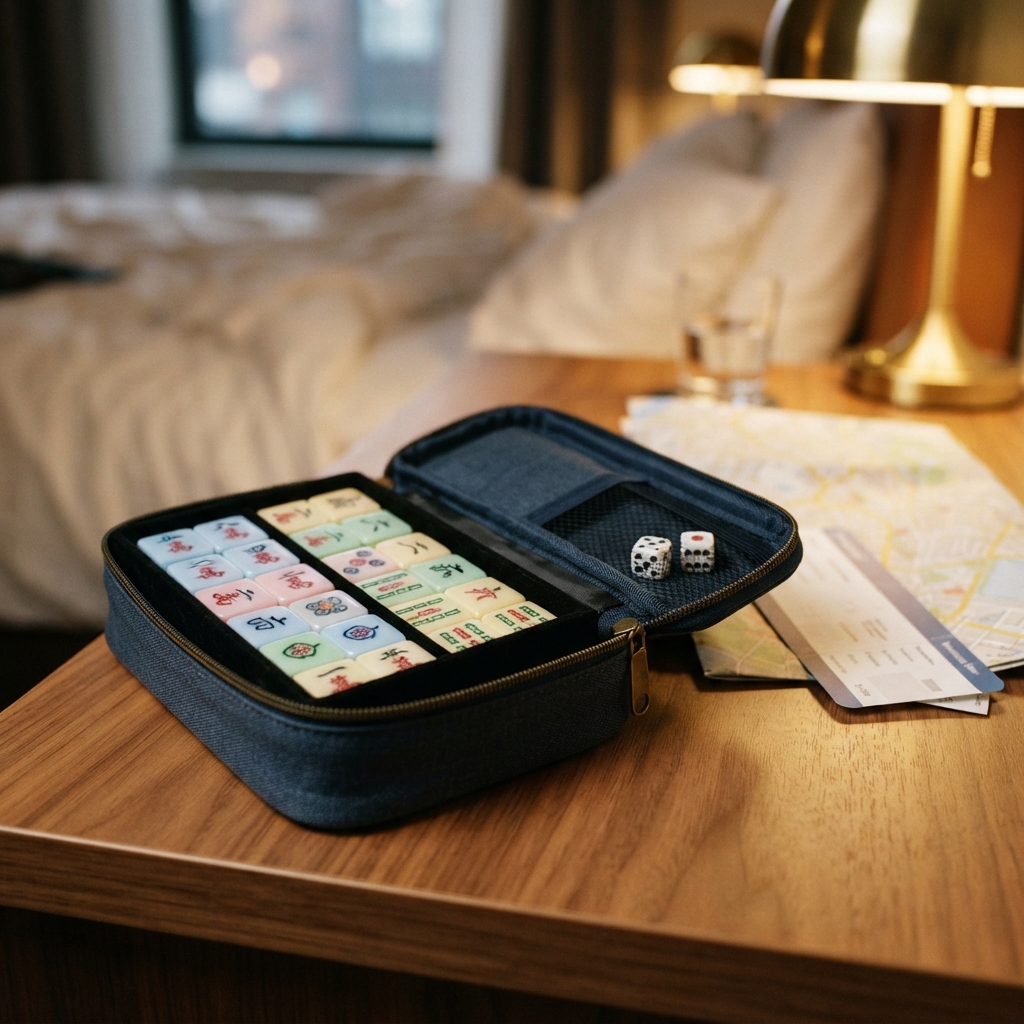
Three formats cover most buyers. A moulded insert case holds each row of tiles in its own channel and is the safest for transport. A divided fabric bag is lighter and cheaper, but it depends on the dividers staying in place. A display case suits retail and gift use, where the set is seen before it is played.
For gift retailers, ask for the insert sample with the tiles loaded. Tiles that shift inside a handsome box arrive scratched, and scratches show most on glossy white faces.
Keep blanks and spare jokers in a labelled bag rather than loose in the case. Loose spares drift into play, and a blank treated as a joker breaks a hand.
Store the set flat and dry. A case left standing on end for months can bow thin racks, and a damp store room dulls printed faces before the tiles ever reach a table.
Beginner Set vs Club Set: What Actually Differs
A beginner set is bought once for a household, while a club set is bought for repetition, replacement and transport. The difference shows up in spares, uniformity and how many identical sets you can match.
| Configuration | Tiles | Jokers | Racks and pushers | Dice | Mat | Who it suits |
|---|---|---|---|---|---|---|
| 144-tile Chinese-style set | 144 | None | Varies; often none | Varies | Rarely | Chinese and Hong Kong players only; cannot run American hands |
| American set, tiles only | 152 playable | Eight | Not included | Not included | Not included | A player who already owns racks and a mat |
| 160-piece American set with accessories | 152 playable plus spares | Eight playing, two spare on most listings | Four of each | Usually included; confirm count | Sometimes; confirm | First-time players and gift buyers |
| 166-piece American set | 152 playable plus 14 extras | Varies; ask for the split | Varies | Varies | Sometimes | Gift and display sets, or groups wanting a deeper spare pack |
| Club or tournament kit | Matched sets to the same spec | Playing set plus spare jokers per table | Four per table plus spares | Per table | Per table | Club organisers and tournament hosts |
A first-time player should buy the full playing inventory and the accessories in one order. Buying tiles first and racks later usually costs more, and the later racks may not fit the tile width.
A club organiser should buy matched sets in the same tile size and colourway. Mixed sets look uneven across a room and make replacement harder. Keep a written inventory per set, plus a spare set of tiles for every four tables.
A Pre-Purchase Checklist for US and EU Buyers
Run this list against the listing before you pay, and ask the seller for anything the page does not state. Ten checks take about five minutes.
- Piece list published, not just a total count.
- Eight jokers in the playing inventory, plus spares if offered.
- Eight flowers and 108 suit tiles confirmed.
- Material named, or confirmed by the seller in writing.
- Print method stated, with a close-range sample photo.
- Tile dimensions published, with the matching rack capacity.
- Four racks and four pushers included, or priced as a bundle.
- Dice quantity and mat size confirmed.
- Case type described, with the insert shown.
- Spare tiles and jokers available as a later purchase.
For US and EU buyers alike, also ask whether the set ships from local stock or directly from the factory. That answer changes the delivery window, and it changes who handles a damaged box.
A Set From Our Range
Our American-style sets are acrylic, supplied with printed joker tiles, and paired with racks, mats and dice that are listed as separate items. Each listing describes the tile finish and states what ships with it.
The Pink-Back American Mahjong Tile Set with Jokers uses rectangular tiles with softened corners, a smooth glossy white face and pink sidewalls. A printed JOKER tile appears in the product photos. The listing does not publish a piece-by-piece count, so confirm the 152-plus-spares breakdown with us before ordering.
Racks, mats and dice are sold separately, which lets a club buy matched accessories for sets it already owns. That is also the reason to check accessory compatibility first and colour second.
Frequently Asked Questions
How many tiles should an American mahjong tile set have?
An American set needs 152 playable tiles: 108 suit tiles, 16 winds, 12 dragons, eight flowers and eight jokers. Retail boxes usually add two spare jokers and six blanks, which is why most listings say 160 pieces. A 166-piece set carries 14 extras, and the split between jokers and blanks varies by seller. Count the playing inventory, not the box total, because a set without eight jokers cannot run most American hands.
Do I really need jokers in an American set?
Yes. American Mah Jongg uses jokers as wild tiles inside runs of three or more, and the official hands card published each year by the National Mah Jongg League is where those hands come from. A set sold for American play without eight jokers is incomplete, whatever the total on the box. Two spare jokers are worth having, because one lost joker leaves a hand type unplayable until a replacement arrives.
Are acrylic or melamine tiles better?
Neither is automatically better. Acrylic feels denser, sounds brighter and usually costs more. Melamine is lighter, warmer in the hand, quieter on the table and cheaper, which suits travel sets and quiet rooms. Check the print method either way: an engraved or inlaid acrylic face will outlast a printed melamine face, while a moulded melamine symbol never wears off at all.
How do I check that racks fit my tiles?
Measure one tile's width, then multiply by 13 or 14, the number of tiles a rack holds. Add a little clearance so tiles do not jam. Compare that figure with the rack's internal length, which sellers sometimes publish and sometimes do not. If the rack length is missing, ask before ordering, because a rack that is too tight or too loose slows every turn.
What should a club organiser buy differently from a first-time player?
A club should buy matched sets rather than one good set. Identical tile size and colourway keeps tables consistent and makes replacement simple. Budget four racks and four pushers per table, dice per table, and a spare tile set for every four tables. Keep a written inventory in each case so a missing joker is found between sessions, not during one.
Can I use a 144-tile Chinese set for American mahjong?
No. American hands assume jokers and eight flowers, and a 144-tile set has neither in the right quantity. The reverse does work in principle: an American set contains the 144 tiles Chinese play uses once jokers are set aside, though the artwork differs on the crak suit. Some groups accept that, and some do not, so ask before relying on one set for both.
Conclusion
Buying an American mahjong tile set comes down to a piece list, a material, and a rack that fits. Confirm 152 playable tiles with eight jokers and eight flowers, then check spares, print method and case before you compare colour or price. Those four checks catch almost every disappointing set.
If you are choosing a set for a household, start with a documented breakdown and buy the accessories in the same order. If you are buying for a shop or a club, ask for the same specification across every set so tables stay consistent. You can browse our American mahjong tile sets or send us your piece-list question with the rule set and player count you have in mind.