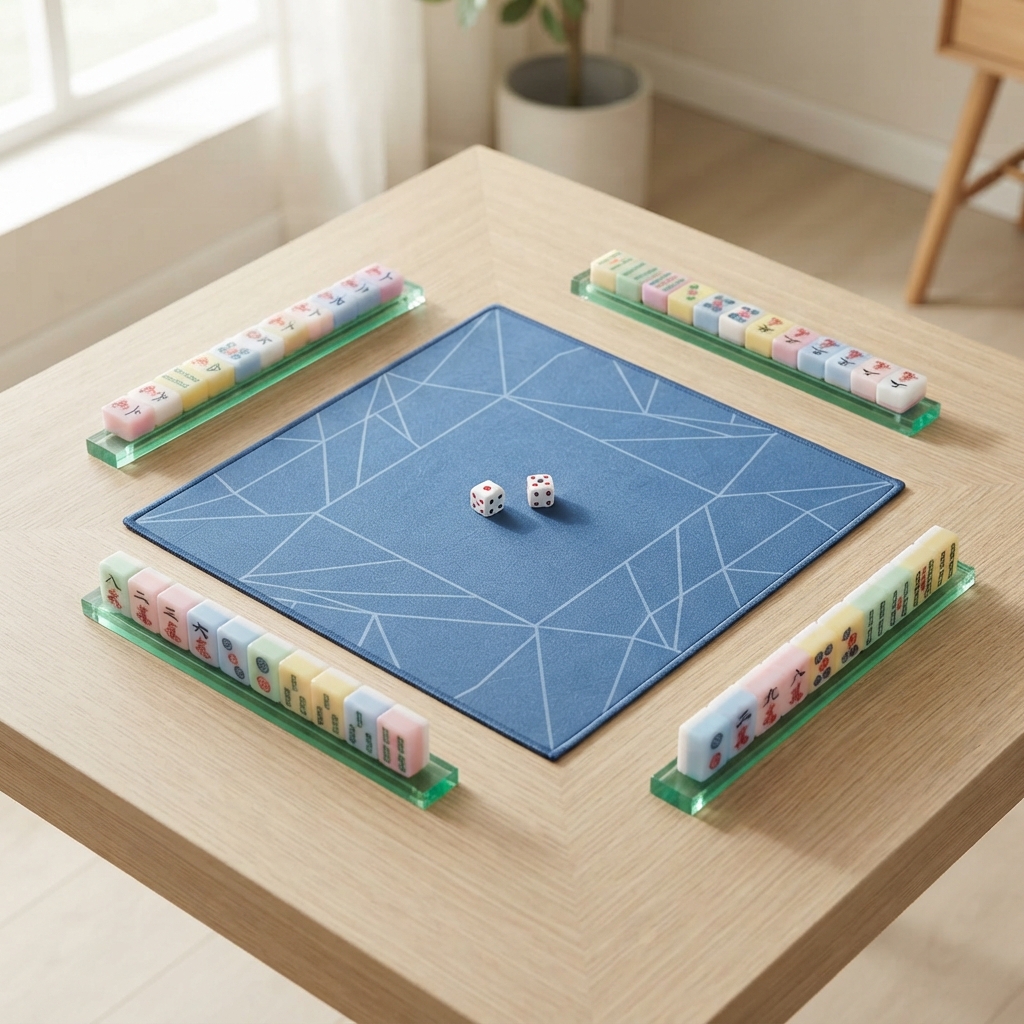

American Mahjong Set Specifications: Buyer Worksheet
American Mahjong set specifications should define the target game version, tile inventory, Joker requirements, tile dimensions, rack compatibility, accessories, packaging, readability checks, sales channel, and replacement record. Do not approve a set from a product name or photo alone. American Mahjong set specifications should be matched to a physical sample before approval. Use a written worksheet, compare it with a physical sample, and record every approved value before production or purchase.
Begin with the market and game version
An American Mahjong set is not interchangeable with every Chinese-style set. The intended market affects the tile categories, use of Jokers, rule materials, rack expectations, visual treatment, packaging language, and replacement plan. Start the specification with the game version and the source used to verify it.
The American and Chinese Mahjong set comparison gives buyers a consumer-level overview. A procurement worksheet must go further by naming the target market, current rules reference, required components, and approval owner.
Record these fields before asking for a sample:
| Specification field | Buyer entry | Evidence to retain |
|---|---|---|
| Intended market | Country, region, club, retailer, gift program, or online channel | Approved sales brief |
| Game version | American Mahjong or another named version | Current rules source and review date |
| User profile | Beginner, experienced player, club, senior user, travel user, or gift recipient | Channel or user requirement |
| Product format | Tile-only set, complete play set, travel set, premium gift set, or replacement pack | Approved assortment plan |
| Language | Packaging, instructions, labels, and support language | Final copy file and approval record |
| Rules dependency | Annual card, rulebook, reference sheet, or no included rules material | Licensing and version confirmation |
Do not treat the word "American" on a listing as sufficient proof. Confirm the physical inventory and every accessory against the version your customer expects.
Build the tile inventory from an approved source
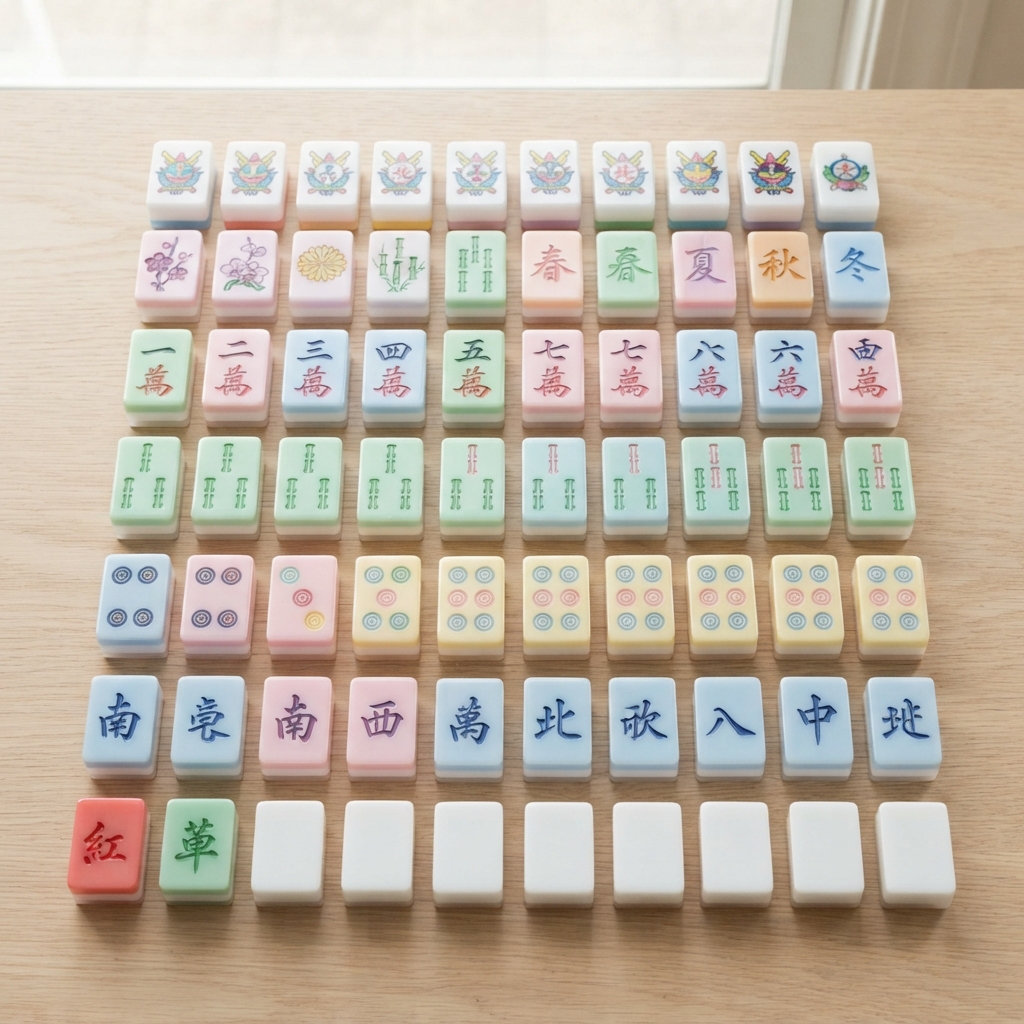
Tile count is a controlled specification, not a number to copy from a competing listing. American Mahjong requirements can depend on the current rules reference, included spare pieces, retailer configuration, and whether the product is a tile-only or complete set. Create an inventory by category and have one person approve the total.
Use this worksheet:
| Tile category | Required quantity | Sample count | Production count | Approval note |
|---|---|---|---|---|
| Suits | Confirm each suit and rank distribution | |||
| Winds | Confirm orientation and artwork | |||
| Dragons | Confirm color and symbol treatment | |||
| Flowers | Confirm numbering or artwork system | |||
| Jokers | Confirm current market requirement | |||
| Blanks or spares | Define intended use and labeling | |||
| Other special pieces | Identify the rule source or customer requirement | |||
| Total | One reconciled total only |
The set inventory guide can help identify component categories. For sourcing, add a signed count sheet to the sample record. If the supplier and buyer calculate different totals, stop and reconcile the category rows instead of changing the total alone.
Specify Jokers as a separate decision
Jokers are a defining requirement for many American Mahjong buyers, but a specification still needs to state the quantity, artwork, material, replacement method, and governing source. Do not assume that every American set contains the same number or that a generic spare tile can function as a Joker.
Ask the buyer or rules owner to confirm:
- Which current game reference determines the Joker requirement?
- Is the artwork supplied by the buyer, developed for the project, or selected from an approved supplier option?
- Must the Joker match the other tiles in size, thickness, material, back color, edge finish, and weight?
- Will replacement Jokers be available, and how will their batch be identified?
- Does the package need to distinguish spare blanks from playable Jokers?
Keep copyrighted rules content out of the product artwork and package unless the necessary permission is documented. A product can be compatible with a game format without reproducing protected text or layouts.
Treat rulebooks and annual cards as controlled content
A rulebook, quick-start guide, or annual card should never be added as an afterthought. Record whether it is included, who owns the content, which edition applies, what languages are required, and whether the buyer has permission to print and distribute it.
| Rules material decision | Buyer must confirm | Supplier file check |
|---|---|---|
| No rules material included | Customer already owns or separately obtains the required reference | Packaging must not imply inclusion |
| Original quick-start guide | Scope, author, reviewer, version, and copyright owner | Final approved file and print proof |
| Licensed annual card or guide | Current license, territory, edition, quantity, and permitted reproduction | Written authorization before printing |
| Retailer-supplied insert | Final copy, dimensions, paper, language, barcode, and insertion position | Approved proof and packing check |
The public JOKKOL catalog includes a Rulebooks category, but a public category does not prove that a particular rules edition, license, or insert is valid for every project. Confirm the exact item and rights before it appears in a purchase order.
Measure tiles with the rack, case, and package
Tile dimensions affect handling, readability, rack fit, case capacity, shipping weight, and packaging layout. Record height, width, thickness, weight, edge profile, and the measurement method. A nominal number without a defined point of measurement is difficult to inspect.
The Mahjong tile size guide explains the consumer fit questions. A buyer specification should also state the tool, sample quantity, condition, and acceptance decision.
| Measurement | How to define it | Compatibility check |
|---|---|---|
| Height | Measure the same two reference faces on each sample | Visibility above the rack lip |
| Width | Measure across the approved orientation | Number of tiles that fit on the rack |
| Thickness | Measure the tile edge at defined points | Stability, standing behavior, and case insert fit |
| Weight | Use the agreed scale and sample method | Handling preference and packed shipment estimate |
| Edge profile | Square, eased, rounded, or other approved profile | Comfort, stacking, and visual consistency |
| Face and back flatness | Define visual or fixture-based review | Rack stability and consistent presentation |
Do not invent a universal ideal size. Approve dimensions against the intended user, rack, pusher, case, insert, and package. Record tolerances only after the manufacturer and quality owner agree on a measurable method.
Verify rack and pusher compatibility as a system
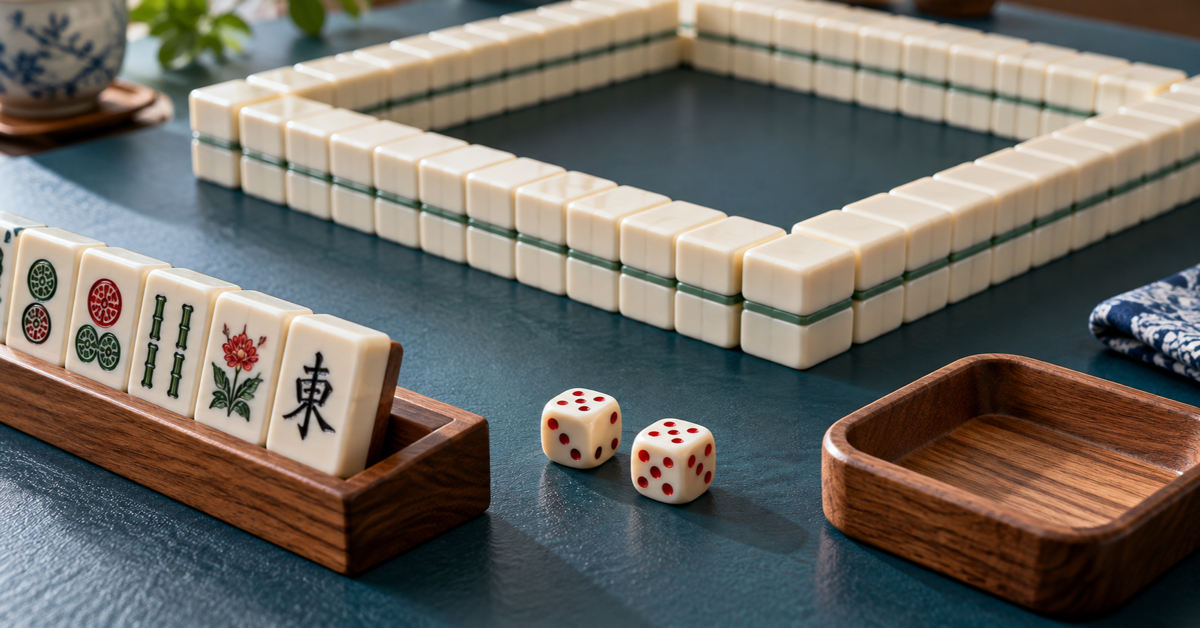
Tile and rack specifications should be reviewed together. A rack may look compatible in a catalog photo but still have an unsuitable channel width, lip height, pusher travel, surface finish, or packed length.
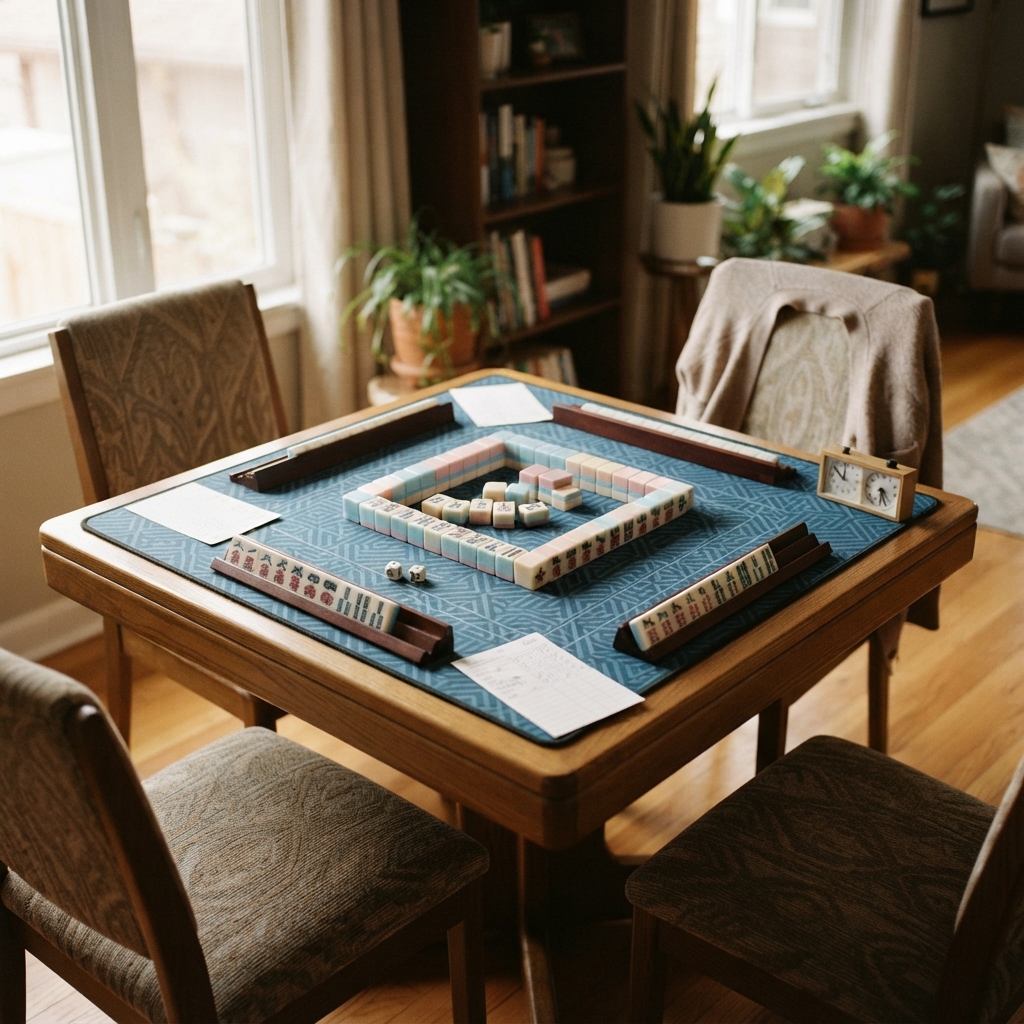
Use a complete physical setup to check:
- the agreed number of tiles fits without crowding;
- the tile remains readable above the rack lip;
- the rack is stable on the intended table or mat;
- the pusher moves without scraping, binding, or tipping the rack;
- the finish does not transfer color or visibly mark the tiles during normal handling;
- racks and pushers fit the case or retail package in the approved orientation.
The rack and pusher guide is a useful supporting page. For a procurement decision, photograph the approved setup and link that photo to the sample ID. Do not approve the rack and tiles in separate records if they will be sold together.
Define the complete accessory bill of materials
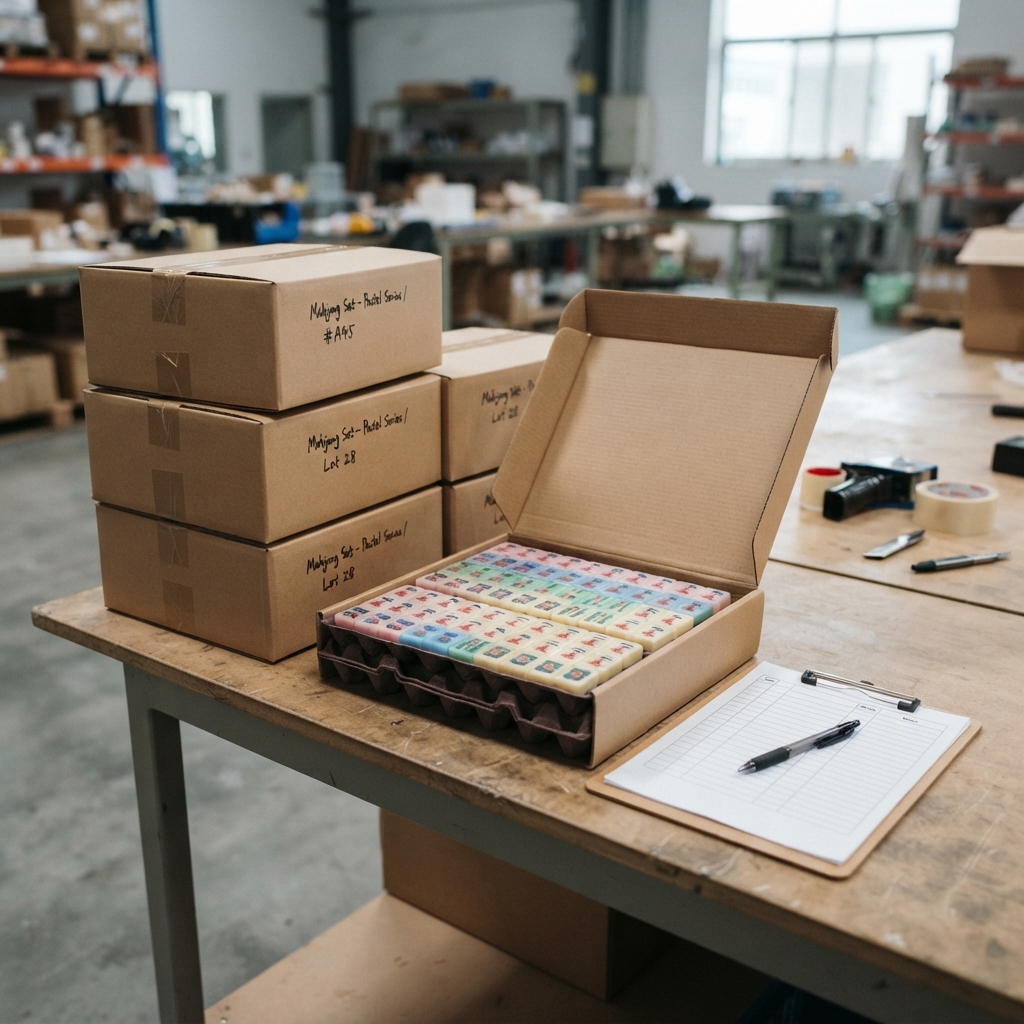
A "complete set" must be translated into a bill of materials. Depending on the product format, the list may include racks, pushers, dice, a mat, storage, trays, labels, instructions, protective materials, or replacement pieces. State included quantity and pack position for every line.
| Component | Required quantity | Material or finish | Pack position | Acceptance method |
|---|---|---|---|---|
| Tiles | Count and approved sample comparison | |||
| Racks | Fit and stability check | |||
| Pushers | Movement and surface check | |||
| Dice | Count, color, finish, and legibility review | |||
| Mat | Dimensions, edge, print, odor, and roll/fold check | |||
| Storage case or box | Capacity, closure, handle, and protection review | |||
| Instructions or insert | Version, language, rights, and print proof | |||
| Spares | Identification and replacement record |
Use the public JOKKOL product directory to understand currently displayed categories, then confirm the actual configuration for the project. Public categories do not establish stock, MOQ, wholesale pricing, or automatic inclusion in a set.
Test readability in the intended environment
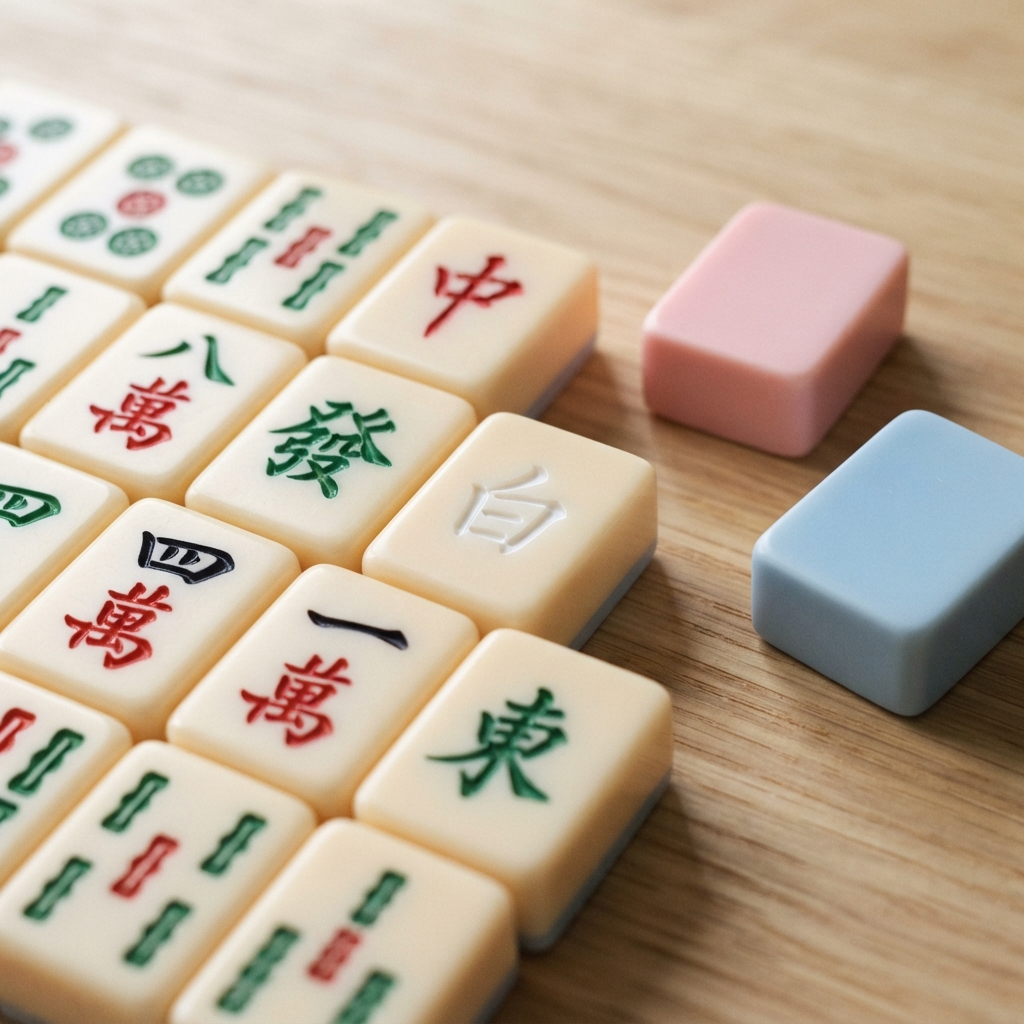
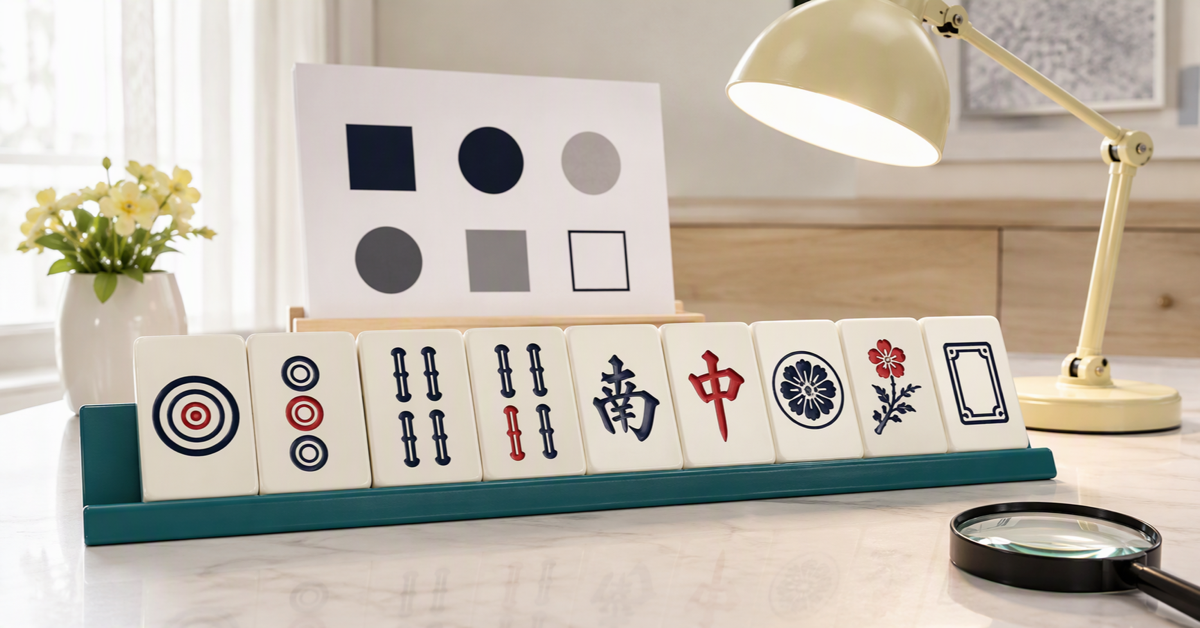
Large symbols alone do not guarantee readability. Contrast, glare, lighting, viewing distance, rack angle, color differentiation, and visual clutter also matter. This is especially important for clubs, senior users, teaching sets, and hospitality environments.
Run a small use-condition review:
- Place the sample on the intended rack and table surface.
- Test it under the warm and cool lighting conditions likely to be used.
- View the tile from the expected seated distance and angle.
- Compare easily confused symbols and colors side by side.
- Ask representative users to identify tiles without coaching.
- Record the lighting, distance, sample ID, and observed difficulty.
The large-print tile guide provides additional evaluation criteria. Avoid medical or accessibility guarantees. Record what was tested, by whom, and under which conditions.
Match the configuration to the sales channel
Beginners, clubs, gift buyers, retailers, and e-commerce sellers may need different configurations even when the core tiles are similar.
| Channel or user | Specification priority | Questions to resolve |
|---|---|---|
| Beginner set | Clear inventory, simple organization, durable storage, approved learning material | What guidance is legally and practically suitable? |
| Club or teaching set | Repeated setup, readable faces, rack stability, replacement tracking | How will mixed sets and high use be managed? |
| Premium gift set | Presentation, insert fit, unboxing sequence, protective packaging | Which decorative choices affect usability or transit protection? |
| Retail shelf | Package dimensions, barcode area, language, assortment naming | What information must be visible without opening the box? |
| E-commerce | Accurate component images, packed weight, carton protection, returns documentation | Can the listing and package show the same verified contents? |
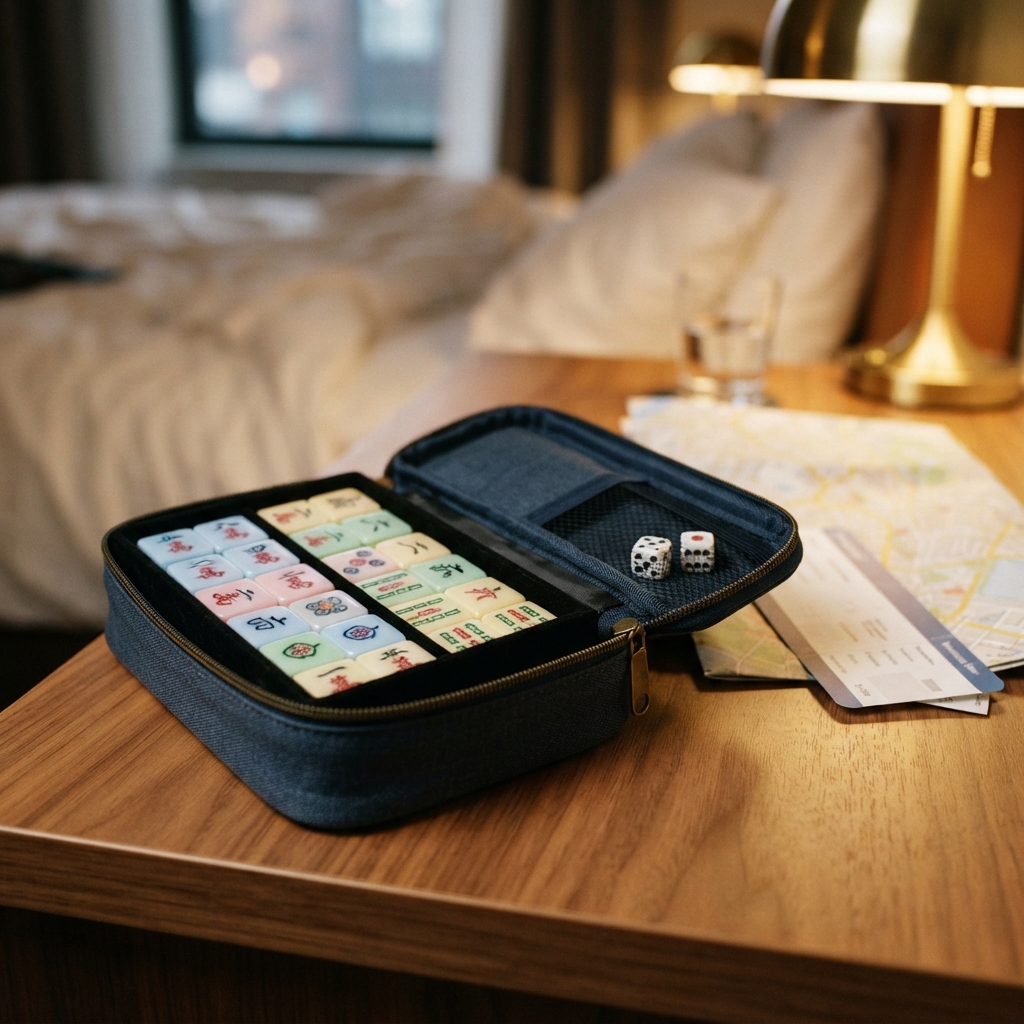
| Travel format | Compact storage, secure closure, piece control | Which reduced-size choices remain usable for the target player? |
One configuration does not need to satisfy every channel. Create a separate SKU or controlled option when a change affects tile inventory, package contents, rules material, or replacement compatibility.
Create a replacement compatibility record
Replacement planning begins before the first order. A future tile must match more than the face artwork. Record the approved dimensions, material, back color, opacity, finish, edge profile, artwork version, print method, and production batch.
Keep these records:
- approved sample ID and date;
- color reference under defined lighting;
- dimension and weight record;
- front, back, and edge photographs;
- artwork version and authorized owner;
- material and finish description;
- production batch or purchase order reference;
- spare pieces included with the original set;
- contact route and evidence required for a replacement request.
The lost tile replacement guide explains the matching problem for individual owners. A sourcing team should also retain the production record. Even with good records, exact color or finish matching across batches may not be possible; the current replacement policy must be confirmed for the specific product.
Use a sample approval sheet, not email fragments
Consolidate the specification into one controlled sheet. Each row should have a required value, sample result, approval status, owner, evidence link, and change date. Mark unknown fields as open instead of filling them with assumptions.
Before approval, require these five checks:
- Inventory total reconciles with every tile category and accessory line.
- Tiles, racks, pushers, case, and package have been tested as one system.
- Rules materials and artwork have a documented version and rights decision.
- Readability and handling have been reviewed in the intended use environment.
- Replacement records identify the approved sample and production batch.
A signed worksheet does not guarantee every batch. It creates a traceable baseline for quotation, sampling, inspection, packing, and later support.
Frequently asked questions
How many tiles should an American Mahjong set contain?
Use the current rules source and the approved product configuration to determine the count. Separate playable categories, Jokers, blanks, and spares in the worksheet, then reconcile the total. Do not copy a single number from another listing because rule references and retail configurations can differ.
Does every American Mahjong set need Jokers?
Confirm the target game version and current market requirement. When Jokers are required, specify quantity, artwork, size, material, back color, finish, and replacement method. A blank or spare tile should not be treated as a Joker unless the approved rules and product specification say so.
Should a set include a rulebook or annual card?
Only when the exact content, edition, territory, language, and reproduction rights are confirmed. The specification should state whether the material is included, supplied separately, or intentionally excluded. Never reproduce protected rules text or layouts without authorization.
How do buyers check whether tiles fit existing racks?
Measure tile width and thickness, then load the agreed number of tiles on the actual rack. Check visibility above the lip, stability, pusher movement, and case fit. Keep a photo and measurement record linked to the approved sample ID.
Can replacement tiles match a set from an earlier batch?
They may be matchable when the supplier has the correct artwork, dimensions, material, color, finish, and batch records, but an exact match should not be assumed. Retain a reference sample and confirm the current replacement policy before ordering or promising support.
Send a specification that can be quoted and inspected
Complete the worksheet, attach the approved rules reference, identify open decisions, and send the package through the verified JOKKOL Contact page. Ask the project owner to return a line-by-line response that separates confirmed specifications, sample-stage decisions, and items still requiring feasibility review. That response can become the baseline for a useful quotation and a measurable sample approval.
*Editorial note: This buyer worksheet is based on public JOKKOL pages reviewed through 2026-10-17. Tile counts, rules materials, dimensions, included accessories, replacement availability, MOQ, price, lead time, and compliance remain product- and project-specific unless confirmed in current written documentation.*